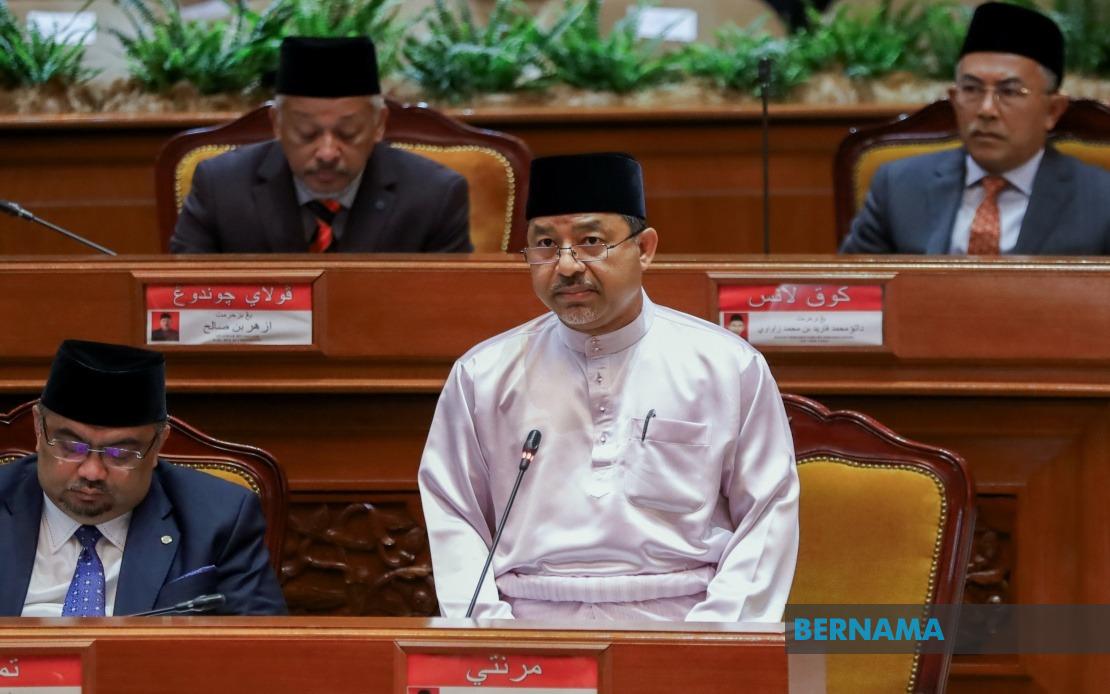
Kelantan's position as Peninsular Malaysia's leading state for Malay reserve land ownership remains secure, with Menteri Besar Datuk Mohd Nassuruddin Daud confirming that the northeastern state's reserved land holdings total 526,083 hectares as of June this year. This substantial landmass constitutes 91.5 per cent of the state's entire land area and encompasses 816,020 individual ownership titles, underscoring the fundamental importance of land tenure arrangements in Kelantan's economic and social fabric.
The complementary data reveals a total land area under Kelantan's administration of 574,427 hectares distributed across 859,275 titles overall. Non-Malay reserve land accounts for 48,344 hectares or 8.4 per cent of the state's territory, with 43,255 registered titles. These figures, drawn from official land administration records maintained by the state government, provide a comprehensive snapshot of Kelantan's property ownership landscape and the regulatory framework governing land use and transactions within its jurisdiction.
Kelantan's overwhelming proportion of reserved land stands significantly ahead of other Peninsular Malaysian states in absolute terms. This distinction carries implications beyond mere statistical superiority; it reflects both historical land policies and ongoing governmental commitment to preserving indigenous Malay ownership rights. The scale of these holdings demonstrates how land reservation continues to shape economic opportunity and social structure in the state, creating frameworks that fundamentally differ from property markets in urban-centric states with smaller reserved land percentages.
Geographic variation within Kelantan itself illuminates the uneven distribution of reserved lands across the state's eleven districts. Gua Musang, the largest district by area, predictably leads with 122,735 hectares of reserved land, a figure that reflects its expansive geographical footprint in the state's interior regions. Following Gua Musang, Pasir Mas and Tanah Merah each hold over 56,000 hectares, while Kuala Krai accounts for 53,473 hectares. This concentration in larger, more rural districts contrasts with smaller or more urbanised areas, where reserved land proportions necessarily differ.
When measured by percentage rather than absolute area, the ranking shifts noticeably, revealing how densely reserved land is concentrated in certain localities. Tanah Merah achieves the highest reservation rate at 99.9 per cent, indicating that virtually all privately held land in the district remains under Malay reserve designation. Tumpat, Pasir Puteh, Bachok, Pasir Mas, Kota Bharu, and Jeli all maintain substantially high reservation percentages, though precise figures for these districts were not individually specified. This pattern suggests that smaller or less economically developed districts maintain stricter adherence to reservation principles than larger, more commercially active areas.
The Kelantan Malay Reservations Enactment provides the legal architecture sustaining this land tenure system. Section 13A of the enactment permits non-Malay land ownership within designated Malay reserve areas under specified conditions, creating limited flexibility within an otherwise restrictive framework. This provision acknowledges practical realities of modern commerce and development while maintaining overarching protections for indigenous Malay interests. The existence of non-Malay titles within reserved areas—represented by the 43,255 registered titles—demonstrates that the system operates as a graduated restriction rather than an absolute prohibition.
Crucially, Datuk Mohd Nassuruddin emphasised that no reduction in Kelantan's Malay reserve land has occurred despite decades of economic change and development pressures. This preservation reflects consistent state government enforcement of reservation principles and resistance to attrition through conversions or exemptions. The political significance of this claim cannot be understated in a state where Islamist governance has been continuous for over four decades and where Malay-Muslim interests command paramount political salience.
State authorities maintain regulatory power extending beyond mere ownership designation to transaction control within reserved areas. The Enactment grants government capacity to scrutinise, restrict, or prohibit property transactions deemed injurious to Malay reserve integrity. This supervisory function operates as a secondary safeguard, enabling authorities to intervene when market transactions might indirectly erode the protective purposes of reservation, whether through speculative pressure, exploitative arrangements, or foreign acquisition patterns.
For Malaysian property markets and investment communities, Kelantan's reserved land regime creates distinct operational parameters. Investors and developers seeking land transactions must navigate reservation restrictions, engage with state government approval processes, and recognise the political immobility of these provisions. Non-Malay purchasers cannot acquire reserved land without specific authorisation, and even Malay owners face state oversight of subsequent sales. These constraints limit market dynamism but serve protective purposes that command sustained political support.
The broader Southeast Asian context renders Kelantan's land tenure system increasingly notable. As other regional governments confront foreign investment pressures and rural land commercialisation, Kelantan's protection mechanisms represent a conscious policy choice to subordinate maximalist market efficiency to indigenous interest preservation. This approach generates different development trajectories than purely market-driven land systems, with implications for rural incomes, agricultural sustainability, and community land retention.
Kelantan's consistency in maintaining and documenting its reserved land holdings reflects institutional capacity and political commitment. The availability of precise district-level data demonstrates administrative sophistication in land record-keeping, essential for implementing reservation policies effectively. Other Malaysian states may lack comparable documentation, suggesting that Kelantan's titular position rests not merely on initial allocation but on sustained governmental attention to land administration.
Looking forward, Kelantan's land tenure framework will likely face pressure from development ambitions, demographic change, and potentially evolving attitudes toward property regulation. However, the demonstrated commitment to maintaining reservation status, combined with strong political consensus on protective principles, suggests continuity rather than transformation. The state's 526,083 hectares of reserved land will likely remain a defining feature of Kelantan's economic and social geography for the foreseeable future, shaping investment patterns, development opportunities, and the distribution of property wealth throughout the state.

