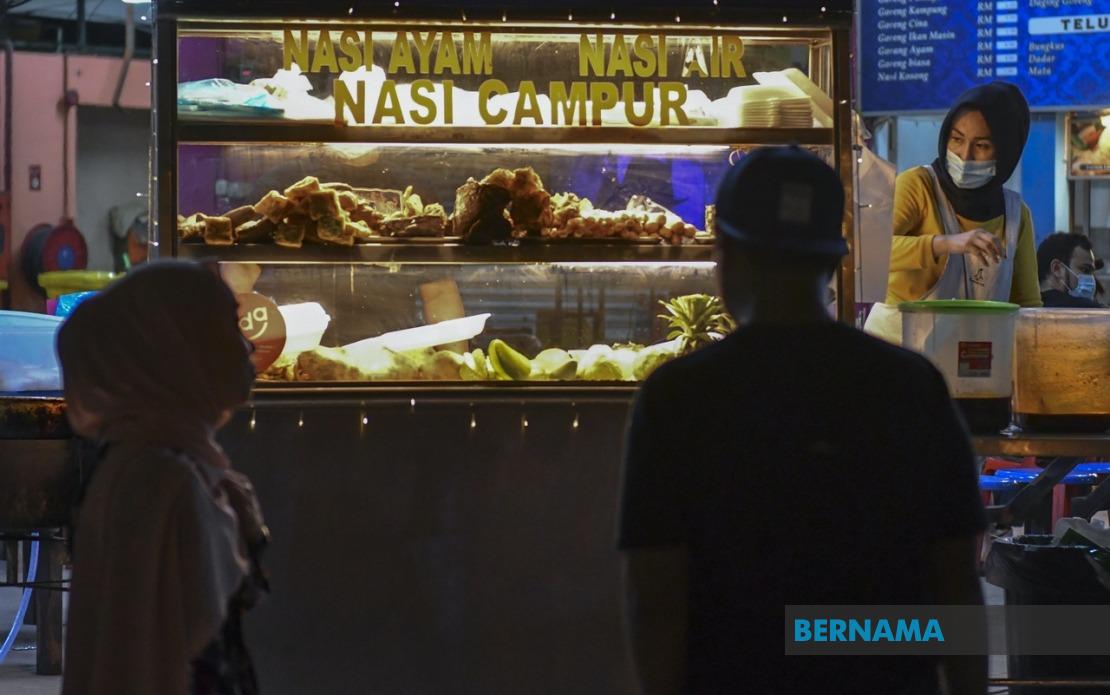
The Kelantan state government has committed to ramping up surveillance and inspections of food operations across the state in response to growing public concern about halal standards, particularly at establishments run by non-Muslim operators. The move comes after allegations circulated widely on social media questioning whether certain food premises meet Islamic dietary requirements, prompting authorities to take a more proactive enforcement stance. Mohd Asri Mat Daud, who chairs the State Islamic Development, Dakwah, Information and Regional Relations Committee, announced the intensified approach while addressing journalists in Kota Bharu on Monday following a halal certification ceremony.
While the state government has not yet received formal complaints through official channels, preliminary investigations are already underway to gather substantive evidence regarding the allegations before determining what enforcement action may be warranted. Mohd Asri acknowledged that responsibility for conducting halal compliance checks rests with the Kelantan Islamic Religious Affairs Department, and his office will work closely with that body to coordinate investigative efforts. The collaborative approach reflects recognition that addressing halal compliance requires both regulatory oversight and departmental expertise in Islamic dietary law.
The enforcement initiative underscores how seriously Kelantan takes the maintenance of halal standards within its food service sector. Mohd Asri characterised the situation plainly: regular monitoring and inspections will become the norm rather than exception if doubts persist about premises meeting halal requirements. The state government wants to prevent any systematic breakdown in halal compliance that could spread unchecked across the region. Such concerns carry particular weight in Kelantan, which has a substantial Muslim population and where Islamic observance carries significant cultural and social importance.
For food business operators, the message is clear: profit margins cannot come at the expense of shariah compliance. Mohd Asri specifically warned establishment owners that cutting corners on halal standards risks eroding Muslim consumer confidence in the entire food sector. Once trust deteriorates, rebuilding it becomes extraordinarily difficult and costly for legitimate operators. This dynamic creates a collective action problem where the misbehaviour of a few venues threatens the reputation of all food businesses seeking to serve the community responsibly.
The government is simultaneously taking a carrot-and-stick approach by encouraging voluntary participation in Malaysia's formal Halal Certification programme. Applications for certification are being prioritised and processed within 30 days, subject to a premises meeting required conditions and demonstrating readiness for the certification process. This streamlined timeline removes a potential bureaucratic barrier that might otherwise discourage smaller operators from seeking official accreditation. The certification itself serves as a verified assurance to Muslim consumers that an establishment has met standardised halal requirements.
The underlying tension here reflects broader challenges facing multiethnic food service industries across Southeast Asia. In Malaysia's diverse society, non-Muslim food operators serving Muslim customers is commonplace and generally accepted provided standards are maintained transparently. However, social media's capacity to amplify allegations—whether substantiated or not—has created new urgency around documentation and verification of compliance. A single viral post can damage reputations far faster than traditional media once allowed, forcing regulators to be more visible and responsive.
Mohd Asri's call for public vigilance represents an important acknowledgment that consumers themselves constitute a frontline of accountability. Muslim diners are being asked to verify halal status through reliable means rather than assume all premises meet standards simply because they serve Muslim customers. This distributes enforcement responsibility across society rather than concentrating it solely with government inspectors, who inevitably lack the resources to monitor every establishment continuously. Informed consumer behaviour thus becomes an informal compliance mechanism.
The situation also highlights how halal certification gaps leave room for ambiguity. Not all legitimate food operations hold formal Malaysian Halal Certification, yet many maintain genuine compliance through careful sourcing and preparation practices. The lack of visible certification, however, can create suspicion among consumers and authorities alike. Kelantan's emphasis on encouraging broader uptake of formal certification aims to close this verification gap by making compliance more transparent and standardised across the sector.
For other Malaysian states and the broader region, Kelantan's response offers a template for managing similar tensions between commercial food service and religious dietary requirements. The approach balances regulatory enforcement with support for voluntary compliance mechanisms, while also mobilising consumer awareness. As Southeast Asian cities become increasingly multicultural and Muslim populations engage more extensively with food services operated by diverse entrepreneurs, this model of cooperative oversight—combining government inspection, formal certification, and informed consumer choice—may become increasingly important for maintaining trust and standards across the entire food ecosystem.

