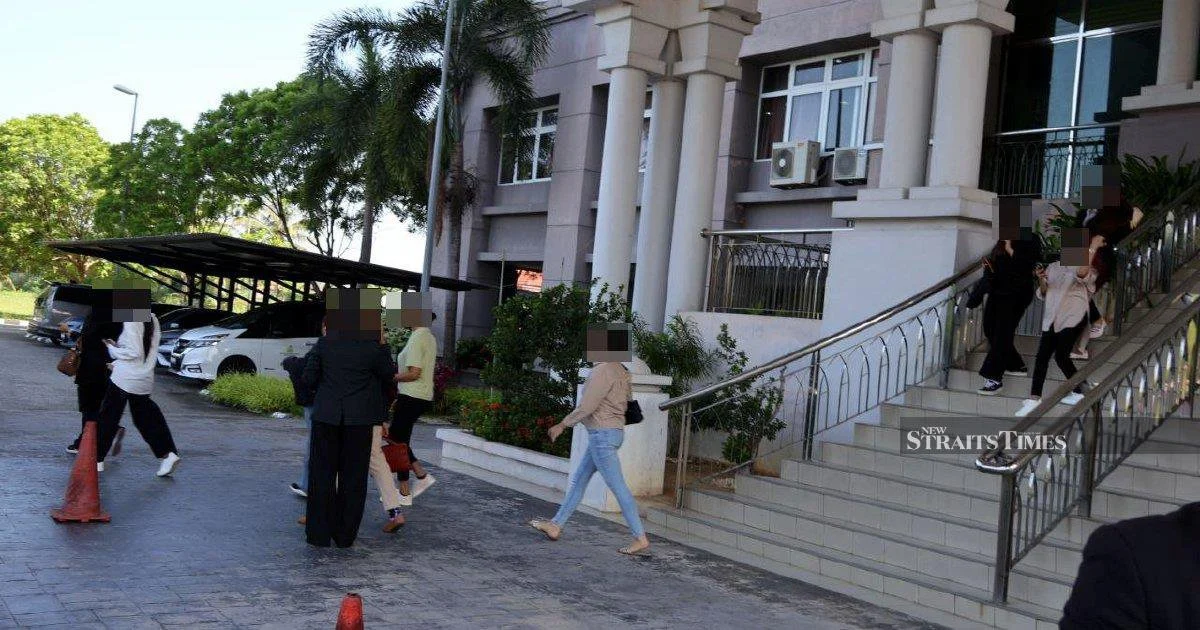
The Syariah Lower Court in Kota Baru has postponed proceedings against 14 men charged with dressing as women, marking another delay in a case that has drawn significant public attention to the intersection of personal conduct and Islamic law enforcement in Malaysia's northeastern state. The adjournment was announced during a hearing at the court where the accused were scheduled to face trial over allegations related to their appearance at a residential apartment located on Jalan Mahmood during 2023.
This development underscores the complexities facing Malaysia's dual legal system, where Syariah courts maintain jurisdiction over matters deemed to affect Islamic faith and morality under federal and state religious laws. The case highlights how interpretations of Islamic principles regarding gender presentation and public decorum remain contentious within Malaysian Muslim communities, even as the nation grapples with broader conversations about individual rights and religious obligations. For observers of Malaysian law, the proceedings represent a test case in how religious courts balance enforcement with contemporary understandings of personal identity and expression.
The incident that sparked the charges occurred at a private residential address, raising questions about the scope of Syariah court jurisdiction and whether conduct within private spaces should be subject to religious legal scrutiny. The apartment setting distinguishes this case from instances where alleged violations occur in public venues, potentially complicating questions about reasonable expectations of privacy and the proper boundaries of religious authority. Legal commentators have noted that such cases increasingly force courts to examine precedents established during Malaysia's earlier decades of religious administration.
Kelantan, as an Islamic-majority state administered under Pakatan Harapan-aligned leadership, has maintained conservative approaches to religious law enforcement compared to some other Malaysian states. The state's Syariah authorities have historically pursued cases involving conduct perceived to conflict with Islamic teachings, making this prosecution broadly consistent with local enforcement patterns. However, the sheer number of accused individuals in a single incident suggests either a particularly organised gathering or a deliberate enforcement action targeting the event.
The postponement signals that proceedings remain in preliminary stages, possibly pending further investigation, documentary evidence compilation, or legal submissions from defence counsel. Such delays are routine in complex cases involving multiple defendants, particularly when coordinating appearances and legal representation across numerous individuals becomes administratively burdensome. The extended timeline also provides opportunity for out-of-court negotiations or for public discourse to potentially influence the trajectory of the case.
Former law enforcement officials have suggested that Syariah court cases often experience extended timelines when they attract public scrutiny, as judicial officers take additional time to ensure decisions withstand potential appeals and criticism. The high-profile nature of this prosecution, with multiple defendants, has likely elevated internal procedural requirements beyond routine cross-dressing investigations. Furthermore, the involvement of so many individuals may necessitate careful consideration of whether all defendants warrant identical charges or whether differentiated culpability exists.
For the Malaysian LGBTQ+ community and civil rights advocates, the case represents an ongoing challenge to personal autonomy within the country's Islamic legal framework. While Malaysia does not criminalise homosexuality in secular law, Syariah courts maintain power to prosecute conduct deemed offensive to Islamic morality, creating a legal environment where LGBTQ+ individuals face potential prosecution under religious statutes. This case therefore carries implications extending beyond the immediate defendants to affect how LGBTQ+ Malaysians calculate personal safety and public presentation decisions.
The postponement also reflects logistical challenges inherent in managing mass prosecutions through Syariah court systems, which typically process individual cases rather than coordinating defence for large cohorts. Adequate legal representation, medical or psychological evidence if required, and scheduling constraints for witnesses and officials all contribute to extended timelines. Each delay, however, also prolongs uncertainty for the accused individuals, many of whom may face employment, family, and social consequences from the public nature of the charges.
This case occurs within Malaysia's broader context of variable religious law application across states, where Kelantan, Terengganu, and other states maintain particularly detailed Syariah codes addressing personal conduct. Neighbouring Selangor and Wilayah Persekutuan have experienced recent shifts toward more progressive religious leadership, creating a patchwork of enforcement intensity across the country. The Kelantan proceedings therefore also reflect state-level choices about how aggressively to police personal conduct under Islamic legal provisions.
As the trial continues to unfold through delayed hearings, the case will likely remain a focal point for discussions about the appropriate scope of religious legal authority in pluralistic Malaysia. Whether the eventual verdict results in convictions, acquittals, or judicial findings on the proper boundaries of Syariah jurisdiction, the proceedings will establish important precedent regarding how Malaysian courts interpret and apply provisions concerning Islamic morality and personal presentation. The postponement, while routine administratively, thus represents another chapter in Malaysia's ongoing negotiation between religious governance and individual liberty.

