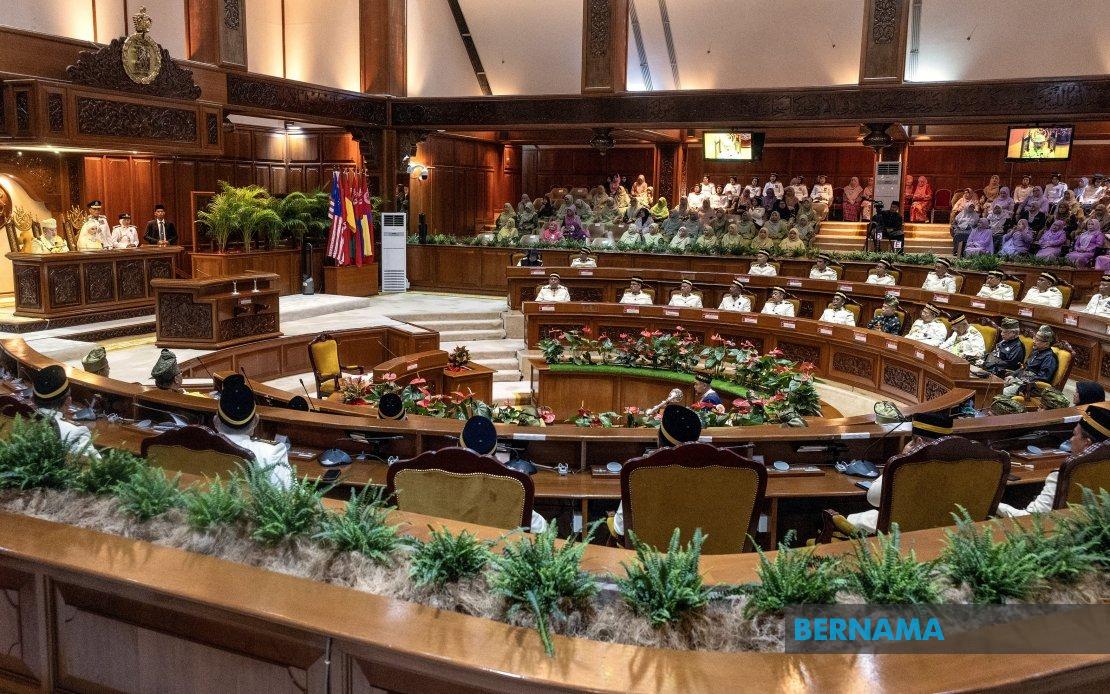
The Kelantan government is moving forward with legislative reform in the Syariah criminal law sphere, preparing to present the Syariah Offences (Kelantan) Bill 2026 to the State Legislative Assembly next Tuesday. This development directly addresses a significant constitutional setback the state experienced earlier this year when Malaysia's highest court struck down substantial portions of its existing Syariah legislation, creating a legal vacuum that the new bill aims to fill while respecting federal-state boundaries.
Deputy Menteri Besar Datuk Dr Mohamed Fadzli Hassan outlined the rationale for the legislative overhaul at a press conference following the State Executive Council's gathering in Kota Bharu. The proposed bill responds to the Federal Court's watershed decision on February 9, 2024, when an 8-1 majority declared 16 of 18 challenged provisions in the Kelantan Syariah Criminal Code (I) Enactment 2019 to be unconstitutional. That landmark judgment, stemming from a constitutional challenge filed by Kelantan lawyer Nik Elin Zurina Nik Abdul Rashid, fundamentally reshaped the legal landscape by establishing that the state assembly had overstepped its constitutional mandate by legislating on matters reserved for federal Parliament.
The February 2024 ruling reverberated across Malaysia's Islamic legal community, igniting passionate debate about the proper division of legislative authority between Putrajaya and the state capitals in Syariah criminal matters. The decision forced legal practitioners, religious scholars, and constitutional experts to grapple with the intricacies of Malaysia's unique federalism structure, where Syariah law is ostensibly a state matter yet constrained by federal constitutional provisions. Kelantan, home to one of the nation's most active Syariah legal systems, found itself at the centre of this contentious constitutional reckoning.
The development and refinement of the 2026 bill has been a methodical process extending since mid-2024, overseen by a specially constituted Committee for the Amendment of the Kelantan Syariah Criminal Code (I) Enactment 2019. This body brought together a diverse array of expertise—civil law specialists, Syariah legal scholars, university academics versed in constitutional matters, and experienced Syariah judicial officers. Such comprehensive representation reflects recognition that balancing religious principles with constitutional propriety demands contributions from multiple disciplines and perspectives, not merely from political or legal bureaucrats.
Crucially, the committee also engaged the Kelantan Council of Ulama, operating under the Kelantan Islamic Religious and Malay Customs Council (MAIK), to ensure the legislative framework aligns with Islamic jurisprudence and religious oversight structures. This consultation demonstrates an attempt to ground the new bill not merely in legal formalism but in the religious legitimacy that underpins Syariah systems in the Malaysian context. The involvement of senior Islamic scholars provides a buffer against claims that the state is weakening religious law simply to comply with constitutional limitations.
The bill's structure reflects careful architectural consideration. Comprising nine parts, 62 clauses, and a single schedule, it follows the constitutional principle of "pith and substance"—a doctrine requiring legislators to frame laws in terms of their true legislative purpose rather than their incidental effects. By adopting this approach, Kelantan's drafters have worked to construct offence definitions that emphasise religious obligations while remaining within the undisputed scope of state legislative authority. The insertion of several new and reformative provisions suggests the state is not simply trying to resurrect invalidated provisions but is reimagining its approach to Syariah criminal administration altogether.
The drafting process explicitly incorporated the Federal Court's detailed reasoning from the February judgment, indicating that rather than circumvent the court's findings, Kelantan's legal team is attempting to construct legislation that respects those grounds while continuing to serve religious enforcement objectives. This approach suggests a more conciliatory stance than might have been anticipated following such a robust judicial rebuff. By demonstrating responsiveness to the court's constitutional concerns, Kelantan positions itself as a mature participant in Malaysia's federal system rather than a defiant challenger.
For Malaysian observers of federalism and religious law, the Kelantan bill represents an important test case. The bill's reception and any further judicial scrutiny it may face will provide clarity on the outer boundaries of what state legislatures can accomplish in Syariah criminal matters. The outcome will influence whether other states contemplating similar revisions to their Syariah criminal codes can follow Kelantan's precedent or whether they must pursue alternative legislative strategies.
Deputy Menteri Besar Mohamed Fadzli's expression of confidence that all state assemblymen will support the measure reflects political unity around the project, though this consensus masks potentially complex trade-offs between ambitions for religious law enforcement and constitutional necessity. The coming week will reveal whether Kelantan's legislative approach successfully navigates these competing demands, and whether the measure can withstand scrutiny should it be challenged as previous iterations were.
The broader significance extends beyond Kelantan's borders. Malaysia's plural legal system, operating both secular and Syariah courts with overlapping jurisdictions, remains a source of tension and confusion for citizens and legal practitioners alike. How individual states navigate federal-state boundaries in designing their religious criminal codes will cumulatively shape whether this dual system functions coherently or continues generating inconsistency and litigation. Kelantan's experience may offer valuable lessons for other states seeking to maintain robust Islamic law while respecting constitutional limits—or it may demonstrate the intractable difficulties inherent in such an endeavour.

