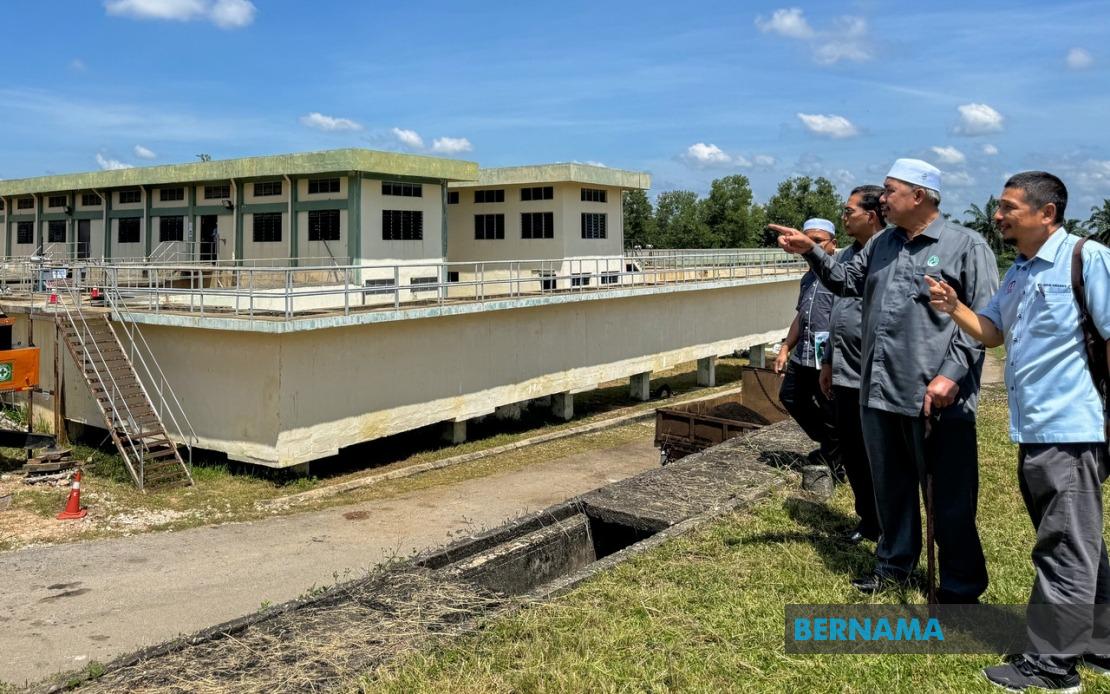
Kelantan residents across three districts will finally receive respite from chronic water shortages when a major infrastructure upgrade reaches completion next month. The Merbau Chondong Water Treatment Plant, situated in Machang, has undergone extensive modernisation work that will allow it to serve approximately 34,000 account holders in Machang, Pasir Puteh, and southern Kota Bharu with substantially more reliable water distribution from early September onwards. The RM11.5 million investment represents a significant commitment to addressing supply challenges that have plagued these communities for years.
The transformation of the facility's operational capacity marks a turning point in Kelantan's water infrastructure. Previously constrained to treating 45 million litres daily, the newly upgraded plant will deliver 80 million litres of treated water per day—a near doubling of output that will fundamentally reshape supply reliability across the affected areas. This expansion was not simply a matter of pushing existing equipment harder; rather, it required sophisticated technological intervention to maintain quality standards whilst increasing throughput dramatically. According to Kelantan Public Works, Infrastructure, Water and Rural Development Committee chairman Datuk Dr Izani Husin, previous operators faced a critical constraint where any attempt to boost production would compromise water quality—a limitation that has now been decisively overcome.
The technological heart of this upgrade centres on the introduction of advanced Xylem Underdrain Leopold filtration systems. These precision-engineered components enable the treatment facility to process between 70 million and nearly 90 million litres of raw water daily, creating operational headroom that was previously absent. More importantly, this enhanced filtration capacity has simultaneously improved the quality of treated water delivered to households. The turbidity level—measured using the Nephelometric Turbidity Unit scale—has been reduced from over 10 NTU to three NTU, a metric indicating substantially clearer, cleaner water reaching consumers' taps.
The project timeline appears on track for completion by the end of July, with distribution from the upgraded system commencing in early September. This phasing suggests authorities are prioritising careful commissioning and testing to ensure seamless transition to the new operating parameters. For residents who have endured irregular supply and quality concerns, the prospect of September bringing consistent, higher-quality water provision represents genuine cause for optimism. The completion of this phase signals that state authorities and Air Kelantan Sdn Bhd have successfully executed a complex infrastructure overhaul without the extended delays that sometimes plague such projects in Malaysia.
However, this upgrade represents only the beginning of a broader infrastructure transformation across Kelantan. State planners and Pengurusan Aset Air Berhad are advancing parallel plans for a new Machang 1 Water Treatment Plant, a RM120 million facility designed to handle 50 million litres daily and expected to become operational by 2030. This facility carries strategic significance beyond Machang itself; once operational, it will allow the existing Merbau Chondong capacity to be redirected toward other water-stressed districts across Kelantan, creating a more balanced distribution network throughout the state. The project remains in contractual finalisation stages between the state government and PAAB, with actual contractor appointment awaiting completion of administrative procedures.
The broader context of Kelantan's water challenges extends far beyond these three districts. Air Kelantan Sdn Bhd has been engaged in systematic resolution of supply issues across the state, having already addressed approximately 70 percent of water supply problems affecting 270,000 user accounts statewide. This represents substantial progress, yet the organisation has set an even more ambitious target: achieving at least 90 percent resolution of all identified water supply issues by 2035. This decade-long commitment suggests authorities recognise that water infrastructure challenges in Kelantan are neither simple nor quickly remedied, requiring sustained investment and strategic planning across multiple project cycles.
For Malaysian readers, this Kelantan initiative offers important lessons about the complexities of modernising water infrastructure in developing regions. The upgrade demonstrates that technological solutions exist for capacity constraints, but their deployment requires substantial capital investment that smaller states must pursue through partnerships with federal agencies and specialist infrastructure operators. The combination of immediate relief through the upgraded Merbau Chondong plant alongside longer-term strategic expansion through planned new facilities suggests a maturing approach to infrastructure planning that balances urgent needs against sustainable long-term solutions.
The economic implications deserve consideration as well. Reliable water supply directly influences industrial investment and economic development prospects. Manufacturing facilities and agricultural operations cannot confidently establish operations in regions with unpredictable water availability. By demonstrating commitment to resolving these infrastructure gaps, Kelantan creates a more attractive investment climate for businesses seeking to expand operations beyond the Klang Valley and northern Selangor. The ripple effects of improved water security extend well beyond domestic consumption into the broader development aspirations of the state.
Regional water security represents an increasingly critical issue across Southeast Asia as populations grow and industrial demand escalates. Kelantan's infrastructure challenges reflect pressures felt throughout the region, making the outcomes of these projects instructive for neighbouring jurisdictions. The successful deployment of advanced filtration technology in a Malaysian context provides practical demonstrations that modern water treatment solutions can be effectively implemented within regional operating environments and economic parameters. As climate variability threatens precipitation patterns across Southeast Asia, infrastructure resilience becomes ever more valuable.
For the 34,000 account holders in Machang, Pasir Puteh, and southern Kota Bharu eagerly anticipating September's supply improvements, this upgrade concludes a frustrating chapter of inadequate water availability. The completion of the Merbau Chondong modernisation project, coupled with transparent timelines for the forthcoming Machang facility and broader state-wide resolution targets, suggests that Kelantan's water infrastructure is finally entering a period of genuine, sustained improvement. Whether the ambitious 90 percent resolution target by 2035 ultimately materialises will depend on continued political commitment and sustained funding, but current momentum suggests genuine progress is underway.

