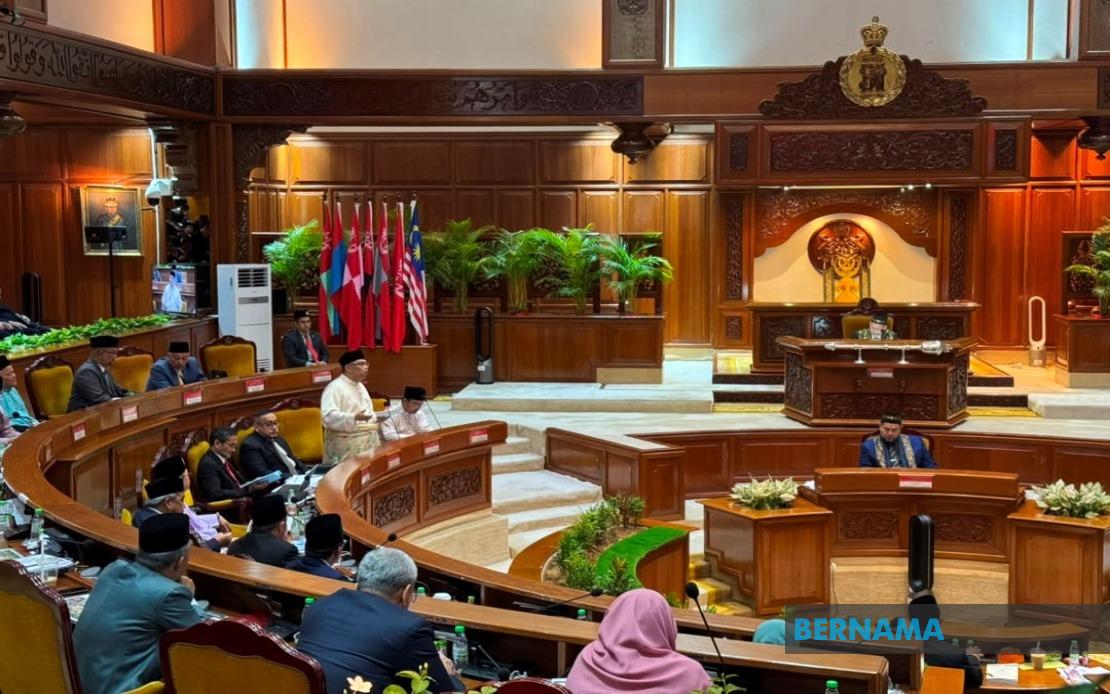
The Kelantan State Legislative Assembly has unanimously approved the Syariah Criminal Offences (Kelantan) Bill 2026, marking a significant overhaul of the state's Islamic criminal legal framework. The comprehensive legislation, which encompasses nine parts and 62 clauses alongside a schedule, represents an attempt to modernise and systematise the state's approach to Syariah law enforcement while introducing progressive mechanisms alongside stricter penalties for specific offences.
Deputy Menteri Besar Datuk Dr Mohamed Fadzli Hassan outlined three pillars anchoring the reform package. The first involves restorative sentencing, a community-focused alternative to purely punitive measures. Under this framework, individuals convicted of certain offences will undertake community service as an alternative penalty, with a mandatory completion period of one year. This approach reflects growing international recognition that rehabilitation and community reintegration can effectively address lower-level Syariah violations while reducing custodial costs and social disruption.
The Bill introduces compoundable offences—violations that can be settled outside the courts through agreed compensation or restitution mechanisms. The Sultan of Kelantan will retain authority to determine which offences fall within this category, along with the procedures and documentation requirements governing such settlements. This discretionary approach allows flexibility in addressing disputes while potentially reducing courtroom congestion and providing victims with faster resolution pathways.
A third major component involves substantially elevated punishment rates, with whipping designated as the primary sanction for serious infractions. The legislation specifically targets offences deemed harmful to Islamic values and social cohesion, including attempted apostasy, parental neglect of children's religious upbringing, violations of modesty requirements, consumption of intoxicating substances, gambling, illicit sexual relations, and out-of-wedlock pregnancies. These enhanced penalties signal Kelantan's determination to enforce stricter compliance with Islamic conduct standards.
The Bill introduces six entirely new criminal provisions, expanding the scope of prosecutable conduct. Clause 10 criminalises the deliberate neglect or abandonment of obligatory prayers, establishing a statutory duty for Muslims to maintain daily worship obligations. Clauses 15 and 16 introduce offences related to safeguarding of private parts and broader bodily modesty respectively, codifying standards previously addressed through general provisions. Clause 33 establishes protection of intellectual integrity by prohibiting exposure to corrupting influences, while Clauses 59 and 60 operationalise the compounding mechanism by formalising procedures and granting relevant authorities settlement powers.
Significantly, the legislation repeals and restructures previous Syariah criminal frameworks. Section 11 of the 2019 Kelantan Syariah Criminal Code Enactment addressing places of worship desecration has been replaced by Clause 12, which reframes the offence specifically as disturbance of Muslim prayer locations. This refinement narrows focus to acts directly interfering with Muslim religious practice rather than broader destruction concepts. Section 14 of the 2019 enactment concerning sodomy has been entirely removed, replaced by Clauses 15 and 16 addressing the broader obligation to guard modesty and bodily integrity. This reformulation potentially provides prosecutors with expanded definitional scope while maintaining the underlying prohibition.
For Malaysian federalism observers, Kelantan's legislative autonomy in Syariah matters reflects constitutional arrangements allocating Islamic law jurisdiction to state governments. However, the Bill's comprehensiveness and severity raise questions about consistency across Malaysia's 14 Syariah jurisdictions. States pursuing divergent approaches to similar conduct creates potential complications for interstate commerce, labour mobility, and public perception of fairness. Kelantan's emphasis on restorative mechanisms alongside enhanced penalties suggests attempts to balance traditionalist values with contemporary criminal justice philosophy.
The restorative sentencing framework warrants particular attention from Southeast Asian legal scholars. Rather than exclusively pursuing retribution, the approach acknowledges that community reintegration and victim-offender reconciliation may serve broader social interests than custodial punishment. This contrasts sharply with purely punitive models, positioning Kelantan within global movements toward rehabilitative justice while maintaining religious law's prescriptive character. The one-year completion deadline provides structured timelines preventing indefinite community service arrangements.
For businesses and individuals operating in Kelantan, the Bill introduces legal uncertainties pending publication of comprehensive regulations detailing compoundable offences and settlement procedures. Organizations employing workers across Malaysia must navigate this additional compliance layer, particularly regarding conduct standards and disciplinary protocols. The criminalisation of prayer neglect, while primarily targeting individual conduct, may have workplace implications if employers face indirect liability for employees' religious observance failures during working hours.
The legislative approach also reflects theological positioning within Malaysia's Islamic jurisprudential spectrum. Emphasizing obligatory prayer enforcement, modesty standards, and intellectual protection suggests reliance on maqasid al-Shariah (objectives of Islamic law) focusing on deen (faith), aql (intellect), and ird (honour). This interpretive framework provides broader definitional flexibility than purely textualist approaches, enabling legislators to address contemporary issues through principles-based reasoning rather than literal prohibition lists.
Implementation challenges lie ahead as enforcement agencies interpret new provisions and develop administrative protocols. The Sultan's delegated authority to determine compoundable offence categories through gazette publications creates administrative flexibility but requires clear guidance documentation preventing arbitrary application. Training programmes must equip Syariah enforcement officials with restorative justice principles and assessment capabilities, representing significant institutional development requirements.
The Bill's unanimous passage through the state assembly suggests cross-party consensus around Islamic law modernisation in Kelantan, though this masks potential divergences regarding implementation priorities. Different political constituencies may emphasize either restorative mechanisms appealing to progressive stakeholders or enhanced penalties attracting conservative voters, creating tension during execution phases. Monitoring how enforcement priorities evolve over the initial implementation period will reveal which reform elements gain practical traction versus remaining nominally available but underutilised.
As Kelantan implements this comprehensive framework, other Malaysian states and Islamic law specialists will scrutinise outcomes, particularly regarding recidivism rates among offenders undergoing restorative sentencing, compounding settlement success rates, and public perception of fairness. Successful implementation could establish models influencing other jurisdictions' legislative development, while significant problems might prompt reconsideration of particular provisions. The Bill represents contemporary Islamic jurisprudence in practice, balancing enforcement rigour with rehabilitation philosophy within Malaysia's plural legal ecosystem.

