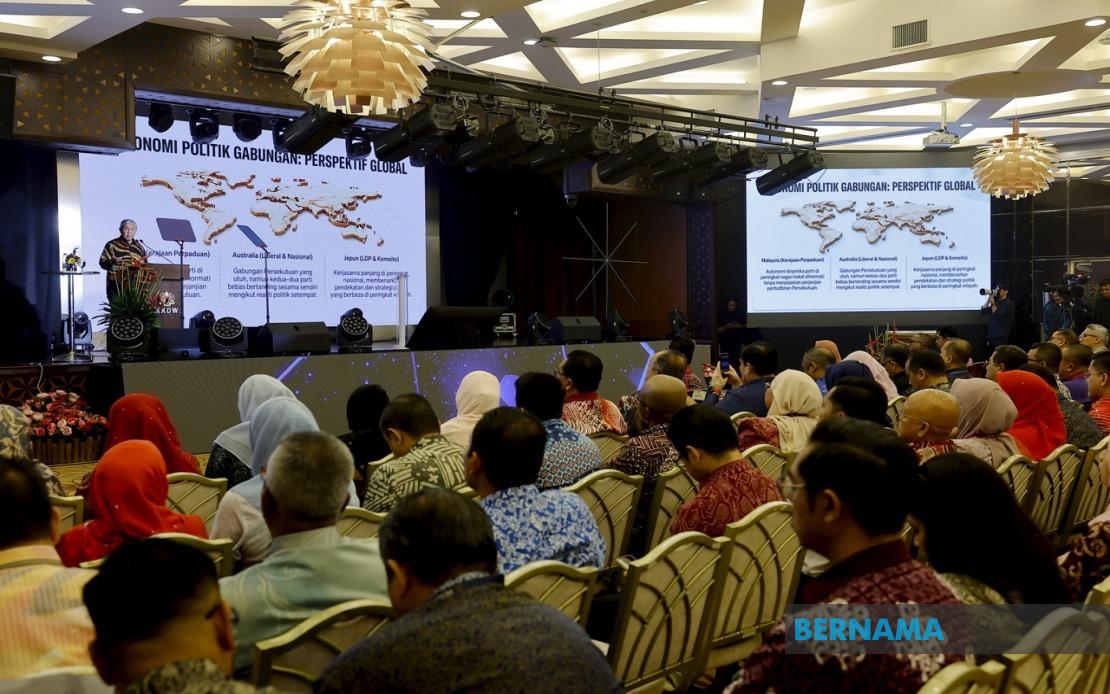
The Community Development Department (KEMAS) has unveiled an ambitious expansion roadmap for special needs education in Malaysia, with Deputy Prime Minister Datuk Seri Dr Ahmad Zahid Hamidi announcing plans to establish a Tabika Tunas Istimewa programme in every district by 2027. The initiative represents a significant commitment to early childhood education for children with special requirements, addressing a critical gap in accessible services across the nation's rural and urban communities.
The expansion strategy is deliberately structured to make quality early education inclusive and affordable. Currently operating 19 kindergarten classes, KEMAS aims to add 132 additional classes through a combination of new facility openings and infrastructure upgrades. This phased growth represents more than a seven-fold increase in capacity, positioning special needs early education as a priority within the government's broader rural development agenda. The organisation has committed to keeping tuition fees at RM100 per month, ensuring that families regardless of income level can access these specialised services for their children.
Ahmad Zahid, who doubles as Rural and Regional Development Minister, framed the expansion within the government's wider philosophy on measuring developmental success. He emphasised that public policy should ultimately be judged not by spending figures or programme announcements, but by tangible improvements in citizens' quality of life. This perspective reflects a shift towards outcome-oriented governance, where infrastructure and services are evaluated based on their actual impact on affected communities rather than merely their existence.
The special needs kindergarten programme aligns with an emerging recognition across Southeast Asia that early intervention and specialised childhood education yield significant long-term benefits for children with developmental challenges. By establishing district-level access, KEMAS aims to eliminate geographic barriers that often force families in remote areas to travel extensively or forgo services entirely. This localisation strategy proves particularly relevant for Malaysia, where population distribution varies dramatically between urban centres and dispersed rural settlements.
Beyond the kindergarten initiative, Ahmad Zahid outlined a broader strategy to enhance rural economic productivity through asset optimisation. All Regional Development Authorities (LKW) have been tasked with achieving a Return on Assets target of four to six per cent, a directive that signals the government's intent to transform idle or underutilised public assets into income-generating resources. To operationalise this objective, LKWs must develop detailed Asset Activation Plans within 100 days, creating accountability mechanisms to ensure government property serves productive purposes and generates returns benefiting rural communities.
This asset-focused approach reflects growing budgetary pressures facing government agencies across the region, where maximising returns on existing investments has become as important as securing new funding. By setting specific financial performance metrics, the government signals that rural development authorities must operate with greater operational discipline and entrepreneurial mindset. The directive essentially converts public land and infrastructure from being treated as static assets into dynamic economic tools.
Parallel to these institutional reforms, the Rural Economic Council Executive Committee (MEXCLUB) has launched initiatives to strengthen village-level cooperatives, recognising them as critical conduits for grassroots economic development. The newly established task force targeting cooperative governance, branding strategies, market access, and strategic networking represents a holistic approach to cooperative development. Rather than simply providing capital subsidies, this intervention targets the institutional capacity and commercial sophistication that often distinguishes successful cooperatives from struggling ones.
The Sustainable Village Programme task force addresses structural weaknesses frequently identified in cooperative performance across Malaysia and the broader region. Many cooperatives struggle not from lack of members or initial capital, but from inadequate management systems, limited market knowledge, and insufficient strategic networks connecting them to value chain opportunities. By concentrating support on governance structures and market linkages, the government targets root causes of cooperative underperformance rather than symptoms.
For Malaysian readers and policymakers, these announcements signal a recalibration of rural development philosophy toward greater specificity and measurability. The emphasis on district-level special needs education infrastructure, quantified asset return targets, and cooperative capability building suggests the government is moving beyond broad development rhetoric toward implementation frameworks with defined timelines and performance indicators. This granularity enables tracking progress and assigning accountability in ways that general development pledges do not.
The special needs kindergarten expansion carries particular significance for Malaysian families with disabled children, many of whom currently lack accessible early intervention services outside major urban areas. Early childhood intervention during the critical zero-to-five development window significantly improves long-term developmental outcomes, educational attainment, and employment prospects. By establishing universal district-level access by 2027, KEMAS potentially addresses one of Malaysia's most underserved segments in the early childhood education landscape.
These initiatives also reflect broader regional trends emphasising inclusive development and rural transformation. As Southeast Asian economies increasingly compete for skilled workers and productive capacity, investing in early childhood development and rural economic dynamism becomes strategically important. Malaysia's commitment to expanding special needs education aligns with international best practices in inclusive development while addressing domestic inequality in service access between urban and rural areas.

