The Ministry of Human Resources (KESUMA) has unveiled a comprehensive response to labour market disruptions caused by ongoing global supply chain instability, committing to retrain displaced workers through Technical and Vocational Education and Training (TVET) programmes. Minister Datuk Seri R. Ramanan announced the initiative during an event in Johor Bahru on June 23, signalling the government's proactive approach to mitigating economic fallout from international logistics challenges that have rattled Malaysian industries for over two years.
Workers losing employment due to supply chain pressures—particularly those in services, manufacturing, and construction sectors—will gain access to structured upskilling and reskilling pathways designed to facilitate transition into new roles. The strategy reflects recognition that vulnerable workers in labour-intensive industries face heightened risk from structural economic shifts beyond their control. By targeting these three sectors, KESUMA acknowledges where supply chain vulnerabilities have hit hardest, given Malaysia's deep integration into global manufacturing networks and the construction sector's reliance on imported materials and equipment.
The employment support architecture leverages the Social Security Organisation's (PERKESO) MYFutureJobs platform, which functions as a job-matching mechanism. Rather than simply providing training certificates, the approach incorporates placement guidance to ensure workers transition into positions aligned with their skills and background. Ramanan emphasized that placements would be assessed for suitability, indicating an attempt to move beyond generic retraining toward thoughtful career repositioning. This dual emphasis—on both skill development and meaningful employment matching—addresses a persistent criticism of previous retraining efforts that sometimes left graduates without clear pathways to stable work.
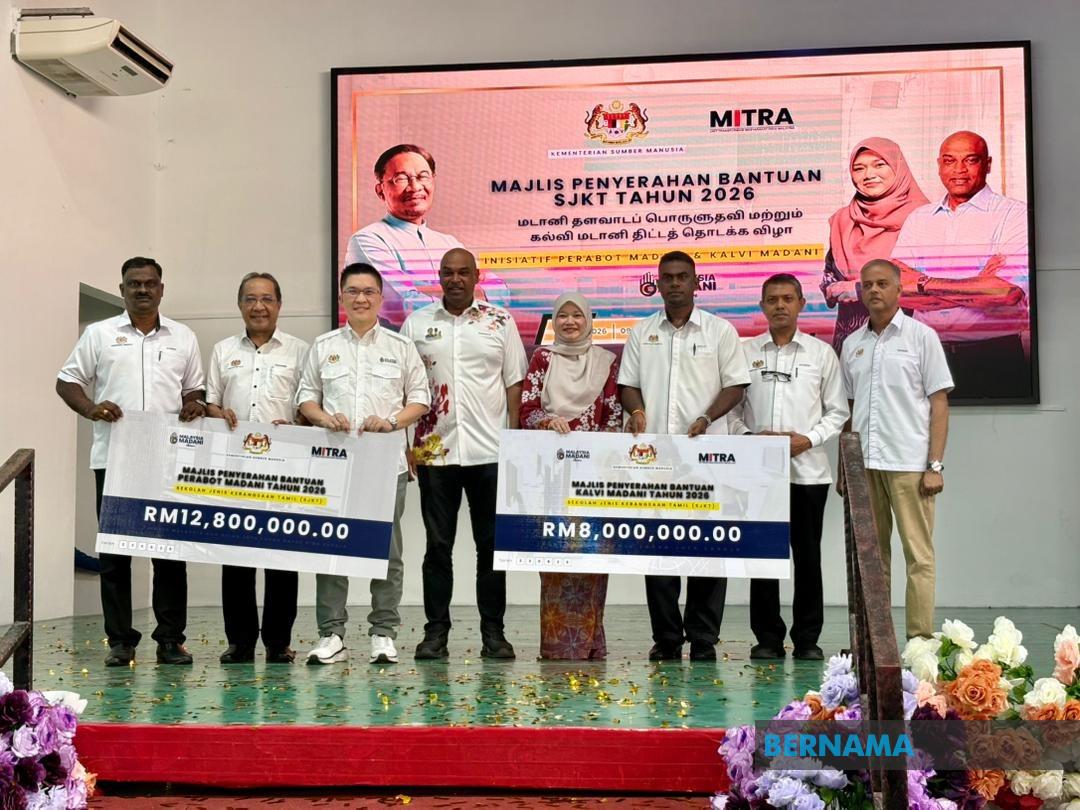
Beyond the supply chain response, KESUMA announced significant investments in Tamil vernacular education infrastructure through two concurrent programmes launched at Sekolah Jenis Kebangsaan Tamil (SJKT) Yahya Awal. The MADANI Furniture Initiative represents a RM12.8 million commitment to equip 361 government-aided Tamil schools with essential classroom infrastructure. This initiative will benefit 39,692 pupils and 5,290 teachers, directly addressing long-standing disparities in educational resources across Malaysia's vernacular school system.
Furniture and equipment supplied under the MADANI initiative—including desks, chairs, storage cabinets, and cooling fans—will be distributed progressively between June and August. The deliberate phasing suggests coordination with school calendars and logistics considerations. Such infrastructure improvements carry tangible educational impact; adequate seating and workspace directly influence learning outcomes and student comfort, particularly in Malaysia's warm climate where inadequate ventilation compromises classroom effectiveness. For Tamil vernacular schools, which historically have received comparatively fewer capital allocations, this represents a meaningful step toward resource equity.
The companion programme, KALVI MADANI, deploys RM8 million across 315 selected Tamil schools to support nearly 10,410 Indian pupils through multifaceted assistance. This scheme transcends traditional educational support by bundling free tuition classes with nutritional provision, learning devices, and materials—recognizing that academic achievement depends on addressing non-academic barriers. The inclusion of nutritional support acknowledges food insecurity's role in educational outcomes, while device provision helps bridge digital divides that intensified during pandemic-related schooling disruptions.
Teacher welfare initiatives embedded within KALVI MADANI signal recognition that educational quality depends substantially on educator capacity and motivation. Tamil vernacular school teachers frequently work in under-resourced settings with limited professional development opportunities. By prioritizing teacher welfare alongside student support, the programme attempts to address retention and morale challenges that undermine educational consistency.
The timing of these announcements—during a period of elevated economic uncertainty from supply chain disruptions—reflects a broader policy strategy combining immediate labour market interventions with longer-term educational investments. For Malaysian workers in vulnerable sectors, TVET opportunities provide agency during uncertain times. For Tamil-medium students, infrastructure and support improvements address historical equity gaps while signalling government commitment to Malaysia's multilingual educational ecosystem.
These initiatives carry implications beyond immediate beneficiaries. Workers successfully reskilled through TVET programmes could model viable career transitions that encourage others facing displacement to pursue retraining rather than exiting the workforce entirely. Similarly, strengthened Tamil vernacular schools support linguistic and cultural diversity while building human capital within Indian Malaysian communities, contributing to broader social cohesion.
The supply chain crisis, while economically disruptive, presents an opportunity for deliberate workforce evolution. Malaysia's competitiveness increasingly depends on human capital adaptability rather than low-cost manufacturing dominance. By coupling immediate retraining with job-matching support, KESUMA positions displaced workers not as permanent casualties but as participants in necessary economic transition. Whether these programmes reach sufficient scale and maintain quality implementation will determine whether they substantially mitigate displacement or function primarily as symbolic gestures. Monitoring programme completion rates, job placement outcomes, and wage trajectories for participants will be essential for assessing genuine impact on worker livelihoods and labour market resilience.