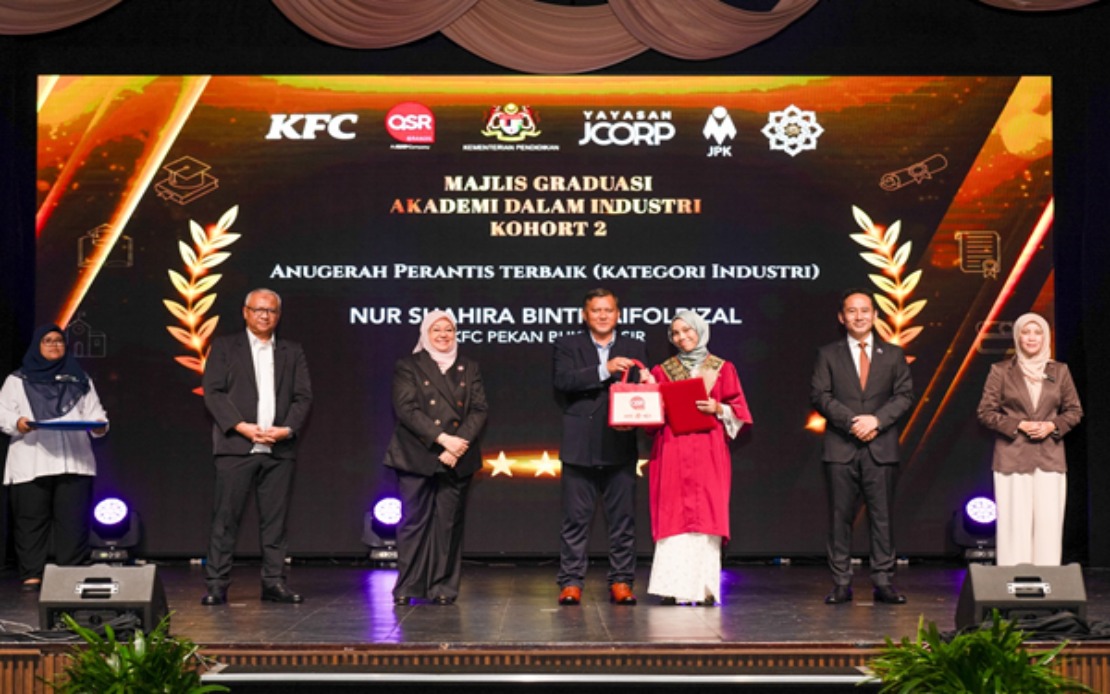
QSR Brands, operating KFC Malaysia, has produced another batch of 37 qualified graduates through its partnership with Yayasan JCorp, marking significant progress in Malaysia's push to bridge the gap between education and industry employment. This latest cohort completes a vocational pathway designed to equip young Malaysians with market-ready skills in the quick-service restaurant sector, demonstrating how corporate initiatives can complement government-led technical and vocational education efforts.
The Apprenticeship Dual Intake (ADI) programme, which kicked off in June 2023, represents a pioneering collaboration between KFC Malaysia, the Department of Skills Development under the Ministry of Human Resources, and the Ministry of Education. By combining classroom-based vocational instruction with hands-on experience in actual restaurant environments, the scheme offers participants a comprehensive introduction to food preparation, service operations, and customer engagement. The model addresses a persistent challenge in Malaysia's workforce development: the disconnect between what students learn in institutions and what employers actually require on their shop floors.
The second cohort's achievements underscore the programme's effectiveness in producing job-ready personnel. All 37 graduates achieved a perfect pass rate in Vocational Stream Subjects (MPAK) and in both the Malaysian Skills Certificate (SKM) Level 2 and Level 3 examinations. Additionally, 95 percent of the cohort passed the Sijil Pelajaran Malaysia (SPM) examination, indicating that the dual focus on vocational and academic credentials does not compromise either pathway. Each graduate left with five formal qualifications: the Vocational SPM, SKM Level 2, SKM Level 3, a programme completion certificate, and a certificate of appreciation from QSR Brands.
Ministry of Education Technical and Vocational Education and Training (TVET) director Zulkernai Fauzi has positioned the ADI model as a benchmark for closer integration between industry and educational institutions. His remarks indicate government enthusiasm for expanding similar programmes across other sectors. The logic is straightforward: students obtain recognised certifications while simultaneously gaining genuine workplace exposure, equipping them with both paper qualifications and practical competencies that make them immediately useful to employers. This dual-outcome approach aligns with Malaysia's broader skills development strategy and addresses employer complaints about fresh graduates lacking industry awareness.
The programme's scope extends beyond simple on-the-job training. Participants undergo structured exposure to restaurant operations, customer service protocols, food preparation techniques, and workplace compliance standards. Training takes place at KFC outlets in Johor Bahru, where students master the vocational syllabus for Fast Food Preparation and Service. This immersion in a commercial environment means that graduates understand not merely technical skills but also the organisational context in which those skills operate—the pressure of service times, quality consistency, team coordination, and customer expectations. Such contextual learning is difficult to replicate in a classroom setting.
When combined with the earlier inaugural cohort of 23 students who completed their industrial training in March 2025, the programme has now produced a total of 60 graduates since its 2023 launch. This cumulative figure, while modest in scale, demonstrates proof of concept. For a pilot initiative in Malaysia's quick-service restaurant sector, reaching 60 graduates in roughly two years suggests the model is sustainable and could serve as a template for expansion. The consistent success rates across both cohorts, with near-perfect examination performance, also suggest that the programme design itself is sound and replicable.
Dr Sharifah Musainah Syed Alwi, chief human resources officer at QSR Brands, emphasised that the programme's value transcends mere credential acquisition. She stressed that the graduates have undergone genuine training in actual restaurant environments, managed real operational challenges, and mastered industry-recognised skills. This distinction matters for Malaysian employers increasingly skeptical of paper qualifications without substance. For QSR Brands and other participating companies, the ADI scheme also represents a talent pipeline; successful graduates are potential permanent hires who already understand company culture and operational expectations.
Yayasan JCorp chairman Rozaini Mohd Sani highlighted the programme's broader social dimension: it opens pathways for young people regardless of background to build self-confidence and acquire practical skills. This equity angle is significant for Malaysia, where vocational education has historically carried lower social prestige than academic routes, potentially limiting access to talented students from disadvantaged circumstances. By demonstrating that vocational pathways lead to genuine employment and respectability, such programmes can help normalise technical careers and broaden workforce participation.
The recognition of outstanding student achievements through awards for Best Apprentice (Industry Category), Best Apprentice (SPM Category), and Best Apprenticeship Documentation further incentivises excellence within the cohort. Such recognition mechanisms, often overlooked in larger education systems, can motivate participants and signal to employers that individual capability varies within any group. For ambitious young workers, the prospect of earning an award and potential preferential employment consideration adds motivation beyond the baseline qualification.
From a Southeast Asian perspective, the ADI model offers lessons for regional peers grappling with youth unemployment and skills mismatches. Thailand, Vietnam, and Indonesia face similar challenges of vocational education perceived as inferior to academic pathways and graduates lacking industry relevance. Malaysia's experience with QSR Brands and Yayasan JCorp suggests that corporate-education partnerships, when structured with genuine commitment from both sides and clear competency frameworks, can succeed. However, scaling such initiatives requires sustained corporate participation beyond pilot phases and, ideally, government incentives that lower the cost burden for companies.
Looking forward, the ADI programme's expansion will likely depend on several factors. First, whether other major employers in food service and beyond embrace similar models; second, whether government support includes subsidies or tax incentives; and third, whether graduates secure stable employment and earn competitive wages that justify their time investment. Early indicators are positive, with the Ministry of Education director already advocating for broader uptake. For Malaysia's ambitions to upgrade its workforce and position itself as a regional knowledge economy, such industry-education bridges remain essential infrastructure.

