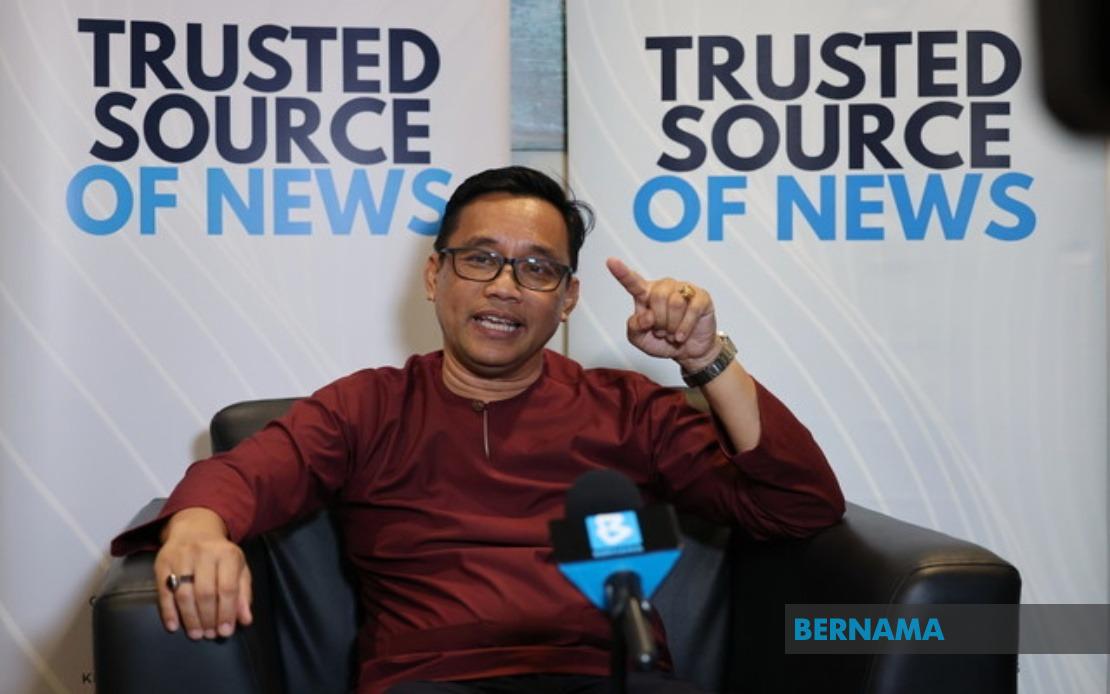
Mohd Khuzzan Abu Bakar is staging a political comeback in the Semerah state constituency after Pakatan Harapan's defeat in the 2020 Johor state election, positioning his candidacy not as an attempt to overturn a previous loss but as a commitment to resume development work that stalled when the coalition exited state government. The 58-year-old former Johor Youth, Sports, Culture and Heritage Committee chairman argues that PH's tenure from 2018 to 2020 left several critical initiatives incomplete, and securing the Semerah mandate would allow him to translate these unfinished plans into tangible results for residents.
Among Khuzzan's stated priorities is the restoration and completion of the Taman Sri Sulong Youth Mini Complex, a project that fell dormant following the change in government. Beyond recreational facilities, he has identified infrastructure deficiencies that continue to affect the broader Semerah area and surrounding communities. Water supply challenges in Semerah and recurring flash flood problems in Batu Pahat and Tanjung Laboh represent persistent grievances that Khuzzan contends require sustained political attention and resource allocation to resolve definitively rather than through temporary measures.
Khuzzan's personal connection to the constituency forms a foundation for his campaign narrative. Born in Jalan Mesjid, Batu Pahat, and married to a woman from Semerah, he frames his electoral bid as rooted in genuine community ties rather than opportunistic political maneuvering. This biographical alignment with the electorate underscores his argument that representation demands accountability to one's own neighbours and family networks, creating what he portrays as an inherent motivation to deliver on commitments made during the campaign.
Employment generation for younger residents constitutes another central element of Khuzzan's platform, reflecting broader economic shifts in Johor driven by foreign and domestic investment in technology and capital-intensive sectors. His previous banking career provides the technical background through which he articulates policy positions on economic development, positioning himself as capable of navigating the financial structures through which government support reaches entrepreneurs and workers. This emphasis on youth employment resonates with Semerah's demographic composition: according to Election Commission data, approximately 37.4 per cent of the constituency's 47,431 registered voters fall between 18 and 39 years of age, representing a substantial cohort whose economic futures will shape electoral outcomes in subsequent contests.
Khuzzan's campaign strategy reveals how Malaysian electoral politics have evolved beyond traditional door-to-door canvassing and public rallies. His deployment of social media platforms including TikTok, Instagram and Threads reflects recognition that information consumption patterns have shifted across age groups, with older voters increasingly accessing content through channels once thought the exclusive domain of younger demographics. This diversification of campaign reach allows candidates to tailor messaging to distinct voter segments while maintaining consistent core narratives about development priorities and policy direction.
Grassroots youth engagement initiatives, including competitions in e-sports, sepak takraw and carrom alongside technology literacy programmes focused on artificial intelligence, represent attempts to build political affinity by offering tangible activities rather than abstract policy speeches. These events simultaneously serve developmental purposes by exposing younger voters to technological competencies increasingly demanded by employers, while creating informal settings where political communication occurs through shared experience rather than formal presentations. The integration of skills training into campaign activities blurs boundaries between electoral outreach and community development.
Khuzzan's specific proposals regarding small and medium enterprise support address a structural challenge affecting Malaysia's SME sector: access to financing through programmes such as TEKUN Nasional and Amanah Ikhtiar Malaysia (AIM) remains constrained by entrepreneurs' limited financial literacy and weak business planning capacities. His advocacy for pairing capital access with structured financial management guidance acknowledges that capital alone proves insufficient without accompanying technical support, a gap that many successful economies address through government-subsidized consultancy services. This policy prescription, rooted in his banking background, positions economic development as requiring institutional capacity-building alongside fund provision.
The political context surrounding this election differs materially from the 2022 Johor state polls, which occurred during the country's immediate post-pandemic recovery when economic uncertainty and public health concerns dominated public discourse. The intervening years have clarified economic trajectories and consumer confidence patterns, potentially shifting voter priorities toward longer-term development vision rather than crisis management. Khuzzan anticipates this shifted terrain will generate stronger voter participation, particularly among Johoreans working across the causeway in Singapore who maintain electoral stakes in their home constituencies, representing a dispersed electorate whose engagement requires deliberate campaign outreach strategies.
Outreach to the B40 income group and e-Kasih programme recipients forms another component of Khuzzan's campaign emphasis, reflecting PH's broader electoral coalition strategy targeting lower-income voters concerned with subsidy preservation and social safety nets. These constituencies experienced disruption during the 2020 transition when government programmes underwent administrative changes and budget reallocations, creating grievances that opposition parties can exploit through promises to restore or enhance benefits. Khuzzan's reported positive reception among these groups suggests PH's previous tenure may have generated sufficient goodwill to overcome the passage of four years since the coalition's departure from Johor governance.
The broader Johor 16th state election environment features 172 candidates competing for 56 seats, with polling scheduled for July 11 and early voting on July 7, creating an intensely contested environment where individual constituency outcomes depend partly on broader state-level momentum. Semerah's previous result in 2022 saw Barisan Nasional's Mohd Fared Mohd Khalid secure the seat with a majority of 4,041 votes, a margin substantial enough to demand significant voter realignment for PH to reclaim the constituency. Khuzzan's task requires not merely mobilizing PH supporters but persuading a meaningful segment of the 2022 BN voters to abandon their previous choice, a conversion process demanding both compelling promises regarding future development and effective narrative reframing of past performance.
The election represents a critical juncture for Pakatan Harapan's capacity to rebuild state-level political presence following its 2020 collapse in Johor, where internal contradictions and leadership conflicts fractured the coalition's unity. Khuzzan's candidacy in Semerah forms part of a larger PH effort to recover ground lost during that period, with the party's performance across the 56 contested seats determining whether it achieves government formation or returns to opposition status. Individual candidates like Khuzzan therefore carry significance extending beyond their specific constituencies, functioning as frontline representatives of the broader coalition's electoral viability and governance credentials.

