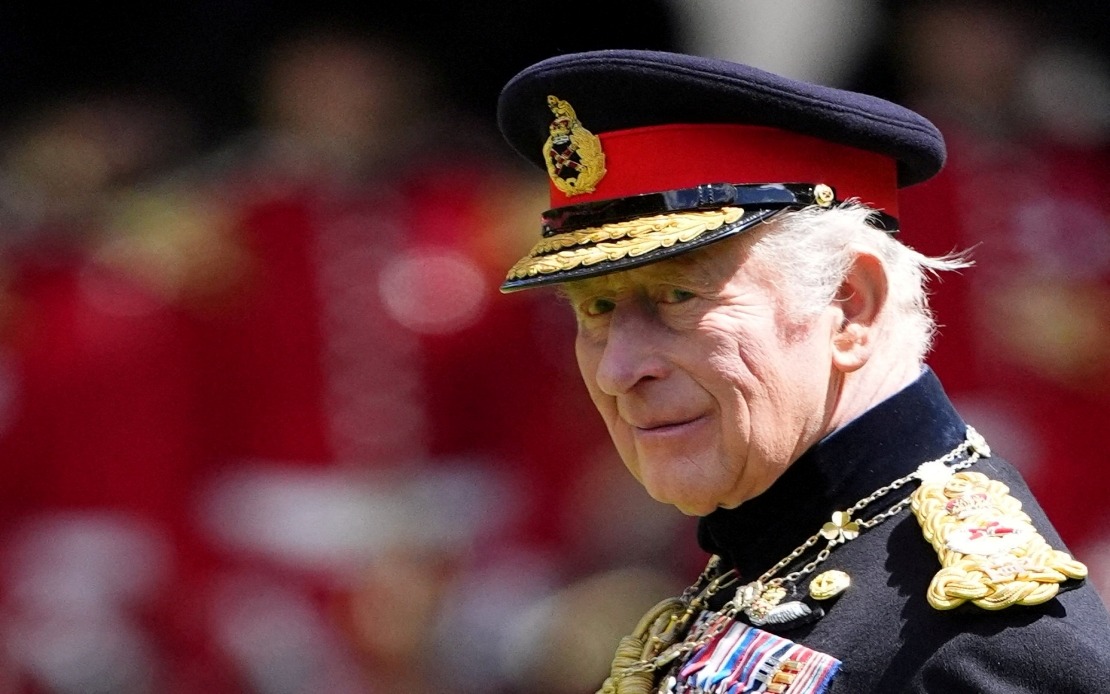
In a significant break with centuries of royal convention, King Charles III has become the first reigning British sovereign to publicly declare his personal income tax contributions. Buckingham Palace confirmed Thursday that the monarch paid £12.9 million in personal taxes during the 2024-2025 fiscal year, marking an unprecedented level of financial transparency at the highest echelons of the British establishment. The disclosure represents a watershed moment in the history of the monarchy, fundamentally shifting public discourse around royal accountability and institutional openness in an era of heightened scrutiny of inherited privilege and state funding of public institutions.
The revelation follows Buckingham Palace's release of a comprehensive financial statement detailing the various revenue streams supporting the Royal Household. The figures show that King Charles III has now paid over £30 million in personal taxes since his accession to the throne in September 2022, continuing a practice he initiated voluntarily during his decades as Prince of Wales. For the preceding 2023-2024 tax year, royal finances records indicate he paid £11.7 million, demonstrating consistent tax contributions since assuming the crown.
What makes this disclosure particularly notable is the legal context surrounding royal taxation. Unlike ordinary British citizens, the sovereign occupies a unique constitutional position and is not formally obligated to pay income tax, capital gains tax, or inheritance tax. However, beginning in the 1990s, the monarchy established voluntary tax arrangements that have persisted through successive reigns. King Charles III's decision to extend this transparency by publicly releasing his personal tax figures represents a deliberate choice to align the institution with contemporary expectations of institutional accountability, rather than an exercise of legal compulsion.
The monarch's personal income streams merit examination for Malaysian and Southeast Asian observers accustomed to different models of state finance and palace administration. His revenue derives principally from private investments held in his personal portfolio, as well as income generated from two privately owned estates: Balmoral in Scotland and Sandringham in Norfolk, England. These properties function as both historical repositories and commercial operations, generating rental and forestry revenues that constitute his personal fortune, distinct from the official expenses covered through parliamentary appropriations and the Sovereign Grant.
James Chalmers, the keeper of the Privy Purse and chief financial officer of the Royal Household, offered context for the disclosure initiative. He emphasised that whilst royal financial arrangements may appear labyrinthine to external observers, the foundational structure rests upon clear legal principles refined iteratively to ensure monarchical independence whilst maintaining accountability and serving the nation's long-term interests. This statement underscores how the Palace conceptualises transparency not as a capitulation to republican sentiment but as a mechanism strengthening institutional legitimacy through voluntary disclosure of information that might otherwise breed suspicion or speculation.
The timing and nature of this disclosure carry significance beyond mere accountancy. British institutions have faced mounting pressure from reform advocates and fiscal watchdogs questioning whether contemporary arrangements adequately balance public funding of the state apparatus with proportionate accountability mechanisms. By voluntarily publishing personal tax figures, King Charles III positions the monarchy as responsive to evolving democratic norms, potentially inoculating the institution against accusations of financial opacity that could undermine public confidence in the legitimacy of hereditary institutions within democratic frameworks.
For readers in Malaysia and the broader Southeast Asian region, where many nations maintain constitutional monarchies with varying degrees of financial transparency, the British precedent offers an instructive case study in institutional adaptation. Several Southeast Asian monarchies exercise considerable wealth and control over vast property portfolios, yet public disclosure of personal financial contributions remains uncommon. King Charles III's approach suggests that transparency regarding sovereign financial conduct, rather than diminishing institutional prestige, may actually reinforce public trust by demonstrating that hereditary leaders submit voluntarily to fiscal standards applicable to ordinary citizens.
The broader implications for Commonwealth nations warrant consideration as well. Many Commonwealth realms recognise the British sovereign as head of state, creating shared constitutional frameworks. The precedent established through King Charles III's tax disclosures could influence expectations across other Commonwealth realms regarding transparency in royal finances, potentially catalysing similar disclosure initiatives amongst other reigning monarchs who have historically guarded such information.
Critical observers might note that voluntary disclosure, whilst commendable, remains fundamentally different from statutory obligation. The monarch retains discretion regarding what financial information enters the public domain, and the absence of external audit requirements distinguishes royal tax arrangements from those governing ordinary citizens and corporate entities. Nevertheless, the direction of travel appears clear: contemporary monarchy, at least in the British context, increasingly operates within an expectation of financial openness that would have seemed extraordinary merely a generation ago.
The financial figures themselves merit contextualisation against broader royal expenditure. The Royal Household's total budget, encompassing staff salaries, property maintenance, official travel, and ceremonial functions, operates at a substantially larger scale than the monarch's personal tax contributions. However, the symbolic value of personal tax payment transcends mere numerical calculation, signalling that the sovereign submits to the same fiscal obligations that define citizenship for ordinary subjects, thereby reinforcing the rule of law principle that no one, regardless of status, stands entirely outside the tax system.
Looking forward, the precedent established by King Charles III's disclosures will likely inform discussions about royal accountability and institutional transparency for decades. The Palace's framing of this initiative as part of ongoing refinement of royal financial structures suggests this represents not a one-time gesture but rather the beginning of an expanded commitment to public financial reporting. Such developments reflect the monarchy's understanding that institutional survival in contemporary democracies requires adaptation to modern expectations of transparency and accountability, even as the institution maintains its ceremonial and constitutional prerogatives.

