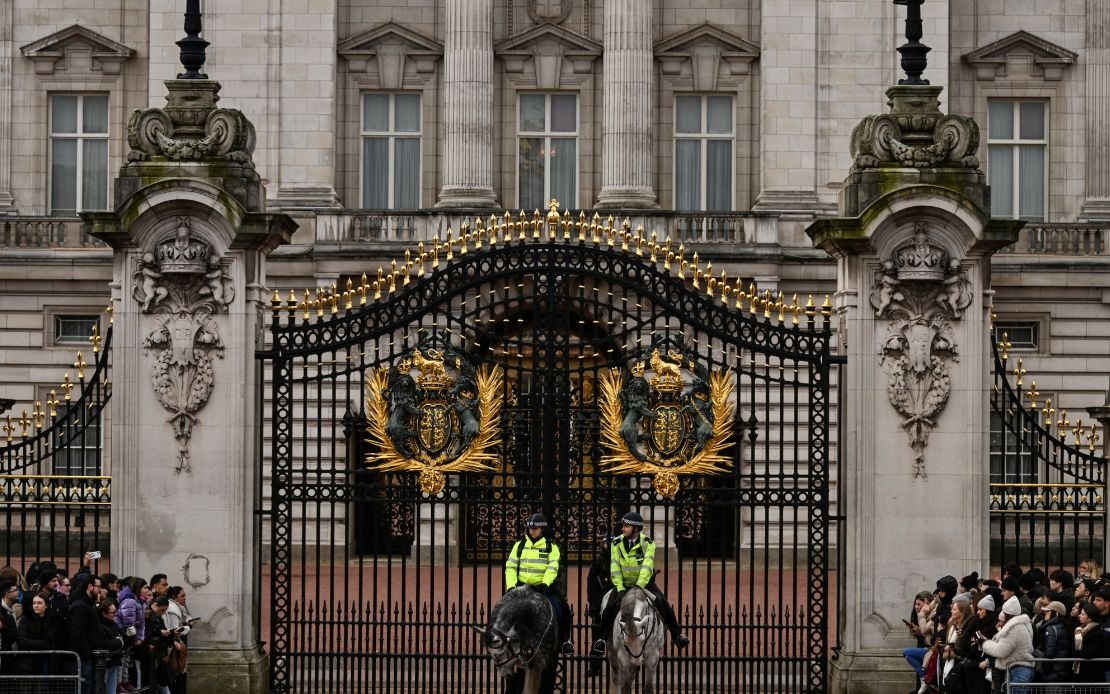
King Charles III and Queen Camilla intend to maintain Buckingham Palace as the principal venue for state ceremonies and official functions once its extensive refurbishment programme concludes, while keeping their private residence elsewhere, according to an announcement from the Royal Household on Thursday. The decision underscores the distinction between the monarch's public ceremonial role and personal domestic life, a separation that reflects evolving approaches to royal residency in the 21st century.
The Palace will function as the focal point of the monarchy's ceremonial operations following the completion of the Buckingham Palace Reservicing Programme, which has now entered its ninth and final year of a planned decade-long project. The statement issued alongside the royal finances report emphasized that the venue will continue to accommodate official receptions, state functions, and formal ceremonies that define the ceremonial calendar of the Crown.
This arrangement represents a significant shift in how the British monarchy utilizes its most iconic residence. Historically, Buckingham Palace has served dual purposes as both the administrative headquarters of the Royal Household and the principal private residence of the reigning monarch. By designating it primarily for state functions, the current reign has repositioned the property within a broader strategic framework that emphasizes public access and national heritage value alongside official operations.
The Royal Household's vision for the palace extends beyond mere ceremonial function to encompass its role as a repository of national heritage. Officials indicated that the refurbished palace will be positioned to offer enhanced opportunities for public engagement and access, allowing British citizens and international visitors to appreciate the building's historical and cultural significance. This democratization of access to royal spaces reflects contemporary expectations regarding the relationship between hereditary institutions and the public they serve.
During the 2025-2026 financial year, the royal palaces hosted approximately 827 ceremonial events and official functions, attracting nearly 97,000 guests. These figures demonstrate the substantial logistical requirements involved in maintaining the monarchy's public-facing operations and underscore the necessity of having a primary venue specifically designed to accommodate large-scale state occasions. The volume of official ceremonies necessitates a purpose-built facility with appropriate infrastructure, security arrangements, and ceremonial spaces.
The financial commitment to maintaining royal palaces has increased substantially, reflecting both inflationary pressures and the scope of the refurbishment programme. The Sovereign Grant, which provides public funding for the monarch's official duties and palace maintenance, rose to £132.1 million in the 2025-2026 financial year. Notably, £67.5 million of this allocation was directed specifically toward preserving and protecting occupied royal palaces, demonstrating the significant public investment required to maintain these institutions.
For Malaysian and Southeast Asian observers, this development offers insight into how established monarchies navigate the tension between tradition and modernization. The United Kingdom's approach of separating ceremonial venues from private residences presents a different model from some Commonwealth realms, where historic palaces continue to serve dual purposes. The emphasis on public access and heritage preservation also reflects broader conversations within the region about the role of royal institutions in contemporary society and their relationship to national identity and tourism.
The decision to maintain Buckingham Palace primarily for ceremonial purposes rather than private residence also carries implications for the operational efficiency of the Royal Household. By consolidating ceremonial functions in a single, purpose-built venue, the monarchy can optimize security protocols, manage public access more systematically, and preserve the historical integrity of the building without the wear and tear associated with continuous residential occupation.
The completion of the Buckingham Palace Reservicing Programme represents a major investment in heritage preservation. Beyond cosmetic updates, the project addresses fundamental infrastructure requirements including electrical systems, plumbing, heating, and structural elements that have accumulated decades of deferred maintenance. Once completed, the renovated palace will be positioned to serve its ceremonial functions for generations ahead with modernized underlying systems supporting historical and architectural preservation.
This arrangement also reflects changing perspectives on what constitutes appropriate public and private space within royal life. Modern monarchy increasingly draws distinctions between the institutional aspects of rulership, which demand public engagement and accessibility, and the personal dimensions of family life, which benefit from privacy and separation from state functions. Buckingham Palace, under this model, becomes fully a work venue rather than a home, a conceptual shift that distinguishes contemporary practice from historical precedent.
Looking forward, the refurbished Buckingham Palace will serve as a platform for the Crown to engage with both domestic and international audiences through state functions, diplomatic receptions, and ceremonial occasions. The commitment to enhanced public access positions the palace not merely as a symbol of royal authority but as a living heritage institution accessible to those who form the broader national and commonwealth communities the monarchy represents.

