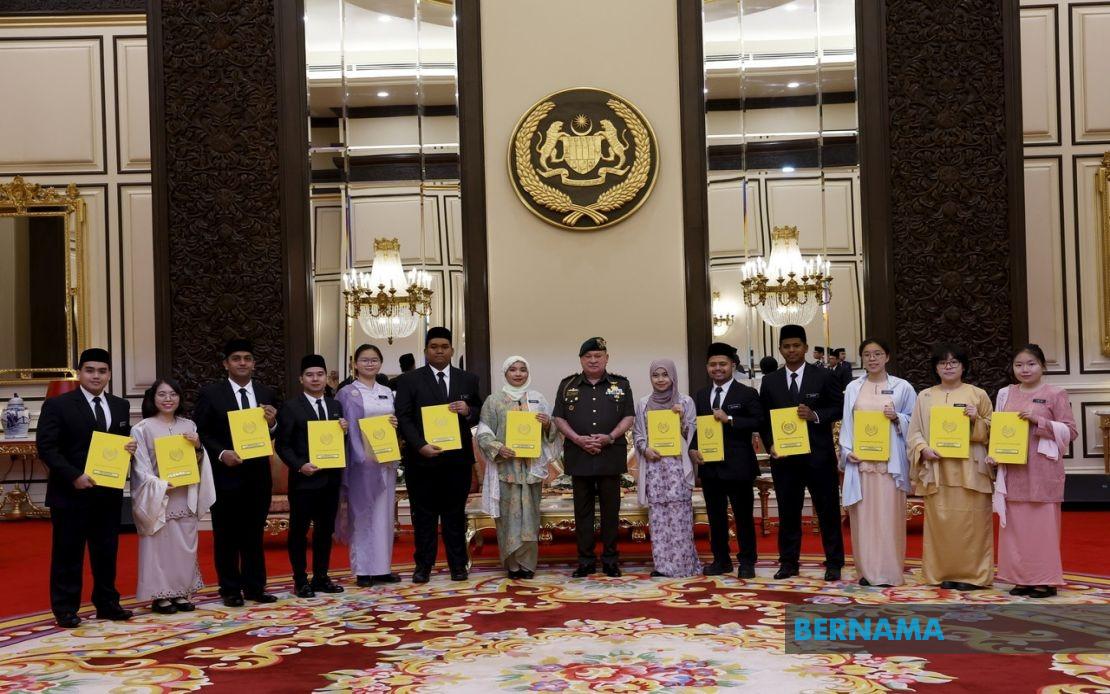
His Majesty Sultan Ibrahim, King of Malaysia, has presented the 2026 Yang di-Pertuan Agong Scholarships (BYDPA) to 14 deserving recipients during a formal ceremony held at Istana Negara in Kuala Lumpur on June 24. The scholarship programme, widely recognised as among the nation's most competitive and generously funded educational initiatives, underscores the Crown's commitment to developing Malaysia's intellectual capital through advanced research and specialised study.
The recipients represent a diverse cohort of accomplished scholars poised to contribute significantly to their respective fields. Seven of the awardees will pursue doctoral degrees while the remaining seven have been selected for Master's (Research) programmes. This balanced distribution between doctoral and master's level funding reflects a strategic investment in developing both established scholars entering their doctoral careers and emerging researchers embarking on their postgraduate journeys.
Geographically, the scholarship recipients will pursue their studies across two distinct pathways. Four scholars have been offered opportunities at internationally renowned universities, positioning them to gain global academic exposure and bring world-class expertise back to Malaysia's research ecosystem. Meanwhile, the remaining ten recipients will conduct their postgraduate research at locally recognised research universities, strengthening the nation's domestic institutions and encouraging the creation of knowledge clusters within Malaysia's academic infrastructure.
The distinction between pursuing studies domestically and internationally reflects the BYDPA's dual purpose: elevating Malaysia's standing in global academic rankings while simultaneously fortifying local research institutions. By distributing scholarships across both pathways, the programme ensures that Malaysia benefits from scholars who will network internationally while simultaneously attracting research talent and capabilities to domestic universities.
Tan Sri Wan Ahmad Dahlan Abdul Aziz, Director-General of the Public Service, attended the ceremony alongside Tan Sri Dr Azmi Rohani, Comptroller of the Royal Household at Istana Negara. Their presence highlighted the significance of the occasion within Malaysia's public sector framework, underlining the connection between postgraduate education and future governance and policy-making roles.
In remarks made to reporters following the presentation ceremony, Tan Sri Wan Ahmad Dahlan emphasised the BYDPA's standing as Malaysia's preeminent government scholarship scheme. The initiative distinguishes itself through exceptionally generous funding parameters that substantially exceed those offered by competing government scholarship programmes. This premium level of financial support removes barriers that might otherwise prevent exceptional talent from accessing elite postgraduate education, democratising access to advanced learning opportunities regardless of socioeconomic background.
The Yang di-Pertuan Agong Scholarship carries considerable prestige within Malaysia's academic community and among international higher education circles. Selection into the programme represents recognition of exceptional academic credentials, research potential, and contribution to society. For recipients, the scholarship functions as both financial enablement and credential validation, signalling to both domestic and international academic institutions that the holder has been vetted and approved by the highest levels of Malaysia's governance structure.
The 2026 cohort's composition reflects Malaysia's evolving research priorities and talent development strategies. By supporting advanced research across multiple disciplines through both PhD and Master's (Research) tracks, the programme creates pathways for scholars at different career stages to contribute to Malaysia's knowledge economy. Doctoral recipients will likely form the nucleus of Malaysia's next generation of university researchers and academic leaders, while master's scholars will contribute expertise across government, industry, and non-profit sectors.
The international dimension of the BYDPA carries particular significance for Southeast Asia's emerging research landscape. Scholars studying at leading universities abroad gain access to cutting-edge methodologies, world-class mentorship, and networks that span continents. When these individuals return to Malaysia, they bring not only credentials but also collaborative relationships and research partnerships that can enhance bilateral academic ties between Malaysian institutions and global centres of excellence. This creates multiplier effects throughout Malaysia's research ecosystem, elevating the quality and ambition of domestic research projects.
Conversely, the ten scholars pursuing studies at local research universities strengthen Malaysia's own institutions during a period of strategic emphasis on elevating domestic research output and international rankings. By concentrating resources on both developing local research capacity and enabling international exposure for Malaysian scholars, the BYDPA adopts a complementary approach that serves multiple strategic objectives simultaneously. Recipients studying domestically benefit from reduced costs and closer integration with Malaysia's socioeconomic challenges, potentially generating research with more direct local applicability.
The presentation of these scholarships occurs against a backdrop of increasing global competition for research talent and recognition of postgraduate education as central to national competitiveness. Malaysia's investment in the BYDPA reflects commitment to producing scholars capable of competing at the highest international levels whilst simultaneously addressing the nation's specific development priorities. The programme serves as both investment in individual potential and strategic bet on Malaysia's future as a knowledge-driven economy.
For Malaysian universities and research institutions, the presence of BYDPA scholars enhances institutional prestige and research capabilities. These scholars bring elevated academic standards, international networks, and often serve as mentors to younger researchers, creating cascading effects throughout academic institutions. The programme thus functions as a catalyst for institutional development beyond the direct benefits accruing to individual recipients.