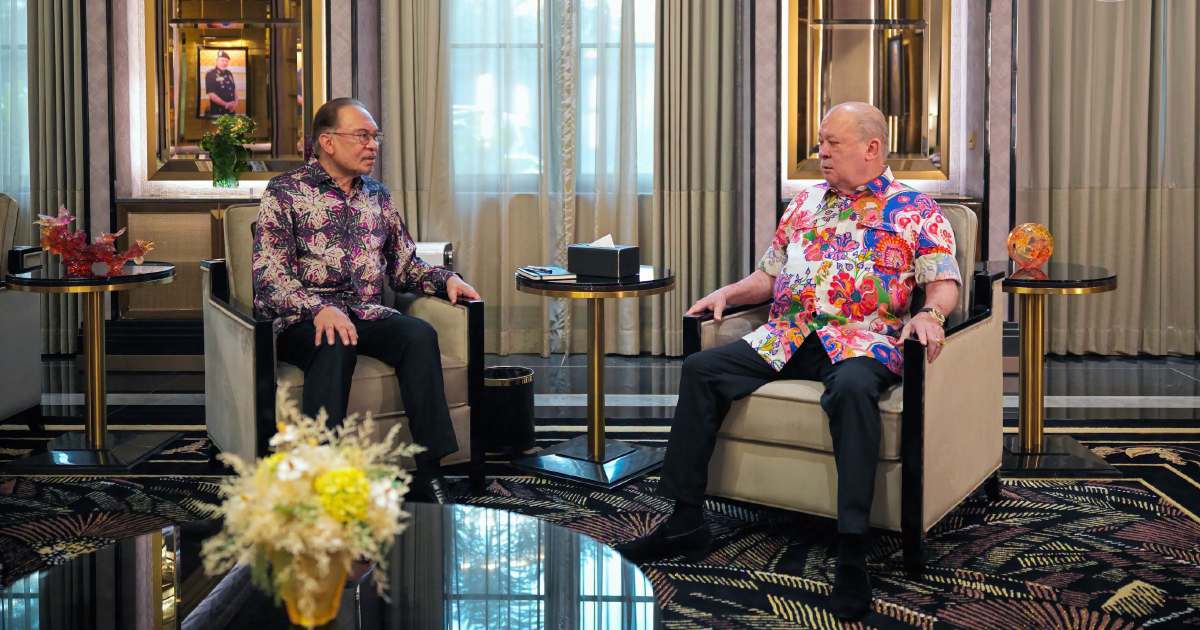
His Majesty Sultan Ibrahim, King of Malaysia, received Prime Minister Datuk Seri Anwar Ibrahim in audience at Istana Bukit Tunku here, marking a significant moment of consultation between the palace and the country's chief executive as the nation prepares to mark its 69th National Day.
The meeting between Malaysia's constitutional monarch and the prime minister represents the routine but symbolically important engagement that characterises the relationship between the throne and government in the country's parliamentary democracy. Such audiences, conducted at the official residence of the king in the heart of Kuala Lumpur, traditionally serve as formal forums for discussing matters of national importance and expressing mutual respect between the two highest offices in the land.
The timing of this audience, coming immediately before one of Malaysia's most significant national observances, underscores the coordinated nature of government functions during periods of nationwide celebration. The National Day, commemorated annually on August 31st, holds profound significance for Malaysians as it marks the nation's independence and the formation of the Federation of Malaya in 1957, followed by the expansion into Malaysia in 1963 with the inclusion of Sabah, Sarawak, and Singapore, though Singapore would separate in 1965.
Such pre-celebration consultations between the king and prime minister typically encompass discussions regarding the broader messaging and themes that will define the national observance. Given the position of the monarchy as the constitutional head of state, the sovereign's involvement in approving or endorsing key aspects of National Day proceedings carries both ceremonial and substantive weight within Malaysia's framework of governance.
The venue itself, Istana Bukit Tunku, carries historical resonance within Malaysian political culture. As the official residence of the reigning monarch, it serves as the seat of royal authority and continues to function as a space where matters of considerable national consequence are addressed. The building's location in Kuala Lumpur's prestigious Bukit Tunku area has made it an enduring symbol of the constitutional monarchy throughout Malaysia's post-independence trajectory.
For Malaysian observers of governance, these formal audiences illustrate the continuing relevance of constitutional monarchy to the nation's political architecture. Unlike some Westminster-derived systems where such meetings might be purely ceremonial, Malaysia's system maintains substantive dimensions to royal-executive interaction, particularly regarding matters touching upon the monarchy's constitutional prerogatives and national unity.
The 69th National Day represents nearly seven decades of independent statehood and consolidated development as a federated nation. Each annual commemoration provides an opportunity for national reflection on progress achieved and challenges remaining. The involvement of both the king and prime minister in preparatory discussions ensures that celebrations appropriately reflect the constitutional values and national aspirations that continue to guide Malaysia's development.
In the context of Malaysia's contemporary political environment, such formal engagements between crown and government also serve a stabilising function. They demonstrate continuity in the institutional frameworks through which Malaysia conducts its affairs, regardless of broader political circumstances or changes in administration. This institutional consistency contributes to the predictability and stability that investors, citizens, and international observers seek when evaluating any nation's governance.
The National Day celebrations themselves typically encompass multiple dimensions of Malaysian national identity. These extend beyond ceremonial events to encompass public participation, reflection on shared values of unity within diversity, and recognition of the nation's multicultural character. The preparatory meeting between king and prime minister helps ensure that these various elements align with constitutional principles and national objectives.
For regional observers, Malaysia's continued emphasis on formal governmental protocols and constitutional observance reflects the nation's commitment to institutional governance. In Southeast Asia, where governmental stability and rule-based decision-making remain critical to economic and social development, Malaysia's demonstration of functioning constitutional structures provides a model of institutional continuity that contributes to broader regional confidence.
The audience also occurs within Malaysia's ongoing efforts to project national cohesion and purpose. In recent years, Malaysian leadership has sought to emphasize themes of national unity, economic development, and positive progress. National Day provides an annual platform for reinforcing these messages, and the prior consultation between the monarch and chief executive ensures that official communications remain harmonized and constitutionally appropriate.
As Malaysia approaches this significant national observance, the formal engagement between Sultan Ibrahim and Datuk Seri Anwar Ibrahim exemplifies how the nation's constitutional framework distributes authority and ensures coordination among the highest echelons of government. Such interactions, though perhaps unremarked upon in some contexts, demonstrate the functioning of institutional processes that undergird Malaysia's approach to governance and national celebration.

