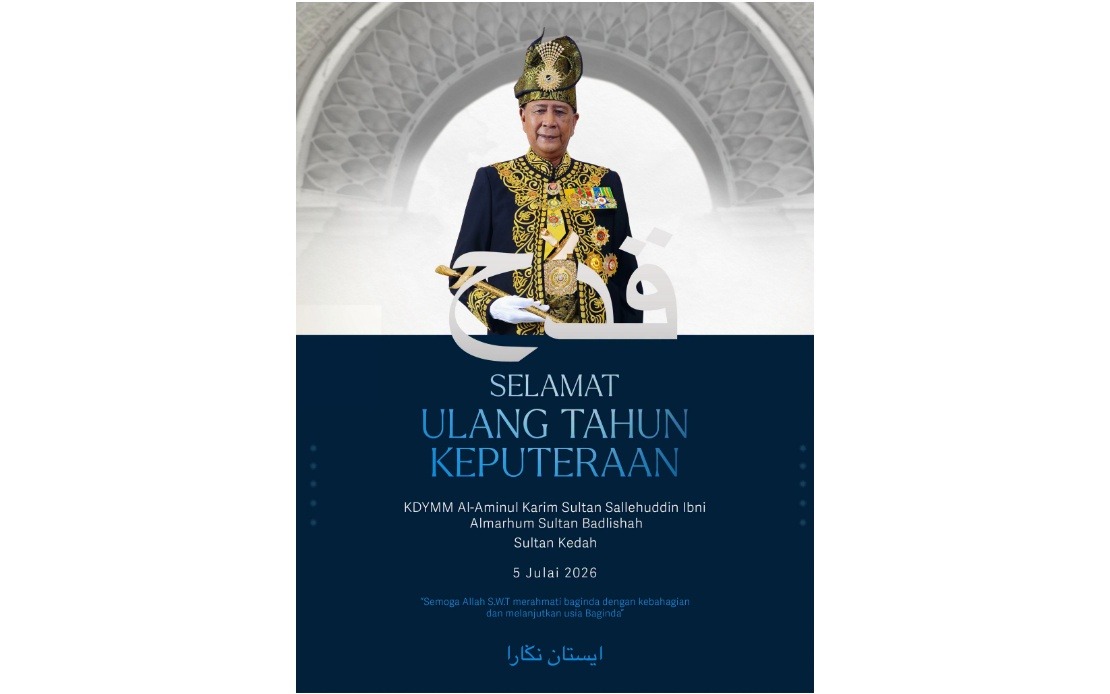
His Majesty Sultan Ibrahim, King of Malaysia, has conveyed warm birthday greetings to Sultan Sallehuddin Sultan Badlishah, the Sultan of Kedah, marking the completion of his 84th year. The gesture, made public through the official social media channels of the King, reflects the customary protocols observed among Malaysia's constitutional monarchy and the sultanates, underscoring the ceremonial bonds that tie the nation's various royal institutions together.
In his message, His Majesty expressed his sincere wishes for the Kedah ruler's continued well-being and longevity. Through his official Facebook page, the King invoked divine blessings upon the Sultan, praying that Allah SWT would grant him happiness, good health, and an extended life. Such expressions represent more than mere pleasantries—they embody the formal relationships and mutual respect that characterise Malaysia's unique system of constitutional monarchy, where the Yang di-Pertuan Agong shares ceremonial responsibilities with the rulers of the constituent states.
Prime Minister Datuk Seri Anwar Ibrahim similarly participated in the occasion, extending heartfelt birthday wishes to the Kedah Sultan. The Prime Minister's gesture demonstrates the inclusive nature of Malaysia's political structure, where the executive branch maintains strong ceremonial and working relationships with the institution of royalty across the federation. His message, posted on social media, reflected a broader sentiment of goodwill toward both the Sultan and his household.
Beyond Sultan Sallehuddin himself, the Prime Minister's message encompassed the wider Kedah royal family, including Sultanah Maliha Tengku Ariff, the Sultanah of Kedah. The inclusion of the Sultan's consort in these wishes acknowledges the integral role that spouses of state rulers play in representing their respective states and supporting the spiritual and social fabric of their communities. The Sultanah, like other state consorts, undertakes numerous patronages and charitable roles that extend the reach of the royal institution into civil society.
The Prime Minister's blessing extended to the entire Kedah royal household, invoking continued divine mercy and guidance for the family's members. This comprehensive approach reflects a recognition that state rulers and their families serve as custodians not merely of traditional ceremonial roles but of cultural heritage and community welfare within their domains. Kedah, one of Malaysia's oldest sultanates with a rich historical legacy, holds particular significance in the nation's monarchical tradition.
Anwar Ibrahim concluded his message with the traditional Malay doxology, "Daulat Tuanku. Dirgahayu Tuanku," phrases that invoke eternal blessing and long life upon a ruler. These age-old formulations, preserved across centuries of Malaysian history, carry profound cultural meaning and represent the enduring connection between the rakyat and their sovereigns. The use of such classical expressions in contemporary public communication demonstrates how modern Malaysian governance continues to be informed by historical traditions.
Sultan Sallehuddin's tenure as the ruler of Kedah has spanned several decades, during which he has witnessed significant transformations in Malaysian politics, economic development, and social dynamics. His extended reign has provided continuity and stability within the state, allowing for sustained institutional development and the preservation of Kedah's unique cultural identity. At 84 years, the Sultan represents both the historical depth of Malaysia's monarchical institution and the living memory of the nation's post-independence evolution.
The exchange of birthday greetings between the highest levels of Malaysia's political and royal hierarchies serves multiple functions within the nation's constitutional framework. Such public acknowledgments reinforce the legitimacy of the monarchy as an institution, demonstrate the harmonious working relationship between the executive and the royal establishment, and send symbolic messages about national unity and respect for established institutions. For ordinary Malaysians, these gestures affirm the continuing relevance of the monarchy in contemporary governance.
Kedah's position within the Malaysian federation carries historical weight, having been one of the first sultanates to establish a formal relationship with British colonial authorities. The state's economic contributions to Malaysia, including its significant agricultural production and latterly its industrial development, have made it an important component of the nation's overall prosperity. The Sultan of Kedah, as the ceremonial head of this state, embodies these connections between historical legacy and present-day governance.
The observance of royal birthdays through formal messages from senior political figures underscores how ceremonial occasions, though traditional in nature, continue to serve important functions in modern Malaysia. These moments provide opportunities to reaffirm constitutional principles, celebrate the institution of royalty, and reinforce the networks of mutual respect that bind together the federation's diverse political and social elements. The simplicity of a birthday greeting masks the deeper constitutional and symbolic significance embedded within such exchanges.

