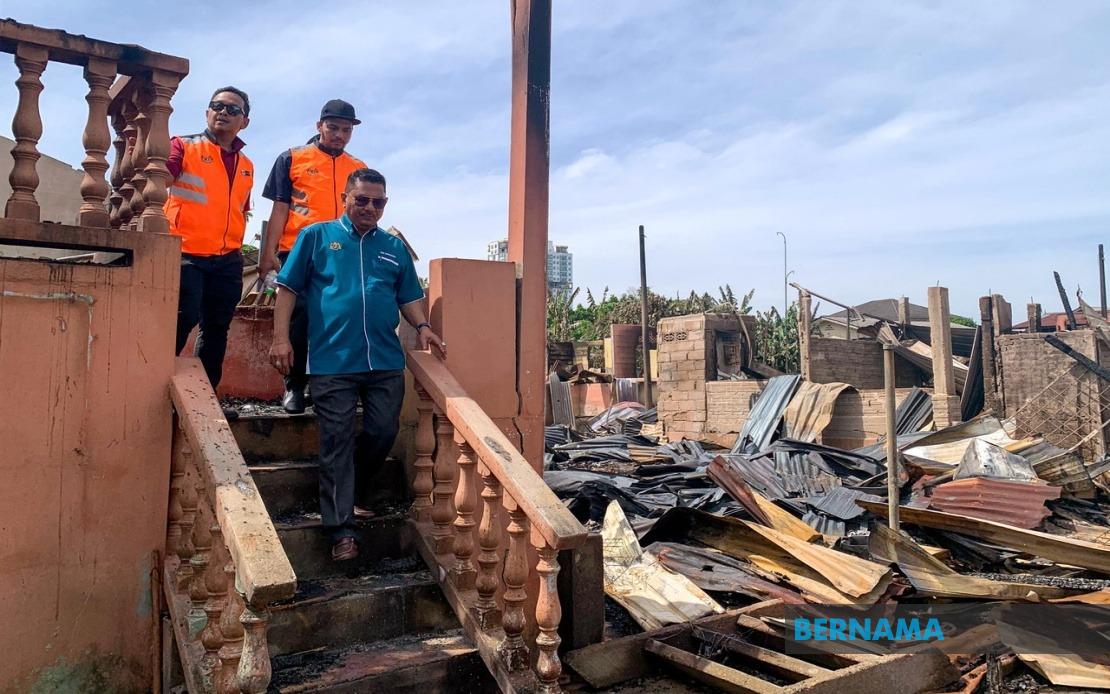
An investigation into the June 8 fire that ravaged Kampung Gok Kapur in Kota Bharu has concluded that the disaster stemmed from a careless household burning practice that spiralled catastrophically out of control. The Kelantan Fire and Rescue Department revealed that a resident used a gas lighter as an open flame source to directly ignite a pile of papers in their kitchen, setting off a chain reaction that ultimately destroyed 27 residential structures and displaced more than a hundred people from their homes.
Kelantan JBPM director Farhan Sufyan Borhan explained that the department's Fire Investigation Forensic Unit conducted a thorough examination of the physical evidence and cross-referenced witness statements to reach its conclusion. The investigation demonstrated that the initial ignition occurred when the gas lighter was applied to the stack of papers in the kitchen area of one dwelling. What might have seemed like a confined domestic task rapidly transformed into an uncontrollable inferno as the flames engulfed nearby combustible materials within the same structure.
The fire's progression from a single house to an entire neighbourhood's devastation occurred with alarming speed. Once the initial flames consumed the flammable contents and fixtures of the originating residence, the blaze spread to neighbouring structures with the kind of intensity that overwhelmed the kitchen's confines and eventually breached the house's exterior walls. Terraced and closely-spaced rural dwellings of this type offer minimal barrier to lateral fire spread, particularly when initial response times are delayed or when residents lack adequate means to contain the flames in their earliest stages.
The forensic findings paint a picture of pure negligence during the burning activity itself. The decision to use an open flame indoors rather than employing safer disposal methods, combined with the apparent lack of supervision or safety precautions, demonstrated a dangerous disregard for fire hazards. Such incidents underscore a persistent gap between public awareness and actual household fire safety practices in Malaysian communities, particularly in rural areas where traditional burning methods persist despite modern alternatives.
The human toll of the June 8 incident extended far beyond property loss. A total of 110 residents from Kampung Gok Kapur found themselves suddenly homeless, their possessions destroyed and their daily routines shattered. These families sought refuge at an emergency evacuation centre established at Mukim Banggol Mosque, a temporary shelter arrangement that posed its own logistical and welfare challenges. While authorities were fortunate that no lives were lost in the blaze, the psychological and material impact on displaced families remained substantial and long-lasting.
The incident highlights the particular vulnerability of densely-populated rural settlements where wooden construction and informal layouts dominate the housing stock. Unlike urban areas with building codes, fire breaks, and hydrant networks, villages like Gok Kapur often lack the infrastructure and regulatory oversight that might contain such fires more effectively. The proximity of houses and the combustible nature of traditional materials used in village construction create ideal conditions for rapid fire propagation once an initial outbreak occurs.
Farhan Sufyan Borhan indicated that the investigation file would be forwarded to police and other relevant government agencies for potential legal action. This procedural step acknowledges that the negligence constitutes not merely a fire safety lapse but potentially a criminal matter, depending on how prosecutors interpret the individual's conduct and its consequences. Such referrals underline the seriousness with which authorities view preventable residential fires that endanger entire communities.
The Fire and Rescue Department took the opportunity to issue fresh public safety guidance in the wake of the investigation's conclusion. Officials urged Malaysians to exercise extreme caution when handling open flame sources and to refrain entirely from conducting burning activities within residential areas or their immediate vicinity. This advisory carries particular weight in Kelantan and other states where rural communities historically practised outdoor burning for waste disposal and agricultural purposes, habits that remain difficult to break despite modern disposal options and mounting fire risks.
The Kampung Gok Kapur incident joins a troubling pattern of preventable residential fires across Malaysia. Similar cases have occurred when household members engaged in unsupervised burning activities, cooking accidents, or unattended electrical appliances sparked conflagrations that consumed multiple properties and disrupted countless lives. The consistency of these incidents suggests that public education campaigns, while necessary, have not yet achieved sufficient penetration in certain communities or demographics.
For residents across rural Southeast Asia facing similar housing configurations and material constraints, this case offers a sobering lesson about fire risk management. The absence of modern waste disposal infrastructure or cultural shifts away from traditional burning practices creates genuine safety gaps that individuals must actively bridge through their own vigilance and decision-making. The investment in safer disposal methods and the conscious rejection of risky burning practices, though sometimes inconvenient, becomes the only reliable prevention available in communities lacking formal fire prevention infrastructure.
The investigation's findings and subsequent police referral will likely influence how local authorities approach fire safety advocacy in Kelantan going forward. Building inspector protocols, community education initiatives, and enforcement of fire safety regulations may receive renewed attention as officials seek to prevent similar tragedies. The destruction of 27 homes and displacement of 110 residents represents a measurable community loss that might have been prevented through a single decision: not to use an open flame for burning papers in a kitchen.