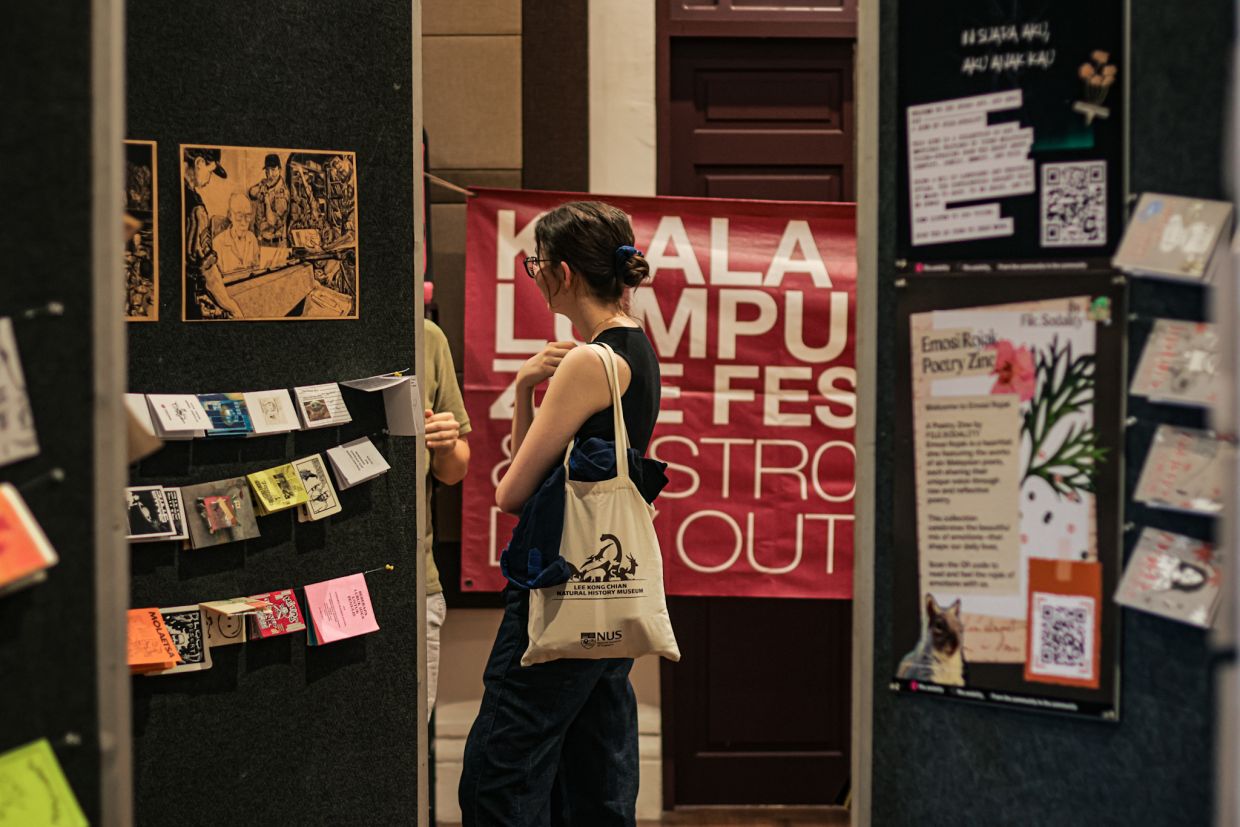
The KL Zine Etc festival is establishing itself as a vital annual event in Kuala Lumpur's independent arts landscape, drawing expanding crowds to celebrate self-published work, DIY culture and creative expression beyond the confines of mainstream publishing. The second edition of the festival, occupying the first floor of the heritage trade hall, reflects the growing momentum of a zine community that has steadily gained visibility and influence across Malaysia and the wider Southeast Asian region over the past year.
Building upon the success of its inaugural event, KLZE has substantially scaled up its operations, nearly doubling its vendor presence from more than 30 to over 50 participants. This expansion demonstrates both the growing appetite among independent creators and publishers for platforms outside traditional distribution channels, as well as the increasing recognition of zine culture as a legitimate and vibrant artistic movement. The larger gathering promises to showcase the full spectrum of what contemporary independent publishing encompasses, from intricately handcrafted zines and artist books to experimental publications, limited-edition prints and collectable works produced by small-batch makers.
The festival's programming framework extends well beyond a simple trade fair model. Across three days, the event features dedicated zine-focused workshops, hands-on creative sessions, documentary and experimental film screenings, and live music performances curated to complement the thematic direction. These supplementary offerings create opportunities for meaningful engagement between creators and audiences, moving beyond passive consumption toward active participation and skill-sharing. The inclusion of an anti-war-themed exhibition as the festival's lead programme signals a conscious effort by organisers to position independent publishing as a vehicle for social commentary and political reflection.
The decision to foreground anti-war messaging reflects broader global anxieties about contemporary conflicts, but the KLZE organising committee has framed the concept in multivalent terms. Beyond responses to traditional military conflicts occurring internationally, the festival's thematic lens encompasses the internal conflicts waged within personal psychology, identity formation and ideological positioning. This layered interpretation broadens the appeal and relevance of the exhibition to audiences grappling with mental health challenges, questions of belonging and competing worldviews in an increasingly fractious public sphere. The organisers have explicitly invoked the concept of 'ceasefire zones' as a metaphor for the festival itself—spaces deliberately designed for intellectual disarmament, dialogue and the possibility of reconciliation through shared creative experience.
The diversity of content represented across participating zines and publications underscores the heterogeneity of contemporary independent publishing. Exhibitors are bringing work that spans contemporary fanzine culture, punk aesthetics and history, folk narrative traditions, indigenous activism, comics and graphic storytelling, environmental advocacy, feminist critique and tabletop gaming communities. This breadth ensures that visitors encounter work reflecting multiple political positions, cultural backgrounds and aesthetic philosophies, rather than a monolithic creative vision. Such pluralism is essential to the stated mission of creating genuine dialogue and exchange rather than echo chambers of likeminded perspectives.
Among the confirmed vendors are established independent press operations and collectives including Otter Is Reading, Tokosue, Paulitical Art, Gerimis Art, Bah Saluji, Sunda Shelves, Munkao, Kawak Buku, Lost Prints Community Studio, Cari Gadoh, Bang Bang Zines, Tofu Stand, Zine Coop and The Storyteller's Caravan. The list reflects a mix of returning participants building on previous year momentum and newer exhibitors bringing fresh creative perspectives and aesthetic approaches to the marketplace. The participation of established collectives lends credibility and historical continuity to the festival while newer entrants inject innovation and contemporary relevance.
Particularly noteworthy is the distinctly national composition of the festival's participant base, demonstrating that independent publishing vibrance is not confined to the capital but distributed across Malaysia's states. Exhibitors travelling from Kelantan, Melaka, Johor, Sarawak and Sabah—including operations such as Kedai Hitam Putih, Pipit Press, Shuren Press, Olivia JD and Borneo Komrad—indicate the existence of robust regional creative ecosystems and publishing communities. This geographical diversity validates the existence of a genuinely national independent publishing landscape and provides visibility for creators and audiences who might otherwise remain isolated from metropolitan arts infrastructure. For readers and creators outside Kuala Lumpur, the festival represents an important node in a growing network of alternative cultural production.
Expanding the festival's significance beyond national boundaries, KLZE has emerged as a regional gathering point attracting creators and exhibitors from Singapore, Indonesia, the Philippines, Hong Kong, China, Myanmar and Taiwan. This Southeast Asian and pan-Asian representation transforms the festival from a primarily local event into a transnational cultural platform where independent creators can establish connections, observe creative trends across markets and potentially initiate collaborative projects. The regional dimension also reflects the borderless nature of zine distribution and digital publishing communities, where language and geography present less substantial obstacles than they did in previous eras of print culture.
The multilingual dimension of published works on display—including titles in Bahasa Malaysia, English, Chinese and additional languages—mirrors this regional diversity and reflects the reality of contemporary Southeast Asian publishing landscapes. Visitors can expect to encounter works produced in multiple languages and addressing themes relevant to distinct cultural and linguistic communities, creating opportunities for cross-cultural understanding and intellectual exchange. This linguistic pluralism also ensures accessibility for international visitors who may not be Malay-language readers but remain interested in regional creative expression.
When considering the festival's trajectory and future development, organisers have articulated a deliberately modest yet ambitious vision focused on nurturing genuine community connection. Rather than pursuing aggressive expansion or commercialisation, KLZE's leadership emphasises creating infrastructural support for local and regional zinemakers to meet, collaborate and showcase work that might otherwise lack institutional platforms. The organisers specifically highlight their aspiration that meaningful friendships and professional relationships will develop during the festival, potentially seeding future collaborative ventures between creators from different countries and cultural backgrounds. This relational framing positions the festival as infrastructure for community-building rather than merely a consumer marketplace.
Practical details confirm the festival's commitment to accessibility for visitors and participants. Admission is set at RM10, a deliberately modest entry fee that includes a RM5 voucher redeemable toward zine purchases. This pricing structure removes financial barriers to participation while simultaneously channelling visitor spending directly to independent creators, ensuring that the festival function serves economic as well as cultural and social purposes. For Malaysian audiences and regional visitors, KL Zine Etc represents a rare opportunity to engage with the cutting edge of contemporary independent publishing while supporting creators whose voices and visions might struggle for visibility within conventional media infrastructure.

