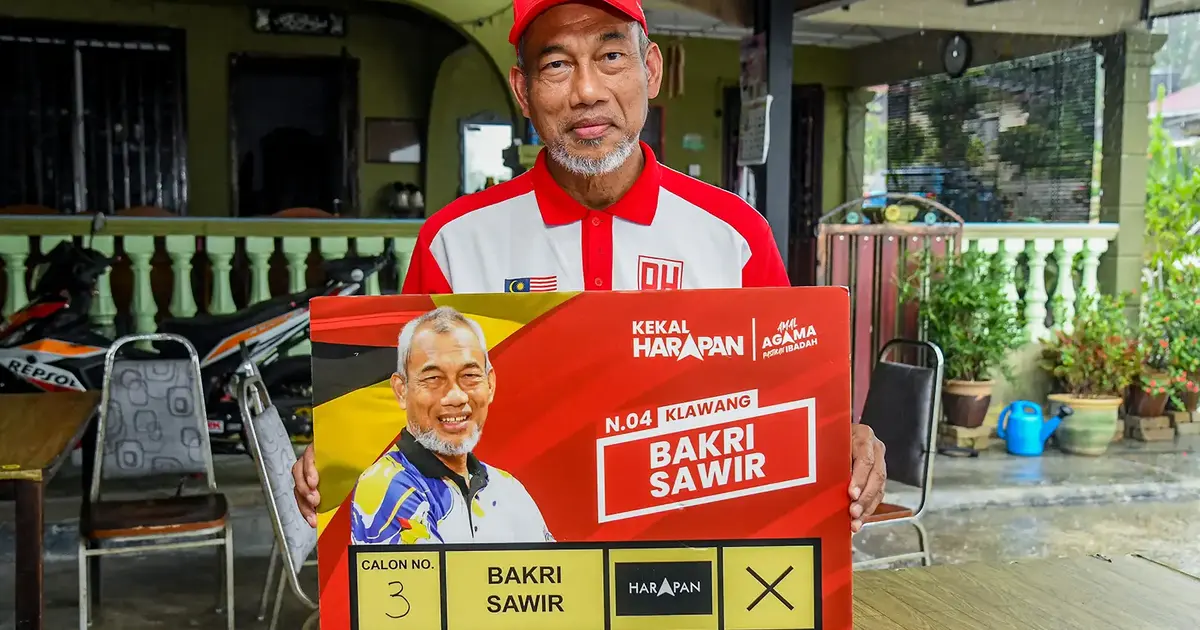
Bakri Sawir, the two-time assemblyman representing Klawang, has dismissed concerns about the electoral threat posed by the combined BN-PN ticket, declaring that his past success came independently of Umno and can be replicated. The Pakatan Harapan candidate's confidence stems from his experience during the 2023 state election, when he claims Umno abandoned him despite previous political ties, yet he managed to retain his seat.
The Selangor state constituency of Klawang has become a focal point in discussions about coalition politics and voter loyalty in Malaysia's shifting political landscape. Bakri's assertion reflects growing tension within the Barisan Nasional-Perikatan Nasional arrangement, a strategic partnership that has reshaped electoral calculations across multiple states. For Malaysian observers tracking political realignments, Klawang's experience offers insights into how traditional coalition structures influence local campaigns and voter behaviour.
Bakri's claim that he secured victory without Umno's institutional support during the 2023 contest challenges the conventional wisdom that dominant parties are essential for electoral success in their traditional strongholds. This narrative carries particular significance in Selangor, where the DAP-led Pakatan Harapan government has maintained control despite facing sustained pressure from resurgent opposition forces. His willingness to publicly address the Umno "betrayal" indicates a calculated strategy to reassure Klawang voters that Pakatan remains a viable option even when faced with coordinated opposition campaigns.
The BN-PN collaboration represents one of Malaysia's most significant political developments in recent years, creating an expansive coalition that brings together the historically dominant Umno, its traditional allies in MIC and MCA, alongside Perikatan Nasional components including PAS. For constituencies like Klawang, this merger amplifies the opposition's organisational reach and resource base. Yet Bakri's confidence suggests that local factors—personality, community connections, and perceived responsiveness—may still outweigh the machinery advantages of larger coalitions.
Bakri's previous electoral success provides empirical ground for his optimism. In 2023, despite Umno's withdrawal of support and the changing political environment, he managed to secure his mandate directly from Klawang voters. This outcome defies the assumption that assembly members are inherently vulnerable when abandoned by their parent party's organisational structure. His ability to maintain his seat without the conventional party machinery raises questions about the sustainability of loyalty-based politics and the emergence of more personalised electoral contests in Malaysian constituencies.
The reference to Umno's "betrayal" adds an emotional dimension to Bakri's messaging, potentially resonating with voters who feel abandoned by traditional parties. This rhetorical approach transforms what might be framed as a coalition weakness into a narrative of resilience and independence. In Selangor's sophisticated electorate, such messaging may appeal to voters fatigued by coalition volatility and seeking representatives who prioritise constituency interests over party machinery.
The Klawang scenario reflects broader patterns emerging across Malaysian politics, where the once-predictable dominance of established coalitions faces challenges from localised campaigns and community-focused representation. Bakri's strategy implicitly argues that effective constituency work—responding to local grievances, delivering visible developmental projects, and maintaining accessibility—can counterbalance the resource advantages of larger coalitions. This approach has gained traction in several state and federal constituencies where incumbent representatives have retained seats despite their parent parties' declining fortunes.
For Pakatan Harapan strategists, Bakri's confidence offers both an opportunity and a test case. Success in Klawang would validate their argument that the coalition remains competitive without necessarily depending on unprecedented machinery investments, particularly in Selangor where they hold state power. Conversely, a loss would underscore the BN-PN partnership's effectiveness in mobilising voters and resources, even in opposition strongholds.
The political implications extend beyond Klawang to affect Selangor's broader electoral trajectory. Selangor represents Malaysia's most populous state and largest economic centre, making its assembly and parliamentary contests strategically crucial for both coalitions. Bakri's assertion that he can win without Umno reflects confidence that Pakatan's state government performance—or at least his own constituency service record—provides sufficient platform for re-election. Whether this confidence proves justified will influence how candidates across Selangor and comparable constituencies calibrate their electoral strategies.
Bakri's public stance also implicitly critiques the BN-PN alignment's apparent inevitability in current Malaysian political discourse. By suggesting that electoral success remains possible outside this framework, he subtly challenges the narrative that smaller coalitions or independent operations face structural disadvantages. For voters concerned about democratic choices and coalition stability, such alternative perspectives matter as they contemplate their preferences.
The coming electoral contest in Klawang will test whether local representation and constituency management can prevail against the coordinated machinery of the BN-PN partnership. Bakri's confidence, grounded in his 2023 experience, suggests that Malaysia's electoral politics may continue evolving toward contests where personal standing and developmental delivery compete effectively against pure coalition resources. His willingness to stake his political future on this premise underscores how dramatically Malaysian electoral dynamics have transformed within the past decade.

