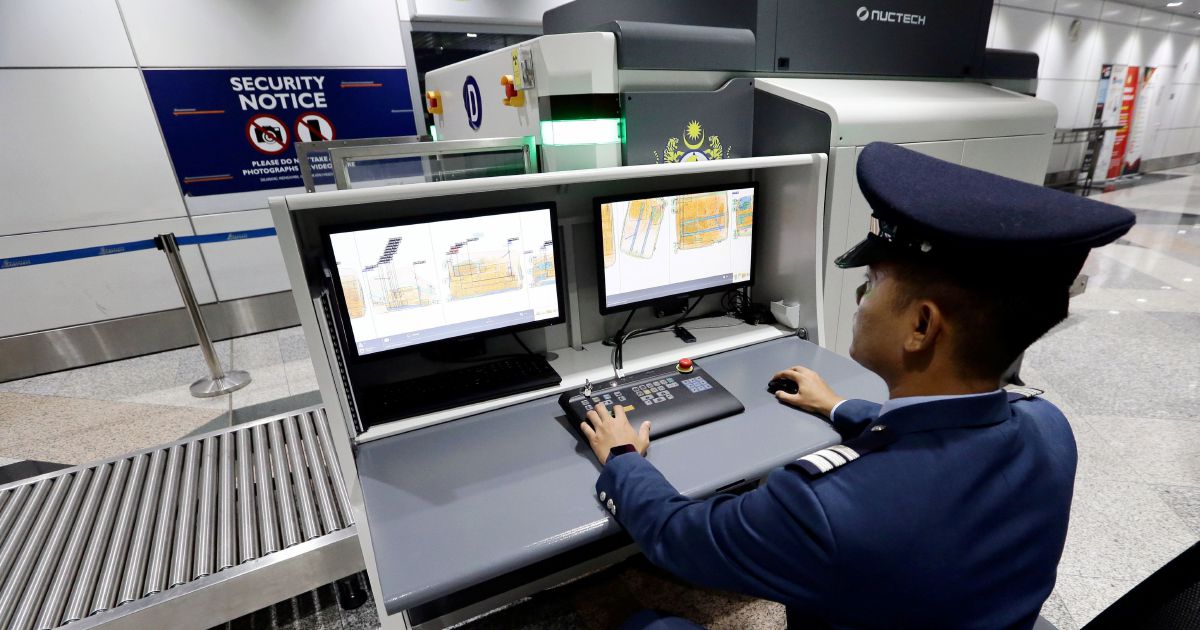
Malaysia's premier aviation gateway possesses advanced scanning technology capable of identifying illicit drugs, yet persistent narcotics smuggling cases at Kuala Lumpur International Airport (KLIA) point to a systemic gap in how security protocols are structured and implemented. Home Minister Datuk Seri Saifuddin Nasution Ismail acknowledged this distinction in recent remarks, emphasising that the airport's equipment limitations are not to blame for drug seizure shortfalls.
The distinction Saifuddin made carries significant implications for how the country addresses its drug interdiction challenges at its busiest international gateway. Rather than requiring substantial capital investment in newer scanning technology, the core issue appears manageable through operational reorientation—a potentially quicker fix than equipment upgrades. This diagnosis suggests that KLIA's existing infrastructure, representing substantial prior investment, remains underutilised for its full security potential.
Screening standard operating procedures at the airport have traditionally weighted security considerations toward detecting weapons and explosives, categories that fundamentally pose immediate physical threats to aviation safety. This institutional focus reflects decades of post-9/11 global aviation security doctrine that elevated weapons interdiction to paramount importance. However, this prioritisation framework inadvertently created an enforcement gap where drug contraband—while illegal and corrosive to public health—received comparatively lower screening intensity during passenger processing and baggage handling.
The ramifications of this procedural gap extend beyond simple statistics. Malaysia faces persistent narcotic trafficking pressures, particularly from Southeast Asian drug production networks and transnational smuggling syndicates viewing the country's air corridors as transit routes. When screening protocols do not uniformly target drug interdiction with the same rigour applied to weapons detection, smugglers gain operational confidence in routing illicit shipments through KLIA. Each successful passage creates precedent and encourages subsequent attempts.
Saifuddin's clarification also reflects a broader recognition within Malaysia's security establishment that institutional procedures sometimes ossify around historical priorities without regular recalibration to emerging threats. The Home Ministry under his leadership appears to be examining whether current KLIA protocols adequately reflect contemporary drug trafficking patterns and the public health emergency surrounding synthetic narcotics like fentanyl analogues. This reassessment suggests movement toward rebalancing security investments across multiple threat categories rather than maintaining the traditional weapons-centric hierarchy.
Implementing enhanced drug-focused screening procedures presents operational complexities that equipment upgrades would not necessarily resolve. Officers require training specific to narcotics identification methodologies, scanning protocols must explicitly incorporate drug detection as a checkpoint objective, and supervisory structures need modification to incentivise detection rates alongside weapons interdiction metrics. These procedural changes demand institutional will and resource reallocation within existing budgets, though they may prove more economically viable than purchasing new scanning systems.
Regional context underscores KLIA's strategic importance in the broader narcotics supply chain. The airport serves as a regional hub connecting source countries in the Golden Triangle and Andaman Sea regions with consumer markets throughout Asia, Australia, and increasingly North America. Enhanced screening at Malaysia's gateway creates friction costs for smugglers and may redirect traffic to competing regional airports in Thailand, Singapore, or Indonesia. This competitive dynamic means that KLIA's security posture influences smuggling route economics across Southeast Asian aviation infrastructure.
The Home Ministry's public articulation of this problem—that procedures rather than equipment constrain drug interdiction—signals internal acknowledgment of systemic shortcomings while avoiding expenditure commitments on new technology. This framing positions forthcoming remedial action as procedural optimisation rather than acknowledging previous enforcement failure. Whether this distinction carries meaning for actual implementation outcomes remains to be demonstrated through operational metrics and seizure statistics in subsequent quarters.
Malaysian authorities face increasing international scrutiny regarding drug interdiction effectiveness, particularly as fentanyl derivatives appear more frequently in seized shipments and as regional law enforcement cooperation initiatives expand information sharing. KLIA's proven scanning capacity, combined with reoriented standard operating procedures, could substantially improve Malaysia's narcotics interdiction profile without requiring new infrastructure investment. The challenge lies in translating ministerial recognition of procedural gaps into sustained operational changes across a large, complex airport facility handling millions of passengers annually.
Moving forward, the distinction Saifuddin articulated becomes actionable only through concrete operational changes: revised screening checklists prioritising drug indicators, training programs for screening personnel emphasising narcotics detection, and performance metrics rewarding interdiction across both weapons and contraband categories. The existing technological capability to detect drugs has always existed at KLIA; what remains uncertain is whether institutional will materialise to deploy that capability with consistent intensity comparable to weapons screening protocols.

