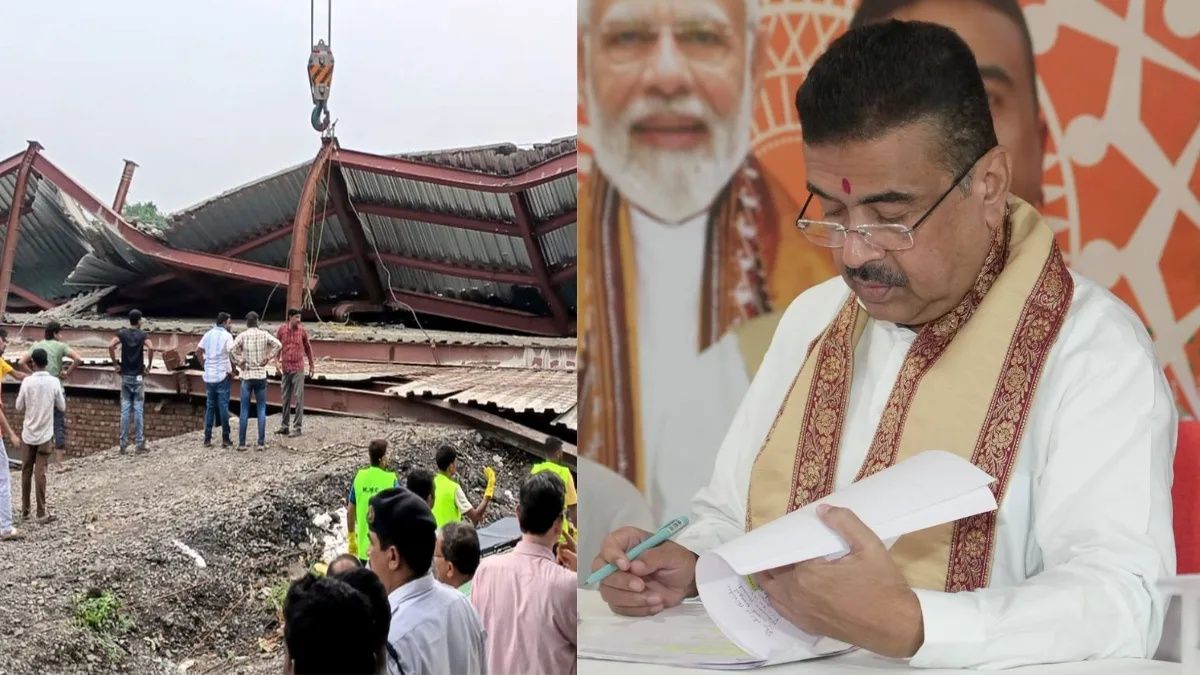
The Taratala warehouse disaster in Kolkata deepened into its second day of rescue operations on Thursday with the death toll climbing to 11 victims, as emergency personnel from multiple agencies worked through debris in search of potentially trapped workers. The latest fatality was recovered in the early afternoon at SSKM Hospital's Trauma Care Centre, though identification of the deceased remained pending at time of reporting. The incident has triggered a far-reaching response from both central and state authorities, with personnel from the Indian Army and the National Disaster Response Force coordinating alongside local agencies to manage what remains an active and potentially ongoing search operation.
The structural failure that led to the collapse has already become a flashpoint for political accountability in West Bengal. During an assembly session, Chief Minister Suvendu Adhikari presented documentary evidence suggesting that the Taratala warehouse building plan had received official approval despite containing significant structural deficiencies. The chief minister pointed specifically to irregularities during the approval process when the Kolkata Municipal Corporation was under Trinamool Congress administration, identifying former Mayor Firhad Hakim's signature on documents that he characterised as approving flawed construction designs.
Adhikari's remarks reflected broader frustrations within the current administration regarding what he described as systemic corruption that had compromised Kolkata's safety record. He alleged that the practice of collecting "cut money"—informal payments outside official channels—during the previous governance period had enabled substandard construction approvals to proceed unchecked. The chief minister emphasised that his government had already obtained a comprehensive fact-finding report on the incident and would pursue those responsible with rigour.
Law enforcement has moved swiftly, with five individuals already in custody related to the incident. Those arrested include the construction company's on-site supervisor, the iron structure fabricator responsible for the structural components, the person who leased the land, the labour contractor associated with the project, and a broker involved in securing the original building plan approval from the municipal authority. However, the primary accused, an individual identified as Azgar, remains at large, and authorities have appealed for information leading to his apprehension.
The incident has prompted an extraordinary preventive measure unprecedented in scope for the region. Effective immediately, all construction work in Kolkata and surrounding municipalities—including Rajarhat-New Town, Maheshtala, Budge Budge, Pujali, Bishnupur, Sonarpur, and Baruipur—will cease for a four-week period, with the sole exception of projects classified as essential services. This sweeping suspension reflects the seriousness with which state authorities are treating the structural safety implications of the collapse.
During this construction freeze, the government plans to conduct a comprehensive audit of every approved building plan currently in force across all affected municipalities. To oversee this complex undertaking, Chief Minister Adhikari established a high-level committee chaired by Additional Chief Secretary Rajesh Pandey. The committee's composition reveals the interdisciplinary approach the state is adopting: it includes representatives from India's premier technical institutes and agencies, specifically IIT Kharagpur, alongside the Rail India Technical and Economic Service and Indian Railway Construction Limited, both organisations with extensive experience in infrastructure safety and structural integrity assessments.
The inclusion of these organisations signals that West Bengal intends to apply rigorous, standardised engineering protocols to building plan review—protocols typically applied to large-scale rail and infrastructure projects rather than municipal construction oversight. The committee also incorporates the state's Fire Services Department and Public Works Department, acknowledging that building safety involves considerations beyond structural engineering alone. The Kolkata Municipal Corporation, despite its previous accountability failures, has been included in the committee structure, presumably to facilitate access to existing building records and approval documentation.
Chief Minister Adhikari has signalled that accountability will extend beyond imprisonment for those found responsible. He warned that properties of individuals convicted in connection with the collapse may face confiscation, with proceeds directed toward compensating victims and their families. This threat of asset seizure represents an unusually forceful commitment to restitution and suggests the state's determination to impose meaningful consequences that extend into the financial sphere.
For Malaysia and other Southeast Asian nations monitoring infrastructure safety, the Kolkata incident underscores persistent challenges in enforcing building codes across rapidly urbanising regions. The collapse occurred despite having been through an official approval process, indicating that procedural compliance alone does not guarantee structural safety—a critical concern for countries where construction booms often outpace regulatory capacity. The state's response, particularly the involvement of specialised technical institutes in post-disaster auditing, offers a potential model for how developing economies might systematically upgrade building safety oversight when systemic failures emerge.
The disaster also highlights vulnerabilities in warehouse and industrial facilities, structures that frequently operate with minimal public attention until catastrophes occur. Kolkata's incident, involving a facility that reportedly housed goods and materials, reflects a broader pattern in South Asia where industrial and commercial buildings may receive less regulatory scrutiny than residential structures, despite housing significant worker populations.
Rescue operations continued with military and disaster response personnel maintaining presence at the collapse site, though the transition from rescue to recovery suggested diminishing hopes of locating additional survivors. The coordination between central military assets and state disaster agencies demonstrated an integrated response capability, though observers noted that such comprehensive mobilisation typically arrives only after disasters occur rather than preventing them through robust pre-construction oversight. The West Bengal government's post-incident audit initiative represents an attempt to shift toward preventive rather than reactive approaches to building safety, a transition that will require sustained institutional commitment beyond the immediate crisis phase.

