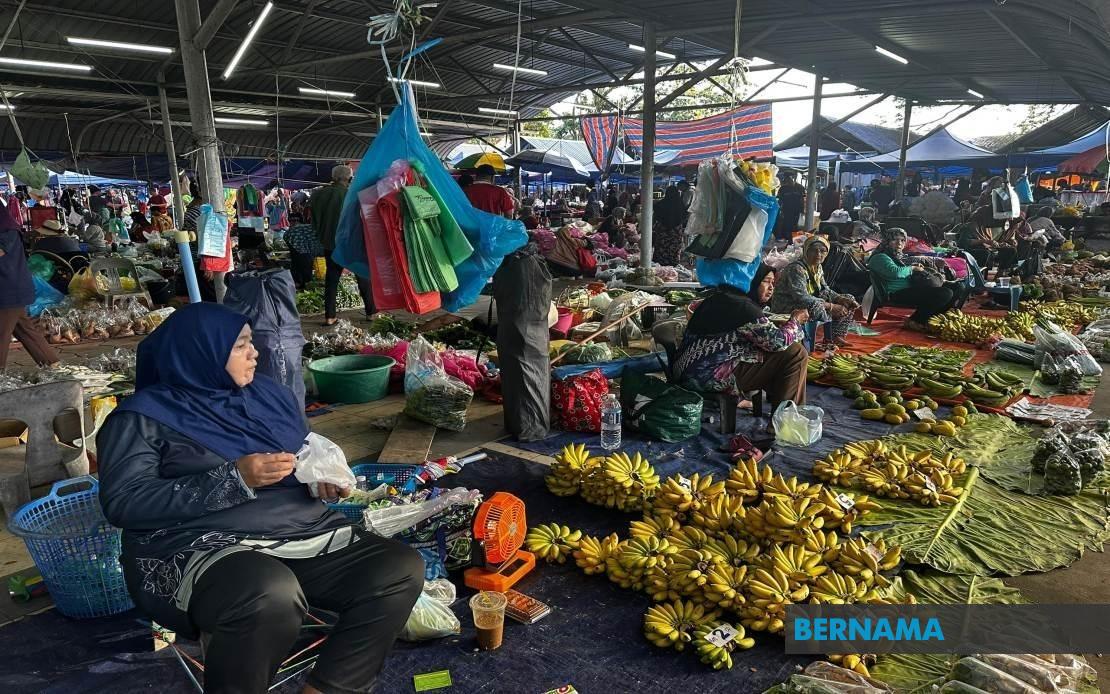
The Sabah State Legislative Assembly heard today that transforming Kota Belud Tamu into a UNESCO World Heritage Site will demand substantial groundwork encompassing detailed research, extensive documentation, and meticulous preparation before formal consideration becomes possible. Dr Andi Md. Shamsureezal, serving as Assistant Minister of Tourism, Culture and Environment, cautioned that the nomination pathway involves stringent evaluation procedures and represents a lengthy undertaking requiring considerable investment of time and resources.
The minister laid out the fundamental prerequisites that any successful nomination must satisfy. Foremost among these is the completion of comprehensive studies addressing both the physical infrastructure and cultural practices inherent to the traditional market institution. These investigations must extend beyond surface-level observations to capture the intricate relationship between the tangible structures—buildings, monuments, or archaeological features—and the intangible dimensions encompassing indigenous knowledge systems, traditional practices, and community customs that define the Tamu experience.
Documentation requirements prove equally demanding. Government authorities must compile meticulous records detailing heritage assets connected to the site, cataloguing everything from architectural elements to any archaeological materials present. This archival work forms the evidentiary foundation upon which a credible nomination rests, transforming anecdotal understanding into scholarly proof acceptable to international evaluators.
Crucially, Dr Andi emphasised that any nomination submission must be anchored in robust historical and scientific evidence. The application cannot rely upon cultural sentiment or community attachment alone; rather, it demands rigorous academic investigation producing peer-reviewable findings. Moreover, the nomination body must demonstrate that Kota Belud Tamu possesses what UNESCO terminology designates as 'Outstanding Universal Value'—the exceptional significance that transcends local or national importance to hold meaning for all humanity.
Responding to a query from Datuk Mohd Arsad Bistari, the GRS-Tempasuk assemblyman who raised the matter during today's sitting, Dr Andi noted that Kota Belud has already achieved international standing through an existing designation. The district forms part of the Kinabalu UNESCO Global Geopark, formally recognised in May 2023, representing acknowledgement of the region's geological and environmental significance.
Sabah Parks, the agency mandated to oversee geopark operations, has already begun implementing initiatives designed to strengthen preservation and visibility of the district's cultural inheritance. The administration has launched a "Tamu Geopark" programme that functions as a multifaceted platform. This initiative strategically showcases the market's authentic dimensions—from traditional cuisine and indigenous garments to handcrafted items and artistic expressions—while simultaneously promoting locally-produced goods and community-developed geotourism products.
The programme architecture reveals a sophisticated approach recognising that heritage designation and tourism development need not exist in tension. By positioning the Tamu as a living cultural hub rather than a static monument, authorities have cultivated economic prospects for resident traders and artisans whilst maintaining the institution's functional authenticity. This integration of conservation aims with community economic benefit creates a compelling narrative for UNESCO assessors evaluating the site's contemporary relevance and sustainability prospects.
For Malaysian heritage enthusiasts and tourism stakeholders, the Kota Belud situation illuminates the substantial infrastructure required for international recognition. The Tamu represents a genuine cultural institution of considerable antiquity, embodying indigenous Sabahan commercial traditions and intercommunal exchange patterns unique to Borneo. Yet cultural authenticity alone proves insufficient; UNESCO processes demand the systematic architecture of evidence that transforms cultural reality into internationally legible scholarly documentation.
The geopark designation already granted to the district provides valuable scaffolding for a future World Heritage nomination. Both designations share UNESCO governance frameworks and evaluation philosophies, suggesting that ongoing work strengthening the geopark programme simultaneously constructs foundational documentation potentially applicable to cultural heritage applications. This sequential approach proves pragmatic, allowing Sabah to demonstrate international-standard management practices through an existing designation whilst building the comprehensive knowledge base required for more specialised recognition.
Sabah's measured approach contrasts with the sometimes rushed heritage nomination attempts observed elsewhere in the region. By explicitly acknowledging the temporal and technical demands ahead, government officials manage public expectations whilst signalling serious commitment to authentic rather than merely aspirational designation processes. For tourism-dependent economies across Southeast Asia grappling with heritage conservation imperatives, the Kota Belud narrative underscores that sustainable international recognition demands patient, systematic investment in research infrastructure and community engagement rather than expedited bureaucratic processes.
The path forward for Kota Belud Tamu likely extends several years into the future, requiring coordination among cultural historians, archaeologists, anthropologists, and government agencies. Yet this very rigour—demanding that communities comprehensively document and interpret their own cultural inheritance—creates enduring records preserving knowledge for future generations whilst grounding tourism and economic development in authentic cultural foundations.

