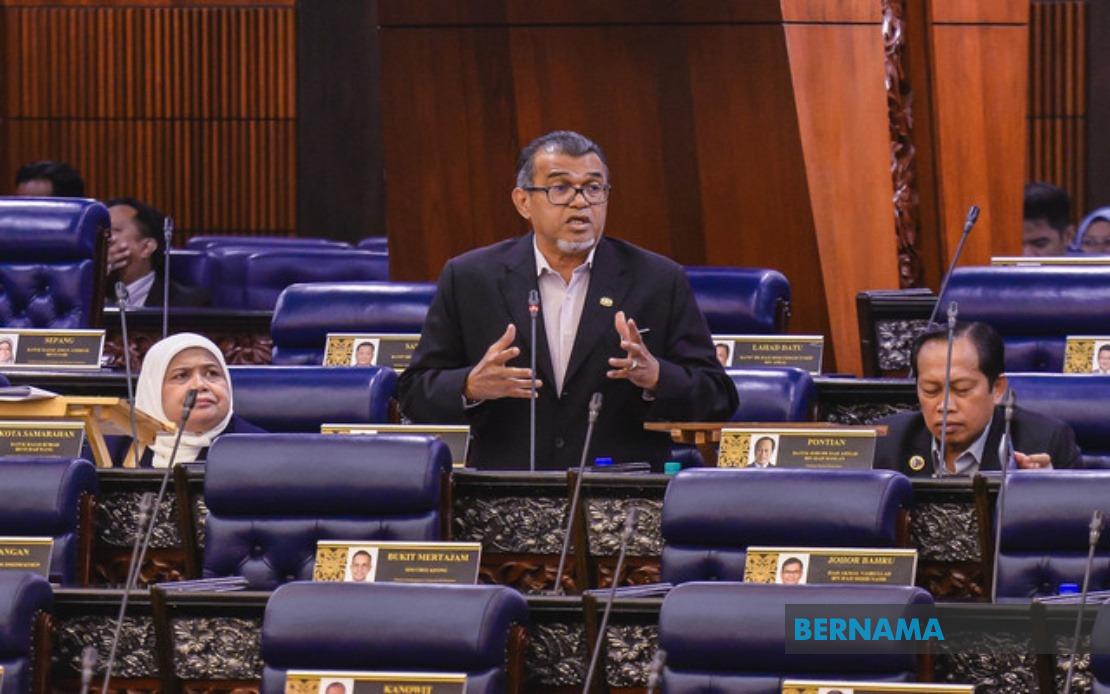
Kota Kinabalu International Airport's long-awaited expansion project, valued at nearly RM500 million, is in limbo as the federal transport ministry awaits the Sabah state government to resolve outstanding land and site-related matters before construction can commence. Deputy Transport Minister Datuk Hasbi Habibollah disclosed this timeline during parliamentary questioning on July 8, indicating that while the federal purse has already been opened for the initiative, critical coordination with state authorities remains incomplete.
The expansion represents part of a broader infrastructure push under Budget 2026, which allocated RM2.3 billion in October of the previous year for airport modernisation across four major hubs in Malaysian aviation. Prime Minister Datuk Seri Anwar Ibrahim, speaking in his capacity as Finance Minister, articulated the government's ambition to have these projects operational by 2028, with developments planned for Penang, Kota Kinabalu, Tawau and Miri airports. For Sabah specifically, this dual commitment to both Kota Kinabalu and Tawau reflects federal recognition of the state's economic potential and tourism significance in the broader Southeast Asian context.
The bureaucratic impediments delaying the KKIA project contrast sharply with progress elsewhere in the airports portfolio. Tawau Airport's expansion is already underway, demonstrating that once approvals align, execution can proceed swiftly. The holdup at Kota Kinabalu points to the inherent complexity of aviation infrastructure development in Malaysia's federal system, where state government cooperation proves essential for land acquisition, site designation and management of adjoining areas, particularly concerning runway buffer zones and operational boundaries.
Hasbi's parliamentary response to Datuk Shahelmey Yahya, who questioned the project timeline under the 2026 Budget allocation, painted a picture of funding readiness coupled with implementation caution. The ministry's reluctance to force timelines without state consent reflects a diplomatic approach to federal-state relations, particularly relevant given Sabah's historical negotiations with Kuala Lumpur over resource management and development priorities. The unresolved issues encompass not merely securing the primary expansion footprint but also clarifying approaches to adjacent areas, suggesting comprehensive spatial planning remains under discussion.
Beyond Kota Kinabalu, the parliamentary exchange illuminated the government's pragmatic stance on smaller regional airports facing commercial viability challenges. Pangkor Airport, which sits at the intersection of tourism potential and operational sustainability concerns, exemplifies this tension. The facility has remained largely dormant since May 2022, when SKS Airways discontinued services that had previously connected the island to Sultan Abdul Aziz Shah Airport in Subang using Dash 7 aircraft through charter arrangements with Berjaya Air.
Hasbi's response to PN-Lumut member Nordin Ahmad Ismail articulated the government's position that restoring commercial aviation to Pangkor depends not on political will but on airlines' independent business assessments. This stance reflects a broader philosophy across the transport ministry favouring market-driven solutions over state-subsidised routes. The deputy minister acknowledged that aviation represents a strategic tool for tourism sector growth, yet maintained that without commercial viability, federal support cannot justify sustained operations on routes where sea transport provides alternative accessibility.
The Pangkor situation encapsulates the challenges facing secondary airports across Southeast Asia's island economies. Tourism authorities and state governments often view air connectivity as essential infrastructure, yet airlines typically demand load factors and revenue projections that smaller markets struggle to sustain year-round. The transport ministry's openness to airline proposals, while avoiding direct investment in route subsidies, positions Malaysia within international best practices where government typically catalyses rather than operates commercial aviation.
Clarifying that Pangkor, Redang and Tioman airports have not been wholly abandoned remains politically important. These facilities continue to serve private aviation, military operations, helicopter services and medical evacuations—roles that justify maintaining infrastructure investments despite absence of scheduled commercial services. Malaysia Airports Holdings Bhd personnel stationed at these locations preserve operational readiness and asset integrity, preventing the reputation damage and capital loss that complete closure would entail.
For Malaysian aviation stakeholders and regional observers, the KKIA delays underscore the critical importance of early coordination between federal and state administrations on major infrastructure projects. While funding certainty represents progress, operational timelines ultimately depend on resolving terrestrial complexities that federal budgets alone cannot overcome. The project's eventual commencement will likely prove contingent on Sabah government's completion of internal processes regarding land alienation, site designation and stakeholder consultation.
The Budget 2026 airport development package simultaneously reflects genuine infrastructure commitment and the practical constraints facing implementation in Malaysia's decentralised governance framework. Success at Kota Kinabalu could establish a template for managing federal-state cooperation on aviation infrastructure elsewhere. Conversely, protracted delays might prompt broader policy reconsideration regarding land acquisition mechanisms and inter-governmental coordination protocols for major transport projects requiring seamless state-federal partnership.

