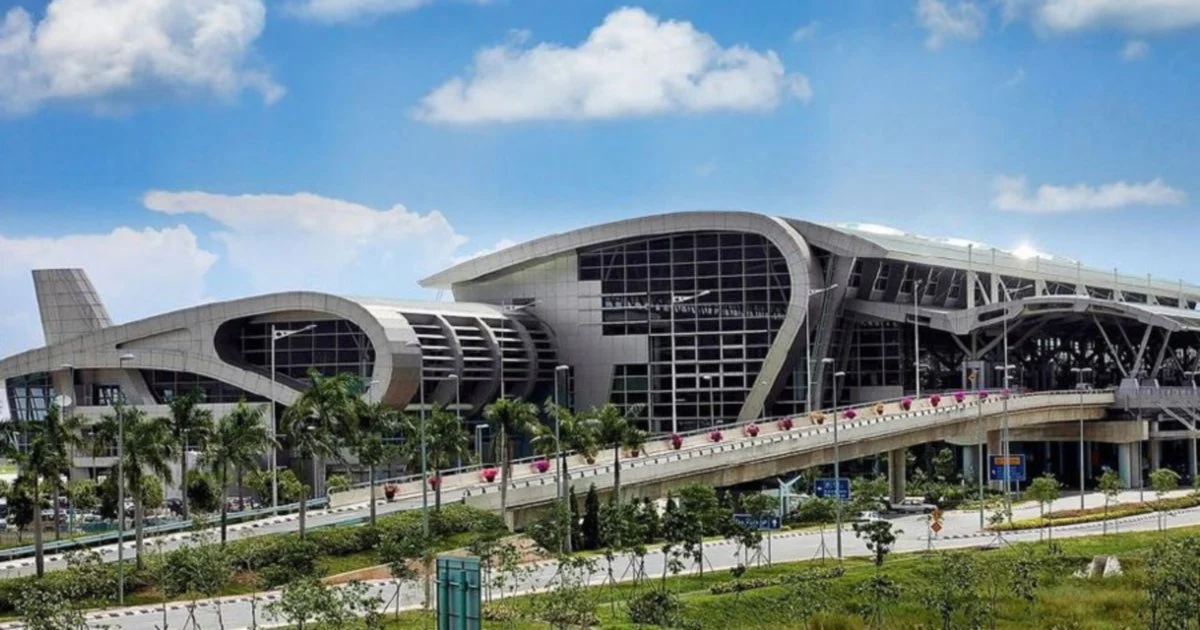
The long-awaited upgrade to Kota Kinabalu International Airport is trapped in bureaucratic limbo, with nearly RM500 million in planned infrastructure investment frozen pending resolution of land ownership and site access complications between federal authorities and the Sabah state government. Deputy Transport Minister Datuk Hasbi Habibollah acknowledged the stalemate in recent remarks, indicating that construction cannot commence until these territorial disagreements are satisfactorily addressed.
The impasse highlights a persistent challenge in Malaysian aviation infrastructure development: coordinating between federal transport authorities and state governments over control of airport land and surrounding properties. Such disputes, while sometimes technical in nature, can delay critical infrastructure projects by months or even years, affecting regional economic connectivity and tourism capacity.
Kota Kinabalu International Airport, serving Malaysia's largest state on Borneo island, handles significant passenger traffic and serves as a gateway for both business travel and tourism to Sabah. The proposed expansion would substantially increase terminal capacity and modernise facilities, positioning the airport to handle growing demand from both domestic and international routes. For Malaysian aviation planners, this project ranks among several priority upgrades intended to relieve congestion at major regional hubs.
The nature of the land complications remains unclear from official statements, but such issues typically involve questions about property boundaries, existing land titles, potential relocation of structures or infrastructure, or negotiation over land acquisition costs between parties. State governments in Malaysia traditionally retain significant authority over land matters within their territories, even where federal entities like the Ministry of Transport hold operational control of strategic infrastructure.
Sabah's geographic position and economic significance make airport capacity a serious developmental concern. The state's tourism sector, which includes visits to natural attractions like Mount Kinabalu and diving sites, depends substantially on air access. Business travellers, particularly those involved in palm oil, timber, and energy industries, also rely on reliable airport facilities. An expanded Kota Kinabalu International Airport would strengthen these economic links and potentially attract additional flight routes from regional carriers.
The RM500 million investment figure underscores the substantial resources committed to this upgrade. Such expenditure typically funds terminal expansion, additional gate facilities, improved baggage handling systems, enhanced security infrastructure, and modernised passenger amenities. In the context of Malaysia's broader infrastructure development agenda, this represents a meaningful allocation toward eastern Malaysian connectivity.
Delay in airport expansion projects carries downstream consequences for the regions they serve. Airlines consider runway capacity, terminal space, and ground infrastructure when deciding route frequency and aircraft size deployment. Bottlenecks at regional airports can discourage new services or force carriers to divert traffic to competing hubs. For Sabah, extended delays risk creating competitive disadvantage relative to other Southeast Asian destinations.
The dispute also reflects broader governance dynamics in Malaysian federalism. While the federal government typically funds and manages critical national infrastructure, state governments maintain proprietary interests and jurisdiction over land within their borders. Balancing these competing claims requires negotiation, compromise, and sometimes formal arbitration. The transport ministry's willingness to acknowledge the impasse publicly suggests a genuine commitment to finding resolution rather than attempting to bypass state-level concerns.
Industry observers note that similar coordination challenges have affected other airport development projects across Malaysia, though most eventually reach settlement. The key variables typically include whether the state views the project as beneficial to its own development priorities, the clarity of existing legal arrangements, and the flexibility of both parties in negotiating solutions such as joint governance arrangements, revenue-sharing models, or phased land acquisition.
For travellers and businesses using Kota Kinabalu International Airport, the expansion's delay creates uncertainty about when capacity improvements will arrive. Current facilities, while functional, face predictable congestion during peak seasons. An expansion would provide breathing room for growth in tourism and business travel over the coming decade.
Government officials now face pressure to accelerate negotiations and reach agreement on the outstanding land and site matters. The transport ministry's position suggests federal determination to proceed, but success ultimately depends on reaching mutually acceptable terms with Sabah authorities. Both levels of government have incentive to resolve the matter—the state gains improved infrastructure and economic benefits, while the federal government advances its aviation modernisation program.
Datuk Hasbi Habibollah's statement indicates that resolution is anticipated, though no specific timeline has been announced. The coming months will be critical for determining whether this RM500 million investment moves from planning into active construction, or whether protracted negotiations further delay this strategically important regional infrastructure project.

