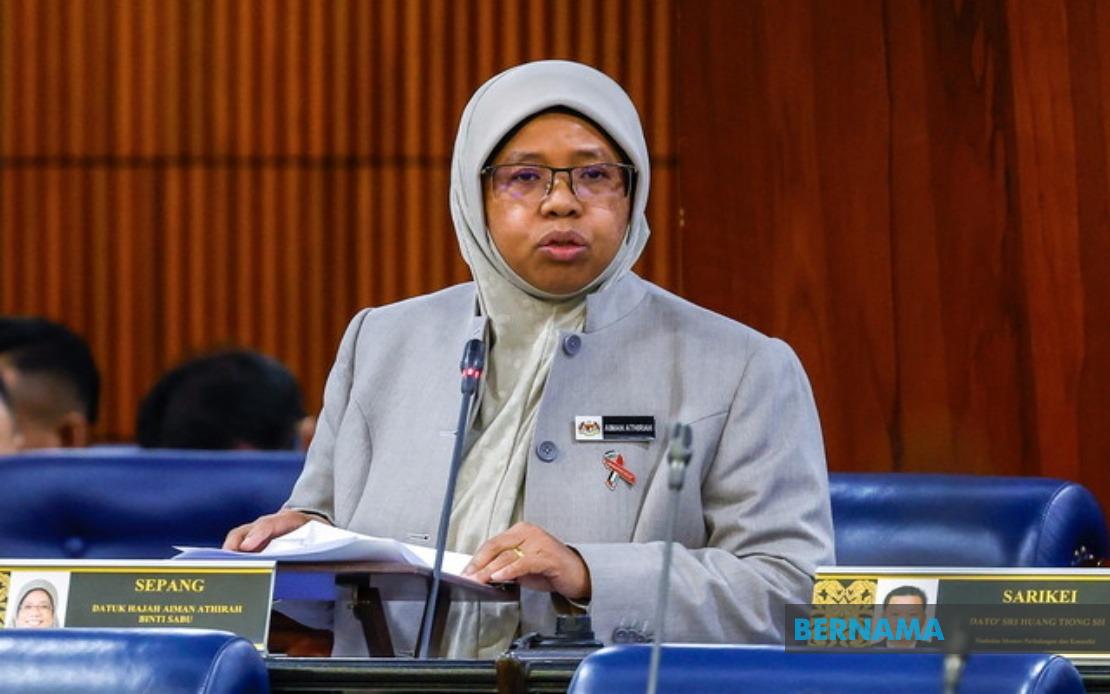
The Ministry of Housing and Local Government (KPKT) has given the go-ahead to 594 separate development initiatives targeting Chinese new villages and Indian traditional communities, with an annual budgetary commitment of RM73 million for implementation across the nation. Deputy Minister Datuk Aiman Athirah Sabu disclosed during parliamentary proceedings that the broad portfolio encompasses 573 projects concentrated in Chinese new villages alongside 21 initiatives dedicated to Indian villages, reflecting the government's ongoing push to upgrade living standards in these communities that have historically faced infrastructure challenges and limited resource allocation.
Within the Chinese new village component, infrastructure development dominates the approved slate with 366 separate projects receiving official clearance. Progress on this infrastructure arm shows mixed advancement, with roughly 40 percent of schemes—specifically 148 undertakings—having reached completion stage. The remaining 218 projects remain in active construction or development phases, indicating a sustained pipeline of work across the landscape of new villages distributed throughout Malaysia's peninsula. This infrastructure focus addresses long-standing deficiencies in basic amenities that have plagued many settlements since their establishment decades ago, when government investment lagged behind development priorities elsewhere.
Paralleling the infrastructure thrust, the Housing Repair Assistance Programme constitutes a substantial secondary pillar within the Chinese village initiative. A total of 197 distinct repair and renovation projects have secured approval, though implementation rates remain uneven. Currently, 47 of these housing improvement schemes have been finalised, whilst 150 continue in various stages of execution. This programme specifically targets the deteriorating residential stock within these communities, many featuring structures that have deteriorated substantially over decades with minimal maintenance investment. The repair assistance mechanism provides direct support to residents undertaking critical renovations and upgrades to their dwellings.
The third initiative addressing Chinese new villages centres on new housing construction assistance, though this component remains embryonic in its rollout. Ten projects have received formal approval under this construction assistance framework, yet none have commenced implementation as of the parliamentary statement. This lag suggests potential delays in project mobilisation, securing contractor engagement, or finalising detailed design specifications necessary before actual construction work can commence. The delayed start may reflect the complexity of coordinating new housing development across multiple village locations simultaneously.
Indian village development initiatives, whilst numerically smaller at 21 approved projects, represent a newer and more targeted government commitment. Deputy Minister Aiman Athirah identified 18 distinct Indian villages across six states—Johor, Melaka, Selangor, Kuala Lumpur, Perak and Negeri Sembilan—as focal points for coordinated development interventions. These undertakings address infrastructure provision, public amenities enhancement, and safety improvements with a combined outlay of RM2 million. The geographic spread across multiple states underscores the dispersed nature of Indian village settlements and the corresponding challenge of delivering equitable development support across fragmented locations.
Progress metrics for Indian village projects demonstrate accelerating implementation momentum. Five projects have reached completion, whilst 13 remain actively under construction, representing substantial forward progress. An additional two projects are navigating procurement processes, and one remains in preliminary planning stages. This distribution suggests most initiatives are well into execution phases, contrasting with the slower mobilisation observed in new housing construction schemes for Chinese villages. The relatively concentrated timeline and smaller project portfolio may facilitate more focused oversight and swifter completion cycles.
Historical funding trajectories reveal substantially increased government commitment toward Chinese new village development over recent years. Between 2023 and 2024, KPKT allocated RM328.9 million supporting development initiatives across 613 identified Chinese new villages nationwide. This substantial investment represents a deliberate policy shift toward addressing decades of relative neglect that characterised these settlements following their establishment in earlier decades. The sustained and growing allocation signals recognition that these communities require consistent long-term investment to achieve parity with mainstream urban and suburban development standards.
Indian village development financing, by contrast, represents an emerging priority area within the ministry's portfolio. Formal dedicated allocations specifically targeting Indian traditional villages commenced only in 2025, suggesting this initiative reflects more recent policy evolution and political emphasis. The government has committed RM15 million for 2025 directed toward benefiting 22,144 identified recipients across 50 Indian villages through 87 separate projects. This two-pronged financing approach allocates RM10 million through KPKT's direct 2025 budget incorporating 54 projects, whilst an additional RM5 million flows through the Indian Community Socioeconomic Development Programme administered via the Malaysian Indian Transformation Unit (MITRA).
The MITRA programme component reflects a broader government strategy of channelling development resources through dedicated ethnic-focused institutional frameworks. MITRA's involvement in coordinating aspects of Indian village development represents integration of grassroots community priorities with centralised government resource allocation mechanisms. This dual-track funding approach permits flexibility in project identification and implementation methodologies tailored to specific community circumstances and needs. The relatively recent establishment of these dedicated allocations indicates political recognition that Indian village communities require targeted investment comparable to efforts directed at Chinese new villages.
For Malaysian policymakers and residents, these development initiatives carry significant implications for social cohesion and equitable regional development. Chinese new villages and Indian traditional settlements represent constituencies that historically received limited government investment despite concentrating populations with distinct community identities and infrastructure challenges. The scaling of approved projects and financial commitments demonstrates explicit policy repositioning toward inclusive development. However, the varying completion rates across different project typologies—with infrastructure projects substantially advanced whilst housing construction remains nascent—suggest implementation capacity constraints merit monitoring. Sustained follow-through and completion of these approved projects will determine whether stated commitments translate into tangible infrastructure improvements benefiting residents and strengthening social stability within these historically marginalised communities.

