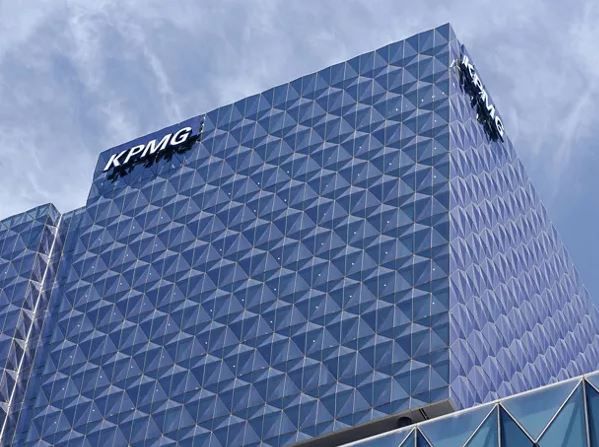
Australia's scandal-plagued consultancy KPMG has brought in Michael Ebeid as its first independent chairman, attempting to signal a fresh start after months of damaging revelations about misconduct. The move, announced on Thursday, represents the latest in a series of leadership changes meant to restore confidence in one of the country's most influential professional services firms. Yet the appointment has immediately attracted criticism from parliament, with opposition figures questioning whether Ebeid's track record actually demonstrates the kind of untainted, external oversight that the firm needs to genuinely reform.
Ebeid's elevation follows a particularly turbulent fortnight for the firm. Just days earlier, KPMG had announced that its chairman and two senior partners would step down as part of a broader governance restructuring intended to address the deeply rooted integrity problems exposed by the scandal. The departures also included the chief executive and the head of the audit division, who had resigned in May. These cascading resignations underscore the severity of the reputational damage that KPMG Australia has suffered, and the extent to which the firm's leadership recognises the need for wholesale change at the top.
The unfolding crisis stems from allegations that emerged publicly in March when Labor senator Deborah O'Neill used parliamentary privilege to reveal claims brought to the company months earlier by a whistleblower. According to the former senior executive, KPMG staff had improperly accessed and deployed confidential board documents belonging to property developer Lendlease in order to strengthen competing bids for major audit contracts. Such conduct, if substantiated, would represent a profound breach of client trust and professional ethics—exactly the kind of behaviour that undermines public confidence in the auditing profession itself.
In his statement accepting the role, Ebeid emphasised his commitment to rebuilding the firm's reputation and said that KPMG could "recover, rebuild and emerge a better firm" despite the current challenges. He outlined an agenda centring on strengthened board oversight, placing integrity at the core of the organisation's operations, and implementing the cultural and governance changes necessary to restore stakeholder confidence. As his first order of business, Ebeid committed to stabilising board governance, and he signalled that KPMG would accelerate its hunt for a permanent chief executive, with a decision expected before the end of July.
Before his appointment to the chairmanship, Ebeid held a background in public broadcasting and media governance, having previously led SBS, Australia's multicultural public television network. He was initially brought into KPMG's orbit in 2024 as an independent adviser to the national board, a role that transitioned into a position on the Asia-Pacific board from 2025 onwards. His history of involvement with governance issues and his status as someone from outside the accounting profession appeared, at least on the surface, to make him an appropriate external voice. However, this very history now lies at the heart of the controversy surrounding his appointment.
The backlash became apparent almost immediately following the announcement. A parliamentary committee released internal correspondence in which Ebeid had commented on the whistleblower allegations and Senator O'Neill's decision to publicise them. Rather than maintaining neutrality, the emails revealed that Ebeid had characterised O'Neill's actions as "very inappropriate and unfair" and had dismissed many of her statements as "completely false", particularly criticising the timeline of events presented by the whistleblower. For a chair tasked with overseeing investigations into precisely these matters, such pre-formed opinions raise awkward questions about impartiality and independence.
Greens senator Barbara Pocock, who sits on the parliamentary committee examining the scandal, was blunt in her assessment of the appointment. She called it a "clear conflict of interest" that fails basic ethics scrutiny. In her view, the released emails demonstrated that Ebeid possesses substantial prior knowledge of events within KPMG and has already formed definite positions regarding the whistleblower's allegations—hardly the posture of someone approaching the firm's problems with a fresh and objective perspective. She further argued that elevating someone so deeply embedded in the firm's recent history sends a troubling signal about KPMG's willingness to genuinely address the cultural rot that the scandals have exposed. If anything, Pocock suggested, the appointment risks perpetuating rather than remedying the very leadership failures that created the crisis in the first place.
The timing of the controversy compounds the reputational challenge facing KPMG. Just a day before Ebeid's appointment was announced, Australia's center-left Labor government indicated that it was actively considering structural reforms to the Big Four accounting firms—the industry giants including KPMG, Deloitte, EY, and PwC—in response to a pattern of scandals stretching across the sector. Such a dramatic intervention would be unprecedented in Australian corporate regulation and would directly threaten the business model and competitive position of firms like KPMG. Against this backdrop, the appointment of a chairman whose independence and objectivity are already in question sends a muddled message about the firm's commitment to genuine reform.
KPMG's initial silence on the parliamentary criticism is itself telling. The firm did not immediately respond to requests for comment on Senator Pocock's statements, suggesting that management remains on the back foot and may still be formulating its response to the mounting pressures surrounding governance and accountability. The lack of a swift, forceful defence of Ebeid's credentials contrasts with the need to project stability and decisive action.
The appointment saga illustrates a broader challenge facing professional services firms attempting to rebuild trust after major misconduct scandals. Simply rotating personnel at the top, while necessary, is rarely sufficient if the new leaders arrive with pre-existing connections to the problems they are meant to solve. Truly independent oversight typically requires individuals with no prior involvement in the affected organisation, or at minimum, those without documented positions on the very issues they are now tasked with investigating and remedying. The fact that Ebeid had already testified before the parliamentary committee as part of the fact-finding process makes his subsequent elevation to chairman appear to blur the lines between investigation and judgment in a way that could ultimately undermine the credibility of any reforms he implements.
For Malaysian and Southeast Asian observers, the KPMG scandal carries broader implications. Global professional services firms operate across the region, and reputational damage to one arm of such organisations can affect client relationships and regulatory standing elsewhere. The Australian experience raises important questions about how regional regulators and clients in Asia-Pacific should evaluate the independence and integrity of governance structures within multinational professional firms. It also highlights the value of robust whistleblower protections and parliamentary accountability mechanisms in surfacing misconduct that might otherwise remain hidden.

