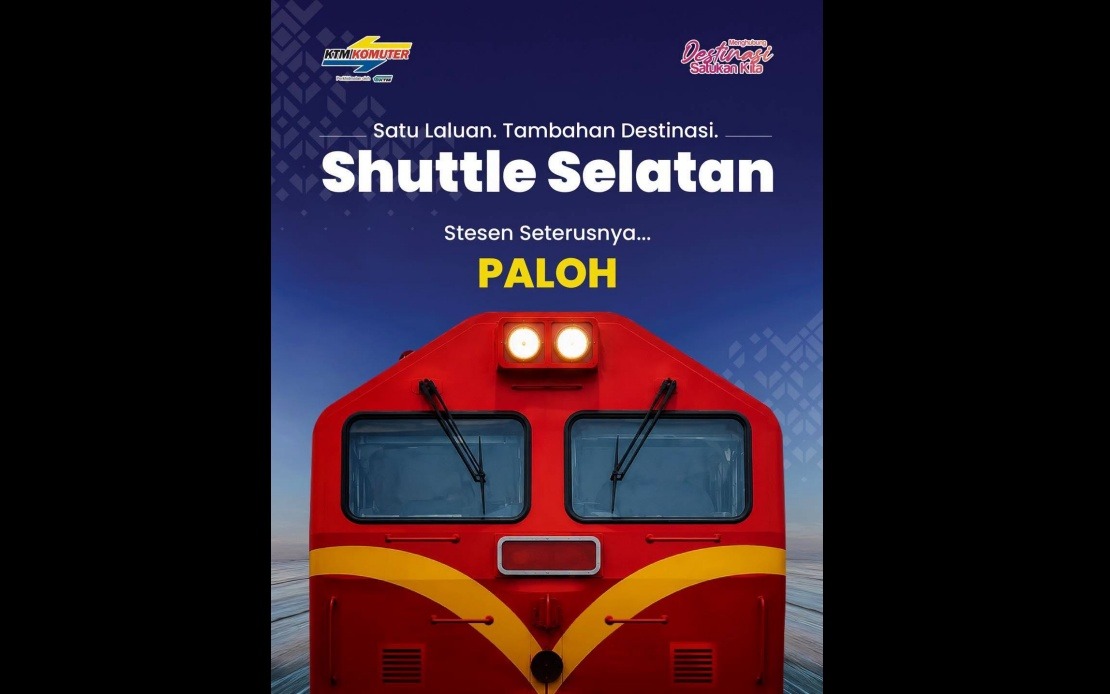
Keretapi Tanah Melayu Berhad (KTMB) is significantly broadening its Southern Shuttle rail network starting August 8, introducing a crucial new connection that links suburban Johor communities directly to major economic centres. The expansion marks a pivotal moment in the country's ongoing effort to modernise public transport infrastructure and reduce road congestion in the southern corridor. This development comes barely three months after the service's initial launch, demonstrating the government's determination to rapidly scale up rail connectivity in this strategically important region.
The newly extended Southern Shuttle will operate across seven stations stretching from Paloh through Kluang, Renggam, Layang-Layang, Kulai, and Kempas Baru, culminating at JB Sentral. The journey between Paloh and JB Sentral will take approximately two hours, providing a reliable alternative to increasingly congested road networks. This routing intelligently utilises portions of the Gemas-Johor Bahru Electrified Double-Track Project (PLBEGJB), leveraging infrastructure investments already underway to accelerate service deployment. For residents and workers across central Johor, the expansion represents a watershed moment in accessible urban rail transport.
The Transport Ministry framed this initiative as a strategic response to growing mobility challenges in the region, particularly for workers commuting within the Johor-Singapore corridor. By providing direct rail access to employment hubs in Kulai and JB Sentral, the service addresses a genuine gap in regional transportation options. The corridor development also strengthens Malaysia's positioning within the broader Johor-Singapore Special Economic Zone framework, facilitating cross-border workforce movement while reducing vehicle-related pollution and infrastructure wear. For Malaysian readers familiar with Johor's rapid economic development, this rail investment signals confidence in sustained regional growth.
Operational capacity appears well-calibrated for current demand. KTMB will deploy ten daily services comprising five trains from Paloh toward JB Sentral and five returning journeys, with each train accommodating up to 400 passengers. The scheduling demonstrates particular attention to commuter patterns, with the earliest Paloh departure at 3:55 am reaching JB Sentral at 5:52 am, specifically designed for early-shift workers and those continuing onward to Singapore. The final northbound service departs JB Sentral at 8:30 pm, arriving in Paloh at 10:27 pm, accommodating evening shift workers and cross-border commuters returning home. This thoughtful timetabling reflects KTMB's attempt to integrate the shuttle into people's actual working lives rather than imposing arbitrary schedules.
Fares have been aggressively discounted to encourage modal shift from private vehicles. The standard one-way Paloh-JB Sentral ticket of RM15.30 has been reduced to a promotional price of RM7.70, representing a 50 percent reduction that substantially improves affordability compared to fuel costs and vehicle maintenance. These promotional prices will remain in effect until new electric trains arrive, creating an extended window for price-sensitive commuters to experience the service. Such aggressive pricing recognises that habit formation is critical when introducing new transport options—early passengers who experience reliability and convenience become repeat users regardless of future fare adjustments.
The MyRailLife Pass extension amplifies the affordability benefit for specific demographic groups. From August 8 through December 31, the pass will provide free travel for children aged four to six, students from Year One through Form Six, and persons with disabilities (PwDs), subject to terms and conditions. This targeted subsidy reduces barriers for students accessing educational institutions and employment centres, while supporting inclusive transport policy. For families in the Paloh-Johor Bahru corridor, the combination of child fares and student passes meaningfully reduces monthly transport expenses, potentially shifting household budget allocations toward other consumption.
Intermodal connectivity within the broader network enhances the extension's strategic value. Passengers transferring at Kempas Baru Station gain access to the existing Kempas Baru-Pasir Gudang-Kempas Baru route, effectively creating a network rather than isolated corridors. This configuration strengthens connections between the Paloh-Kluang-Kulai-Johor Bahru suburban corridor and the Pasir Gudang industrial area, traditionally reliant on road transport. For manufacturers and logistics operators in Pasir Gudang, rail access from Johor Bahru's central business district opens possibilities for integrated supply-chain operations. The enhanced network topology demonstrates sophisticated transport planning rather than ad-hoc service introduction.
Initial passenger metrics provide encouraging signals regarding market receptiveness. The Southern Shuttle's two initial routes attracted 3,209 passengers since launch, demonstrating genuine demand for convenient rail alternatives in this region. While absolute numbers appear modest, the trajectory is significant—early adoption of novel transport services rarely attracts massive passenger volumes immediately. The fact that commuters have embraced the service despite limited marketing and route coverage suggests latent demand remains substantial. For KTMB and government planners, these initial results justify the rapid expansion timeline and provide confidence that further network extensions will attract viable ridership.
The extension's broader implications extend beyond immediate commuter convenience. KTMB and the Transport Ministry explicitly identified workforce mobility, economic activity support, and JS-SEZ development as strategic objectives. By reducing single-occupant vehicle dependence, the service addresses congestion, air quality, and infrastructure preservation—considerations increasingly important as Johor's population and economic activity intensify. For Malaysian policymakers monitoring urban transport challenges, the Southern Shuttle represents a template for rapid deployment of rail services in growth corridors, contrasting with lengthy infrastructure development cycles that plague many ambitious transport projects. The service demonstrates that existing railway alignments can be productively leveraged when political will and coordinated planning align.
Looking forward, KTMB faces the challenge of maintaining momentum and managing capacity constraints. The announcement that new electric trains will eventually replace current rolling stock suggests growth ambitions extend beyond current 400-passenger-per-train capacity. As the service matures and fare promotions eventually normalise, KTMB must retain passengers through consistent service quality, reliability, and gradual service enhancements. The extended MyRailLife Pass validity period through December 31 indicates management awareness that seasonal and cyclical demand patterns require strategic pricing adjustments. For transport analysts and commuters watching this service's trajectory, the next critical milestone arrives when promotional fares conclude and true market demand becomes apparent.

