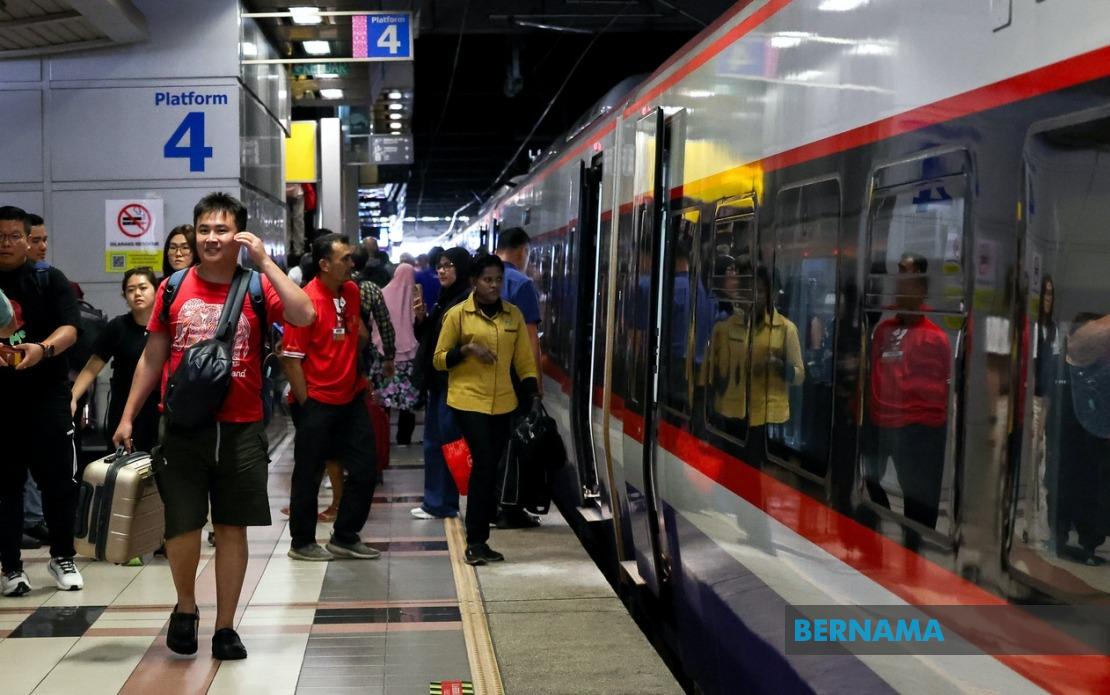
Keretapi Tanah Melayu Berhad (KTMB) is mobilising additional rail capacity to accommodate the anticipated surge in passenger traffic around the Johor state election, announcing the release of 7,464 extra Electric Train Service (ETS) seats across two critical routes connecting the Klang Valley and southern Johor. The move represents a second wave of capacity expansion after an initial batch of additional tickets released on June 19 sold out completely, underscoring both the public appetite for rail travel and the logistical pressures that electoral events place on national transportation infrastructure.
The supplementary services will operate along two principal routes: the JB Sentral to Gemas to JB Sentral corridor and the KL Sentral to JB Sentral to KL Sentral line, routes that historically witness peak demand when voters travel between urban centres and their constituencies. KTMB's expansion involves deploying four additional train services on each route over a concentrated three-day window running from July 10 through July 12, enabling the operator to inject approximately 2,488 seats into the system daily without permanently expanding its fleet or infrastructure. This surgical approach to capacity management allows the railway operator to address temporary demand spikes without the capital expenditure associated with permanent service increases.
The complete depletion of the initial June 19 ticket allocation revealed how constrained Malaysia's intercity rail capacity remains during peak travel periods, a vulnerability that periodically surfaces during national and state elections when millions of Malaysians return to their hometowns. By releasing this second tranche of seats, KTMB is attempting to prevent the transportation bottlenecks that historically emerge when demand outstrips supply, a scenario that typically forces voters into reliance on private vehicles and long-distance coaches. The emphasis on advance planning and early ticketing through digital channels suggests KTMB has learned from previous capacity crises and is attempting to distribute demand across available services more systematically.
To incentivise passengers toward rail rather than road transport, KTMB is offering a 20 percent discount on all ticket categories for these additional services, a promotional strategy that addresses both affordability concerns and the government's longer-term objective of shifting intercity travel patterns away from private vehicles toward mass transit. For budget-conscious voters facing travel costs alongside election-related expenses, this reduction materially improves the economics of train travel relative to fuel costs or coach fares. The discount structure also reflects broader policy recognition that competitive pricing remains essential to building ridership on Malaysia's ETS network, which has expanded substantially over the past decade but remains locked in competition with entrenched road transport habits.
Ticket sales logistics have been staggered to manage the administrative load, with reservations for the JB Sentral to Gemas route opening at 3:00 pm on July 7, while the KL Sentral to JB Sentral route sales commence the following morning at 9:00 am. This phased approach allows KTMB's booking systems to process demand sequentially rather than facing a simultaneous surge that could overwhelm reservation platforms, a consideration that reflects hard-won operational experience from previous capacity releases. The railway operator has specifically encouraged cashless transactions through its KITS Style mobile application, its official website, and kiosk machines at major stations, a digital-first strategy that accelerates transaction processing and provides real-time visibility into seat availability across the network.
Operational readiness remains critical given the compressed timeframe for these services, and KTMB has imposed station access protocols requiring passengers to arrive at least 30 minutes before departure, with platform access shutting five minutes prior to train departure. These strict timing requirements reflect the precision scheduling demanded by adding multiple services within existing operational windows, where every minute of buffer between successive trains affects network stability. For passengers accustomed to more relaxed boarding procedures on routine services, these requirements represent a tangible reminder that election-driven surge capacity operates under different operational constraints than standard scheduling.
The Johor state election represents a particularly significant logistics challenge given the state's demographic distribution, with substantial populations in Johor Bahru requiring connections to Kuala Lumpur and other peninsular centres, while traditional voters in smaller towns and rural areas depend heavily on transport infrastructure to reach polling stations. The concentration of ETS capacity expansion on the JB Sentral routes reflects this geographic reality, targeting the corridors along which maximum voter movement is anticipated. For Malaysian voters in other states watching this Johor-focused initiative, the exercise illustrates how electoral events periodically reorder national transportation priorities and expose the structural capacity constraints of Malaysia's intercity rail network even as ridership grows.
Beyond the immediate election context, KTMB's repeated capacity exhaustion during predictable surge periods has implications for long-term network planning and investment decisions. The fact that additional tickets released over a month earlier sold out completely suggests underlying demand significantly exceeds current service levels, raising questions about whether KTMB's existing infrastructure investment pipeline adequately addresses these periodic peaks. Permanent capacity expansion—whether through additional train sets, extended platforms, or increased service frequency—remains a different proposition than temporary surge capacity, requiring capital investment and regulatory approval, but the consistent sellouts during major electoral and holiday periods suggest the business case for expanded capacity continues strengthening.
For Malaysian business and logistics sectors, improved intercity rail capacity has downstream implications for productivity and cost structures, as reliable passenger transport capacity affects labour mobility and the efficiency with which workers can commute between job markets and home communities. The election-driven surge in demand simultaneously highlights both the success of ETS as a travel option and its limitations as the primary intercity transport spine serving Malaysia's western corridor. Continued pressure on rail capacity during peak periods may accelerate policy discussions about network expansion, fare pricing strategies, and the distribution of government transport investment between rail and highway infrastructure.

