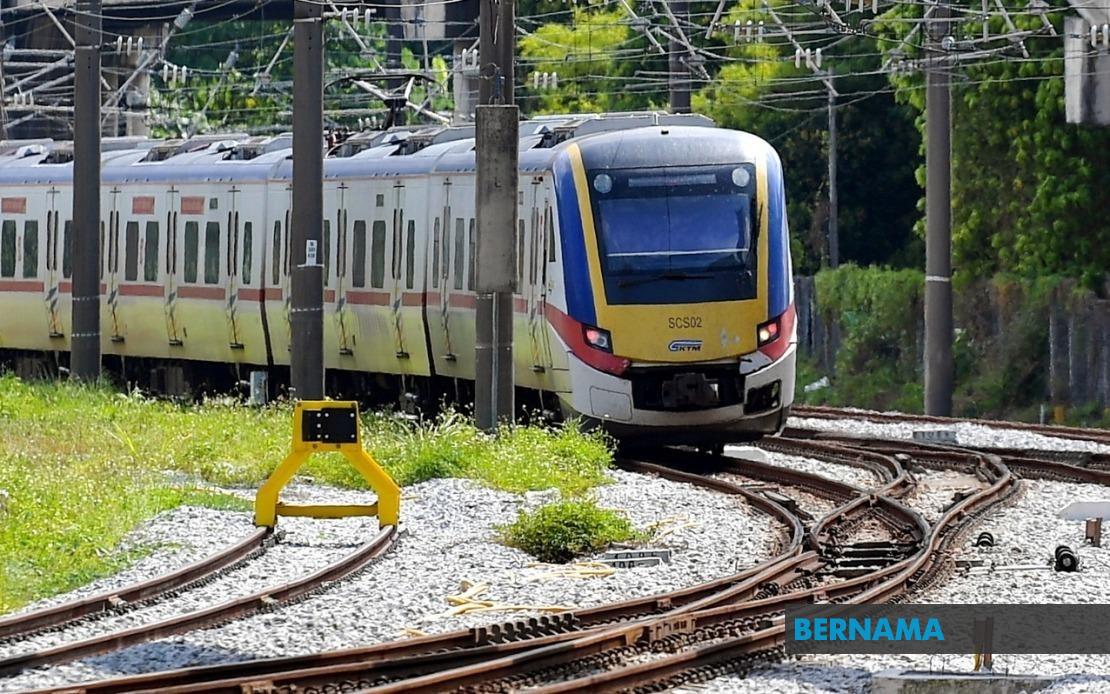
Keretapi Tanah Melayu Berhad (KTMB) is preparing for the August and September holiday season by significantly expanding its train capacity, announcing 124 supplementary services that will provide 38,944 additional seats across its Electric Train Service (ETS) and Electric Multiple Unit (EMU) Plus networks. The move comes as the country prepares for National Day festivities and the back-to-school period, times when intercity rail travel traditionally peaks as Malaysians visit relatives, holiday destinations, and return home from vacation.
The bulk of this expansion centres on the ETS, with 100 additional services offering 31,600 seats distributed across three separate holiday windows: August 21 to 23, August 28 to 31, and September 4 to 6. This phased approach reflects KTMB's strategy to match capacity precisely with expected passenger volumes rather than maintaining elevated service levels throughout the entire month. The EMU Plus service, which offers premium comfort and faster journey times, will contribute 24 extra services with 7,344 seats, also running selectively between August 21 and September 6 with the notable addition of extended service to Bandar Tasik Selatan, expanding access to the southern Klang Valley region.
For commuters in the northern corridor, the KTM Komuter is also contributing to the expanded network. Eight supplementary services will operate on the Padang Besar-Butterworth route from August 27 to 31, bringing daily service levels on this important cross-border link to 46 trains. This enhancement underscores KTMB's recognition that holiday periods generate demand not only on the premium ETS network but across all rail services, including the suburban and regional commuter lines that form the backbone of Malaysia's rail transport ecosystem.
Tickets for all additional services became available for purchase immediately following the announcement, providing travellers with nearly two weeks' notice before the first holiday surge. KTMB's deployment of these extra capacities through established sales channels signals the company's confidence in demand forecasting and its ability to mobilise additional rolling stock and operational resources on short notice. For Malaysian travellers accustomed to fully booked trains during holiday periods, the expanded availability represents a material improvement in travel flexibility and comfort.
The expansion initiative coincides with celebrations marking 16 years since the ETS launched its inaugural service to Ipoh on August 12, 2010. KTMB marked this milestone with customer appreciation activities throughout mid-August, including promotional vouchers, complimentary meal vouchers from KFC, free travel tickets, and discounts of up to RM16. These gestures, while modest in scale, underscore the company's efforts to build customer loyalty and reinforce its position as a preferred intercity transport option amid competition from budget airlines and coach services.
Since its establishment in 2010, the ETS has undergone significant expansion, first extending to Butterworth and Padang Besar in 2015 before announcing further southward expansion scheduled for late 2025. This progressive geographic expansion reflects both demand growth and KTMB's capital investment strategy. The railway operator has now transported 44.3 million passengers cumulatively, with recent performance indicating acceleration in uptake. The January-to-July period of 2024 recorded 3.67 million passengers, representing a 56 percent increase compared to the same months in 2023 when 2.36 million passengers used the service.
This substantial year-on-year growth trajectory carries significant implications for Malaysia's transport planning and carbon emissions targets. As more Malaysians choose rail over private vehicles or air travel for intercity journeys, the pressure on highway infrastructure decreases while contributing to the nation's sustainability objectives. The demand surge also validates KTMB's capital expenditure on rolling stock and infrastructure, suggesting that further investment in rail capacity will likely generate corresponding returns through revenue growth and market share expansion.
Datuk Azlan Shah Al Bakri, KTMB's group chief executive officer, characterised the strong passenger growth as evidence of public confidence in Malaysia's rail transport reliability and service standards. His comments reflect a broader industry narrative in which rail operators position themselves as essential alternatives to congested highways and increasingly scrutinised air travel. The availability of competitive fares, coupled with improving onboard amenities and punctuality records, has evidently resonated with Malaysian travellers seeking value and comfort for medium-distance journeys.
The holiday season expansion also highlights operational challenges that KTMB navigates continuously. Deploying an additional 124 services requires not only sufficient rolling stock but also sufficient trained personnel, track access agreements with Malayan Railways Limited, and careful scheduling to maintain freight operations that generate substantial revenue. The company's ability to execute this expansion suggests mature operational planning and resource management capabilities, though sustained growth will eventually require substantial capital investment in new rolling stock to avoid capacity bottlenecks during peak seasons.
For Malaysian consumers, the practical benefit of this expansion is straightforward: reduced instances of sold-out services and lower prices if demand-responsive pricing mechanisms are applied more conservatively. During previous holiday periods, ETS tickets frequently sold out weeks in advance, forcing travellers to accept less convenient departure times or explore alternative transport modes. The additional 38,944 seats represents meaningful relief, though whether capacity proves sufficient depends ultimately on actual holiday travel patterns.
The expansion also carries implications for regional rail connectivity within Southeast Asia. As Malaysia's domestic rail network expands and modernises, it enhances the country's position within emerging regional rail corridors, including initiatives linking Malaysia to Thailand and Singapore through upgraded cross-border rail services. KTMB's investment in capacity and service quality contributes to this broader regional transport integration agenda, positioning Malaysia's rail network as increasingly competitive and reliable.

