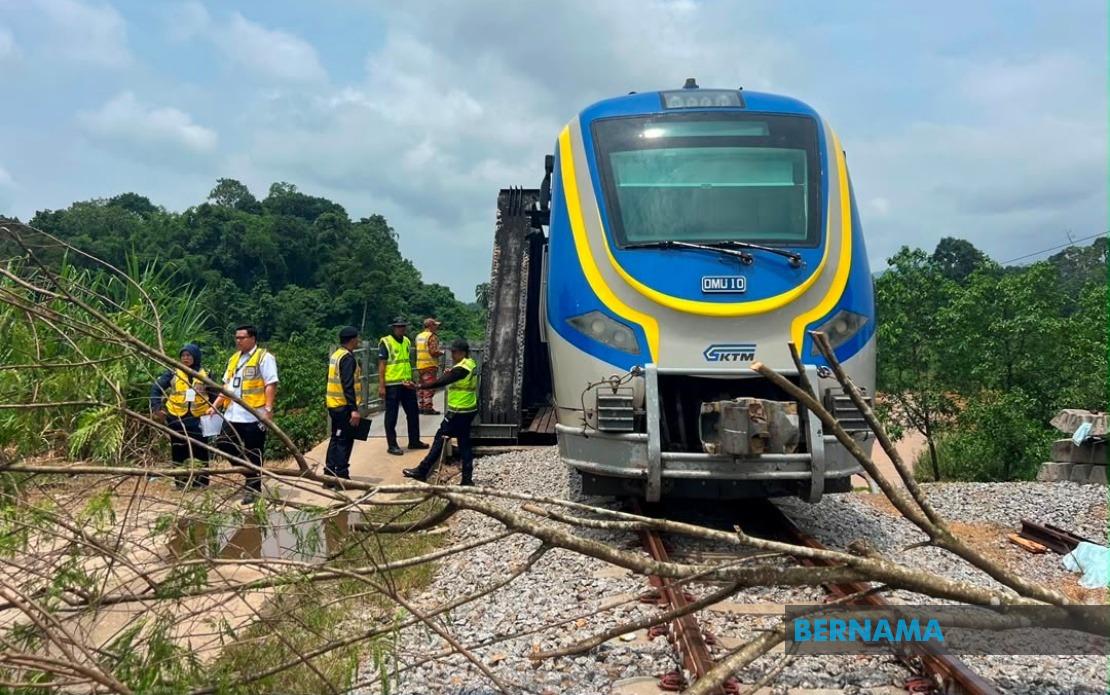
Keretapi Tanah Melayu Berhad (KTMB) is putting its emergency readiness to the test through a substantial training programme centred on the EX-Kemubu route, where officials acknowledge that geographical isolation presents genuine operational hurdles in the event of an incident. The exercise, held in Kuala Krai, brings together representatives from eleven different government and emergency response agencies to systematically evaluate how quickly the railway operator and its partners can mobilise to protect passengers and staff. The focus extends beyond simply arriving at a scene—it encompasses the entire chain of communication, decision-making, and coordination that determines whether a crisis is managed smoothly or descends into confusion.
Khairul Naim Johdi, KTMB's general manager for occupational safety, health and environment, articulated the core challenge facing railway operations across Malaysia's more sparsely populated corridors. Rural rail lines such as those through Kemubu present inherent difficulties that urban counterparts do not encounter; distance from main roads creates temporal friction in rescue operations, and the absence of nearby medical facilities compounds the urgency of effective first-response protocols. These constraints make the difference between a manageable situation and a catastrophic one measured not merely in minutes but in the capacity of systems to function cohesively under pressure. The Kemubu line was deliberately selected for this exercise precisely because it embodies these realistic hazards, including proximity to waterways and significant isolation from densely populated centres.
The training brings approximately 350 participants representing a broad spectrum of emergency response capability. The Royal Malaysia Police, the Malaysian Fire and Rescue Department, the Ministry of Health, the Malaysian Civil Defense Force, and the Department of Social Welfare all fielded personnel for the drill. This multi-agency mobilisation reflects the understanding that railway emergencies cannot be managed by KTMB in isolation; rather, they demand seamless integration between transport, security, health, and civil protection authorities. The breadth of participation also serves a secondary purpose—it ensures that personnel from diverse backgrounds and operational traditions develop familiarity with one another's standard procedures and communication protocols, reducing friction should a real emergency occur.
The evaluation methodology employed in the exercise carries particular significance for identifying systemic weaknesses. Rather than assessing the drill as a simple pass-or-fail exercise, KTMB employs what officials term a post-mortem analysis, examining detailed feedback from all participating agencies to construct a comprehensive picture of performance. This scrutiny targets specific measurable elements: the duration between incident detection and rescue team arrival, the appropriateness of first responder actions, the viability of access routes to accident sites, and the clarity and timeliness of information flows. By disaggregating performance into these distinct components, KTMB can identify whether delays stem from communication failures, resource constraints, geographical impediments, or procedural confusion—information that proves invaluable for targeted improvement efforts.
Access and response time represent the paramount concerns for railway operations in remote areas. In rural contexts, the time required for rescue vehicles to navigate from nearest towns to a railway incident site can stretch into hours, a reality that fundamentally alters emergency response strategy. Rather than hoping for immediate external rescue, protocols must emphasise KTMB's own capacity to stabilise situations, evacuate passengers to safe locations, and provide preliminary medical assistance before professional rescue teams arrive. This internalist approach places substantial responsibility on railway staff to possess genuine competency in evacuation procedures, basic medical response, and situation assessment. The Kemubu drill provides practical testing ground for whether KTMB personnel possess these capabilities or whether training gaps exist.
Information dissemination constitutes a third pillar of the exercise's evaluation framework, reflecting lessons learned from past transport incidents where confused or delayed communication created secondary crises. The protocol established by KTMB designates its operation control centre as the hub through which all incident information must flow. When an emergency occurs, trained KTMB staff contact this control centre, which then initiates notifications to relevant external agencies. This centralised approach aims to prevent duplicated communications, contradictory information reaching public audiences, and delayed mobilisation due to unclear incident parameters. However, centralisation introduces its own risks—bottlenecks at the control centre can cascade into delays throughout the response chain. The drill assesses whether KTMB's control centre infrastructure and staffing can manage high-volume incident notification without degrading communication quality.
The systematic approach KTMB has adopted reflects broader international best practices in railway safety management. Most developed railway operators conduct large-scale emergency drills annually, rotating training locations across different operational regions to ensure comprehensive coverage and to test response systems under varied geographical and infrastructural conditions. KTMB follows this model, conducting major exercises by rotation across its four operational regions whilst maintaining supplementary smaller-scale drills throughout the year. This tiered approach balances the resource demands of comprehensive training against the imperative to maintain staff readiness across the entire network. Annual rotation also ensures that the same regions are not repeatedly stressed, distributing exercise burdens fairly across the railway's operating footprint.
The Kemubu route in particular merits intensive focus given its combination of rural isolation and topographical challenges. The line traverses terrain where rivers present both barrier-like qualities for rescue access and drowning hazards for passengers. The absence of nearby hospitals or specialised trauma centres means that medical decision-making carries heightened stakes—choices made in the first minutes following an incident may prove decisive for patient outcomes. Furthermore, the Kemubu and Dabong routes serve communities for whom the railway remains a critical transport link, implying that prolonged service disruptions following incidents carry economic consequences beyond the immediate passenger impact.
Khairul Naim's remarks emphasise that emergency preparedness extends beyond reactive training to encompass preventive architecture. Ensuring KTMB staff possess evacuation competency, establishing clear notification procedures, and maintaining regular drill cycles all represent upstream investments in safety culture. The integration of procedure documentation with hands-on training creates reinforcing feedback loops—written procedures guide training design, whilst training experience reveals procedural weaknesses requiring revision. This iterative approach to safety management represents a maturation beyond merely complying with regulatory minimums towards building organisational systems genuinely capable of protecting human life under crisis conditions.
The coordination challenges that the Kemubu exercise tests hold particular relevance for Malaysian railway authorities as the nation continues to expand rail networks and upgrade existing infrastructure. As KTMB and other operators develop new routes or modernise existing lines, the foundational systems of emergency preparedness must evolve in parallel. A newly constructed high-speed rail corridor serves no public good if emergency response systems lag behind operational capabilities. Conversely, rural rail lines such as Kemubu, lacking the technological sophistication and capital investment of premium routes, must compensate through superior organisational discipline and personnel training. The drilling approach KTMB demonstrates here provides a template applicable across diverse operational contexts, emphasising adaptability to local conditions rather than assuming uniform solutions.
The implications of this training programme extend beyond KTMB itself to shape regional expectations around transport safety standards. Malaysia's positioning as a middle-income nation with aspirations toward developed-economy status includes expectations that public transport systems operate with safety standards comparable to affluent counterparts. Drills like the Kemubu exercise signal to the public that railway authorities take these expectations seriously, that they identify weaknesses proactively rather than waiting for incidents to expose them, and that they invest in continuous improvement. For passengers considering whether to utilise rail services, evidence of systematic safety preparation provides reassurance that their transport choice reflects responsibility rather than convenience alone.
Looking forward, KTMB and its partner agencies face the ongoing challenge of translating training insights into operational improvements. The post-mortem analysis will likely identify specific deficiencies—perhaps excessive response times from certain locations, communication delays at particular interfaces, or gaps in evacuation training among certain personnel cohorts. Translating these findings into concrete corrective actions, measuring improvement through subsequent drills, and sustaining institutional commitment to safety culture across staff transitions and budget cycles represents the true test of whether exercises genuinely strengthen response capability. The Kemubu drill represents a significant step in this direction, but sustainable safety improvement remains an ongoing commitment rather than a destination reached through single training events.

