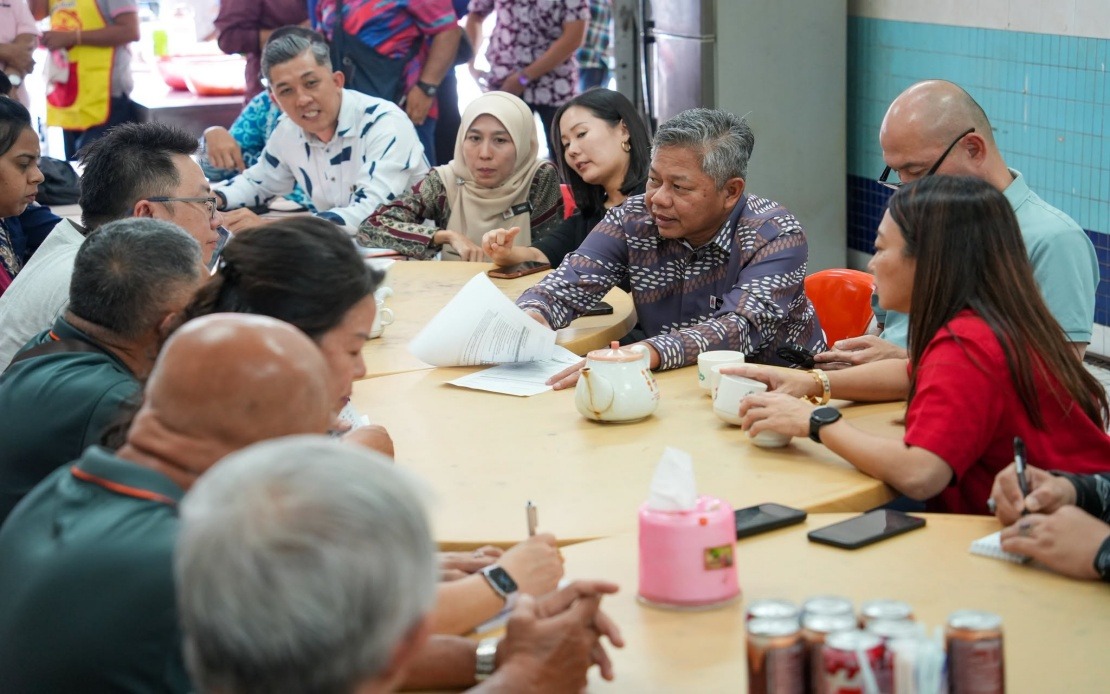
Kuala Lumpur City Hall (DBKL) has unveiled a package of operational reforms designed to ease the regulatory burden on businesses operating within Malaysia's capital, signalling a shift towards more trader-friendly municipal governance. The three-pronged initiative tackles persistent friction points in the licensing system, from outdoor seating arrangements to building modifications and hygiene-related closures. Under the new framework, businesses seeking to place tables and chairs on five-foot ways will pay a standardised monthly fee of RM30 per set, a fixed rate intended to eliminate negotiation and inconsistency across different DBKL branch offices. This move directly addresses long-standing grievances from food and beverage operators who have contended with opaque or variable pricing structures, particularly affecting the hawker and small restaurant sectors that form the backbone of Kuala Lumpur's informal commercial landscape.
The second component streamlines the permitting process for minor building works that do not alter structural integrity, such as tile or ceiling replacement. Previously, such modifications required extensive documentation and review cycles that could stretch across weeks. Under the revised system, applicants need only complete a straightforward form and notify their respective DBKL branch office, with permits issued directly at the branch level. This decentralisation of authority aims to reduce processing delays while maintaining baseline safety and compliance standards. The approach recognises that low-risk renovations have been unnecessarily throttled by bureaucratic procedures designed for complex structural work, effectively penalising small traders who lack the resources or expertise to navigate multi-stage approval systems. By distinguishing between risk categories and calibrating oversight accordingly, DBKL appears to be embracing proportionate regulation—a principle increasingly adopted by progressive municipal administrations across the region.
The third reform addresses a critical pain point for food-related businesses: the reopening of premises following hygiene-related closures. DBKL now permits businesses to apply for reopening as soon as 24 hours after remedial cleaning has been completed, provided that an inspection confirms all food safety and hygiene standards have been met. Previously, closure periods could extend significantly longer, imposing acute financial strain on operators already grappling with lost revenue during the initial shutdown. Importantly, DBKL emphasises that reopening remains conditional on successful inspection rather than automatic, preserving public health safeguards whilst acknowledging the genuine hardship extended closures inflict on proprietors and their employees. This calibrated approach balances trader welfare with legitimate municipal health responsibilities.
Applications for outdoor seating permits will be processed through branch offices aligned with parliamentary constituencies, with approval hinging on location suitability and confirmation that pedestrian access, wheelchair accessibility, and emergency service routes remain unobstructed. This geographical delegation mirrors the minor works approach and should theoretically accelerate decision-making by vesting authority closer to ground level. The eligibility criteria apply universally to all traders meeting stipulated requirements, regardless of business background or premises type—a statement that appears designed to signal impartiality and forestall accusations of selective enforcement or preferential treatment toward particular communities or business models.
The initiative emerged from engagement sessions involving Hannah Yeoh, Minister in the Prime Minister's Department (Federal Territories), DBKL mayor Datuk Seri Fadlun Mak Ujud, and representatives from the Selangor and Kuala Lumpur Chinese Coffee Shop and Tea Shops Owners' Association, as well as a separate consultation with the Malaysian Muslim Restaurant Owners' Association (PRESMA) earlier in April. These dialogues underscore an evolving municipal willingness to absorb trader feedback and translate grievances into policy adjustments. For Malaysian readers, such consultative processes may signal a departure from top-down regulatory frameworks, though outcomes ultimately depend on frontline implementation consistency across numerous branch offices.
Standardisation emerges as a critical theme underlying all three reforms. DBKL explicitly notes that uniform processes, requirements, and enforcement protocols should reduce inconsistency at the branch level, providing traders with greater certainty and officers with clearer guidance, thereby diminishing scope for discretionary interpretation that can breed complaints of unfairness. This emphasis on clarity reflects lessons learned from complaints about variable treatment across jurisdictions and reflects international best practice in regulatory design. When municipal staff lack detailed procedural guidance, enforcement can become inconsistent, leaving traders uncertain about compliance expectations and fostering perceptions of arbitrary decision-making.
For Kuala Lumpur's informal and formal trading communities, these reforms carry tangible implications. Lower outdoor seating costs and faster minor works permits directly reduce operational expenses and time-to-market for small enterprises. The accelerated hygiene closure reopening pathway mitigates catastrophic revenue loss during remediation periods, enhancing business resilience. Collectively, the measures lower barriers to formalisation, potentially encouraging more hawkers and unlicensed operators to regularise their status through formal permitting. Broader Southeast Asian traders watching Kuala Lumpur's regulatory evolution may view these steps as a bellwether for municipal modernisation in the region, particularly as cities balance economic development pressures against service-delivery expectations.
However, success hinges on implementation fidelity across DBKL's sprawling branch network. Regulatory reform on paper frequently falters when frontline officers lack training, resources, or motivation to apply new procedures consistently. Traders report that even well-intentioned municipal initiatives sometimes produce mixed outcomes depending on individual branch competence and officer diligence. DBKL's emphasis on officer guidance and standardised checklists suggests awareness of these implementation challenges, yet sustained monitoring will be essential to ensure promised benefits materialise in practice rather than remaining aspirational.
The timing of these reforms reflects broader political messaging around business-friendly governance and regulatory efficiency. Hannah Yeoh's involvement signals federal-level interest in demonstrating responsive municipal administration, a potentially important signalling mechanism as Malaysia's capital competes with regional cities for investment and entrepreneurial talent. Kuala Lumpur's attractiveness as a business destination depends partly on institutional reliability and efficient governance; these reforms, if well-executed, contribute to that positioning.
Looking forward, Malaysian business associations and trader groups will likely monitor implementation closely to assess whether procedural efficiencies translate into genuine operational relief or merely represent repackaged bureaucracy. The success or failure of this initiative will influence municipal credibility in subsequent reform efforts and may establish precedents for similar regulatory streamlining across other Malaysian cities. For traders already struggling with post-pandemic recovery, even modest reductions in licensing costs and permitting timelines can meaningfully improve cash flow and competitive positioning, making the practical execution of these announced reforms a matter of considerable economic consequence.

