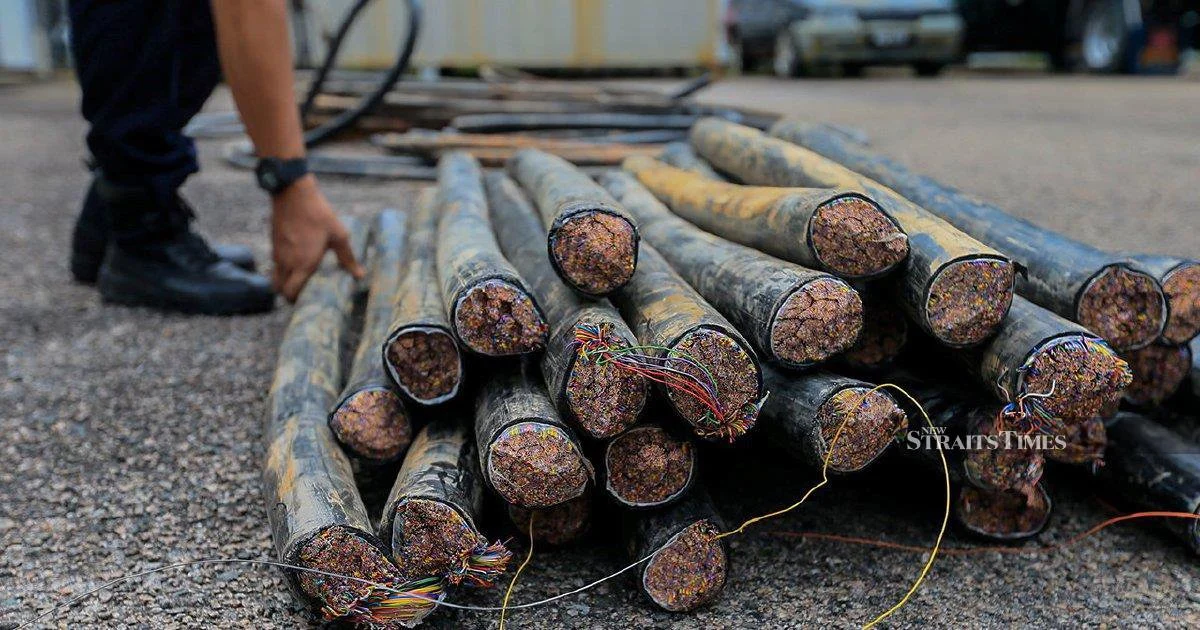
The Royal Malaysian Police have recorded a marked decrease in cable theft cases across Kuala Lumpur during the first five months of 2024, signalling that sustained enforcement efforts are beginning to yield measurable results against organised theft rings that have long plagued the capital's infrastructure and utilities sector. The drop from 205 reported incidents last year to just 71 cases during the January to May period represents a decline of approximately 65 percent, offering cautious optimism to city administrators and utility companies who have struggled with the economic and operational consequences of large-scale metal pilfering.
The police have arrested 85 suspects in connection with these crimes so far this year, indicating that law enforcement agencies are not merely recording fewer incidents but are actively pursuing perpetrators with greater intensity. The arrest figure suggests a shift from reactive policing to more proactive intelligence-led operations, potentially disrupting supply chains that have traditionally moved stolen copper and aluminium cables to scrap metal dealers and informal recycling operations throughout the Klang Valley region.
Cable theft has represented a persistent challenge for Malaysian authorities, particularly in urban centres where copper and aluminium thieves target telecommunications infrastructure, electrical power lines, and railway systems. The thefts inflict considerable financial damage on service providers, who must replace damaged cables and restore interrupted services, often at considerable expense. Beyond direct economic losses, these crimes create public safety hazards by leaving exposed electrical lines and destabilising infrastructure that millions of residents and businesses depend upon daily.
The concentration of such offences in Kuala Lumpur reflects broader patterns seen in major Southeast Asian cities, where rapid urbanisation and high scrap metal prices create incentives for organised criminal groups to target essential infrastructure. The relatively high arrest figure of 85 suspects indicates that authorities have moved beyond individual opportunistic thieves to dismantling more structured theft operations, suggesting an understanding that many cable thefts involve coordinated teams with division of labour, transport arrangements, and links to buyers.
Utility companies in Malaysia have long advocated for stronger police action against organised metal theft, recognising that service disruptions ripple through the entire economy. When telecommunications cables are stolen, business continuity suffers, hospitals and emergency services face potential complications, and ordinary Malaysians experience communication blackouts. The police's apparent success in reducing the incidence rate could demonstrate the effectiveness of dedicated task forces and intelligence sharing between telecommunications operators and law enforcement agencies.
The significant percentage decrease must be contextualised within Malaysia's broader security landscape and the resource constraints facing police forces nationwide. Achieving a 65 percent reduction in offences over a twelve-month period typically requires sustained commitment from multiple departments, improved coordination between agencies, and enhanced surveillance capabilities. The fact that authorities have managed this while presumably managing numerous other criminal priorities suggests either targeted operations focused on cable theft or a broader improvement in prevention and detection systems.
Scrap metal dealers and informal recycling networks form the final destination for most stolen cables, making them critical pressure points in the theft supply chain. Police success in reducing cable theft may indicate increased scrutiny of second-hand metal trading operations, potentially through inspections, documentation requirements, or intelligence operations designed to disrupt the link between theft and sale. Cooperation from the scrap metal industry itself could also have contributed to the declining figures.
For ordinary Malaysians and Malaysian businesses, the declining cable theft statistics translate into more reliable infrastructure and reduced service interruptions. Manufacturing plants, offices, hotels, and households throughout Kuala Lumpur benefit from uninterrupted power and communications, enabling economic activity to proceed without the disruptions that plagued previous years. The improvement in public safety also extends beyond infrastructure stability, as cable theft often occurs in remote or poorly lit areas at night, creating dangers for both perpetrators and law-abiding persons who might be in proximity.
Looking forward, sustaining the downward trend in cable theft will require maintaining police momentum while remaining alert to criminals who may simply relocate operations to less heavily policed areas or adapt their methods to avoid detection. The region surrounding Kuala Lumpur, including parts of Selangor and surrounding states, could potentially become targets if criminals perceive reduced enforcement pressure outside the capital. Police officials will likely need to coordinate with state forces to prevent this displacement effect from simply shifting the problem beyond Kuala Lumpur's boundaries.
The 71 cases recorded in five months also represents approximately 14 incidents monthly, a figure that while dramatically improved, still reflects ongoing vulnerability in parts of the city's infrastructure. Continued emphasis on prevention through improved cable security, increased lighting in vulnerable areas, and enhanced surveillance at known target locations will remain necessary to drive the trend toward even lower figures. The partnership between police, utility companies, and community stakeholders appears to be producing results that could serve as a model for addressing similar infrastructure crimes throughout Southeast Asia.