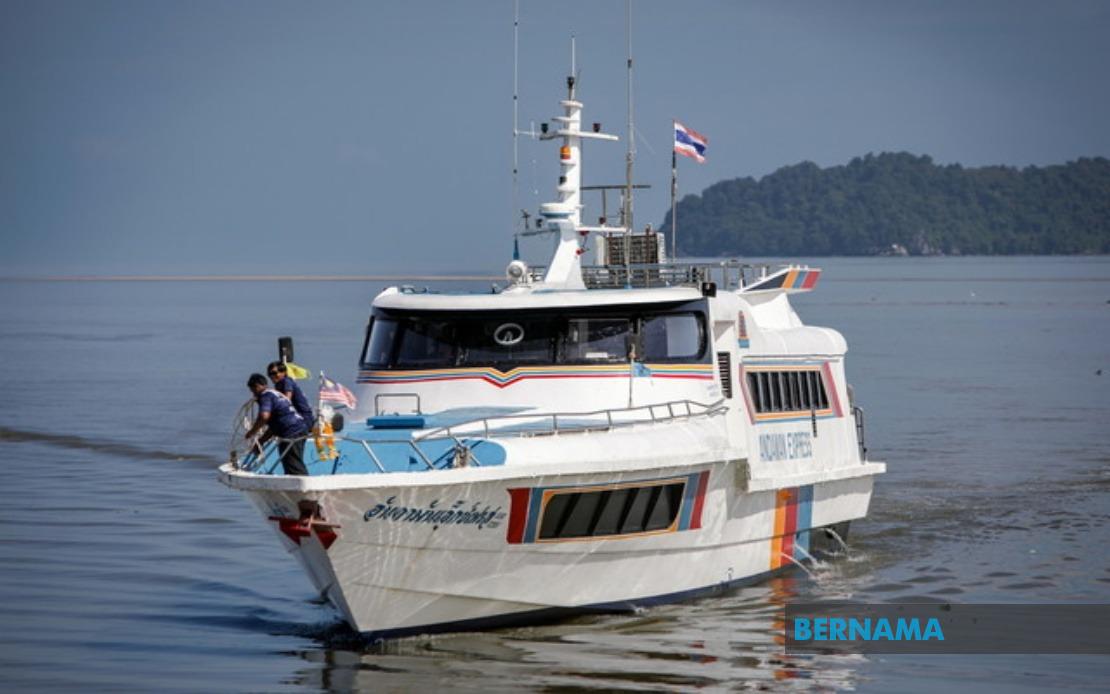
The maritime corridor connecting Kuala Perlis and Satun will spring back to life this Thursday, marking a watershed moment for cross-border connectivity in the northern peninsular region. The ferry service, suspended since the onset of the COVID-19 pandemic, carries significance that extends far beyond routine passenger transportation—its resumption signals a deliberate repositioning of regional tourism infrastructure and the strengthening of Malaysia-Thailand economic collaboration at the community level.
Perlis Menteri Besar Abu Bakar Hamzah articulated an expansive vision for the revived sea route during remarks made at the Thai port town yesterday. Rather than viewing the ferry simply as a transport convenience, state leadership sees the corridor as a catalyst for integrated tourism development across three designated geopark zones: the Perlis Geopark, Satun UNESCO Global Geopark, and Langkawi UNESCO Global Geopark. This tripartite framework represents a deliberate attempt to harness geographical and geological assets for sustainable economic growth, creating a unified narrative around natural heritage that can attract international visitors and distribute tourism revenue across multiple jurisdictions.
The operational blueprint that authorities have established begins modestly, with a single daily crossing during the initial phase. This cautious approach reflects both pragmatic market assessment and the institutional need to verify that systems function reliably before scaling upward. Abu Bakar indicated that frequency will expand in response to demonstrated demand, suggesting that planners are attentive to the risk of over-provisioning transport capacity in the opening months. The graduated rollout approach reduces financial exposure while building operator confidence and allowing regulatory agencies time to refine procedures.
Fare competitiveness emerged as a priority concern for state administrators. Officials have initiated conversations with ferry operators to ensure pricing structures remain attractive to prospective users, particularly cross-border commuters and leisure travellers who may have established alternative routes during the service closure. The government is furthermore exploring promotional pricing mechanisms during the launch window—a tried market-entry strategy designed to generate early adoption momentum and establish user habits that extend beyond the initial subsidy period. Such pricing flexibility acknowledges that the market requires coaxing after a three-year hiatus.
Infrastructure enhancements at the Kuala Perlis end of the route are simultaneously progressing. The Roll-on-Roll-off terminal is undergoing systematic upgrades, including the construction of dedicated vehicle circulation routes that will streamline ferry boarding procedures and reduce processing bottlenecks. These physical improvements, though unglamorous, constitute the operational foundation upon which service reliability depends. Malaysian tourists attempting to transport vehicles into Thailand, and Thai visitors bringing cars into Malaysia, will benefit from more efficient terminal workflows that reduce waiting times and associated costs.
A simulation exercise conducted at Tammalang Jetty on the Thai side validated the operational readiness of both jurisdictions. The test run encompassed ferry movements, passenger handling, safety protocols, and emergency procedures, confirming that the technical and human systems required for daily operation function in coordination. Equally significant, the simulation demonstrated that bilateral regulatory frameworks are aligned—a non-trivial achievement given the complexities of international maritime commerce and the involvement of multiple national agencies.
Compliance with Malaysian regulatory architecture has been thoroughly addressed. The Royal Malaysian Customs Department, Malaysian Immigration Department, Marine Department, and pertinent security organisations have validated their procedures and confirmed operational readiness. This regulatory alignment is vital, as cross-border ferry operations require seamless coordination between agencies responsible for cargo inspection, passenger documentation, environmental protection, and maritime safety. The fact that these entities conducted joint preparation with Thai counterparts indicates genuine institutional commitment to the corridor's success.
The geopolitical and economic implications warrant consideration by Malaysian policymakers and regional analysts. The Perlis-Satun corridor sits within a broader context of Malaysia-Thailand cooperation spanning trade, tourism, and infrastructure investment. Thailand's southern provinces have experienced economic growth pressures and infrastructure modernisation needs; similarly, Perlis state government has prioritised tourism development as a economic diversification strategy. The ferry service provides both jurisdictions with a concrete mechanism to advance these shared objectives while demonstrating that pandemic-related interruptions need not become permanent structural barriers.
For Malaysia specifically, the reopening carries implications for tourism distribution patterns. Northern peninsular Malaysia has historically concentrated visitor flows toward Langkawi, while Perlis remains comparatively underdeveloped as a tourism destination. The integrated geopark framework offers potential to reshape this geography, positioning Perlis as an entry point to a broader regional itinerary encompassing Satun's geological attractions and Langkawi's established tourism infrastructure. Tour operators may increasingly package multi-destination experiences that leverage the newly restored maritime connection, generating spending across multiple states and extending visitor stays.
The timing of the resumption also merits attention within the context of post-pandemic tourism recovery across Southeast Asia. Thailand and Malaysia have both prioritised tourism sector rehabilitation as part of their respective economic recovery strategies. The ferry service represents tangible infrastructure support for this sector, signalling to regional and international travel operators that the Malaysia-Thailand border is operationally normalised and accessible via diversified transport options. This may influence investment decisions by tour operators and travel agencies considering expansion in the region.
Operational success will depend substantially on ongoing stakeholder coordination and adaptive management. The committee comprising representatives from Perlis, Satun, and Langkawi administrations provides a formal mechanism for addressing emerging challenges, adjusting service parameters in response to user feedback, and coordinating promotional activities. However, institutional structures succeed only when participants prioritise collaborative problem-solving over parochial interests. Early weeks of operation will reveal whether political commitment to regional cooperation translates into functional day-to-day collaboration.
The ferry service's trajectory over coming months will serve as a barometer for broader Malaysia-Thailand collaboration and the viability of tourism-led development strategies in the region's peripheries. Success could catalyse additional cross-border infrastructure initiatives, while operational difficulties might dampen enthusiasm for similar regional transport projects. For Malaysian stakeholders, the stakes extend beyond Perlis state boundaries to encompass the nation's positioning within Southeast Asian tourism networks and its capacity to develop coherent regional economic strategies.

