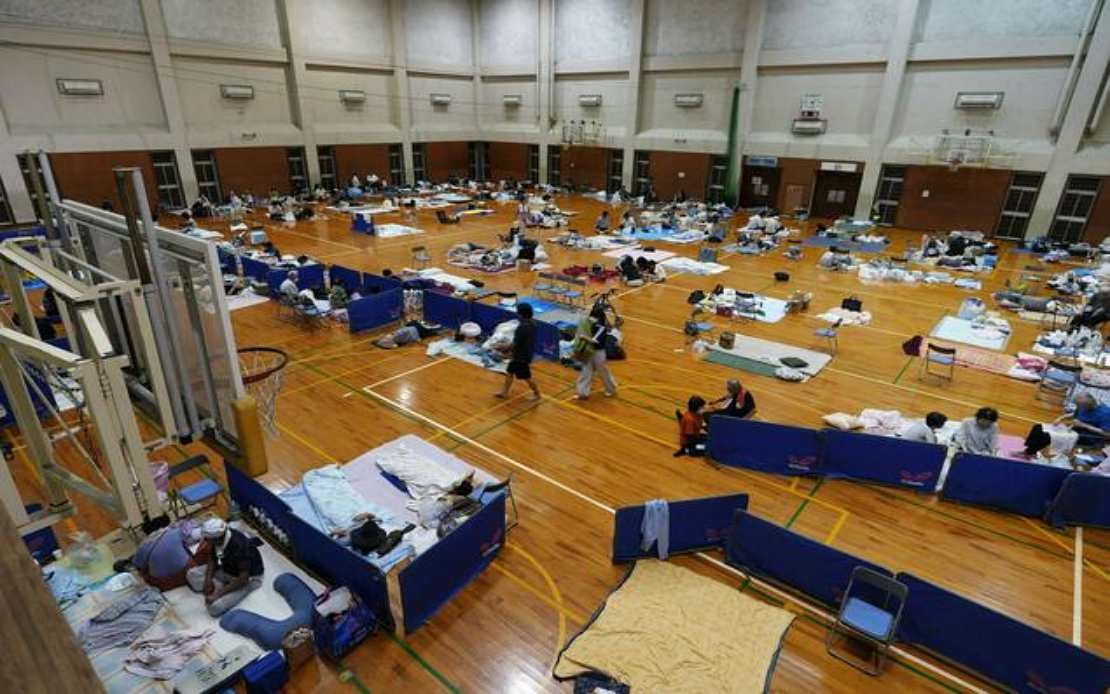
Seven days have passed since a powerful magnitude 7.1 earthquake struck Kumamoto Prefecture in southwestern Japan on July 28, yet the crisis remains far from over. More than 8,000 survivors continue to shelter in approximately 150 evacuation centers across the prefecture, facing a mounting health emergency as scorching temperatures and persistent water shortages test the limits of disaster response efforts. The situation underscores the compounding nature of natural disasters in Japan, where immediate seismic damage is increasingly complicated by secondary hazards like extreme weather that can prove equally deadly.
The initial tremor, which struck around 4:27 p.m. on July 28, has claimed 38 lives thus far, with authorities reporting particularly tragic incidents at two major facilities. Seven people perished in an explosion at an Aeon shopping mall in Kashima, while nine lost their lives when a chimney collapsed at Nippon Paper Industries Co.'s plant in Yatsushiro. The prefecture estimates that approximately 12,000 buildings sustained damage in the quake, though the true extent of structural damage continues to emerge as rescue and assessment operations proceed. This scale of destruction has strained local infrastructure and emergency services, leaving entire communities scrambling to meet basic survival needs.
Perhaps more immediately threatening than the initial earthquake damage, however, is the record-breaking heat sweeping across the region. Large portions of Kumamoto Prefecture recorded temperatures exceeding 35 degrees Celsius on Monday, with some areas reaching 40 degrees Celsius for the first time in recorded history. These extreme conditions pose a grave risk to evacuees living in crowded shelters with limited ventilation, particularly the elderly and infirm. Authorities have already documented one suspected heat-related death among people sleeping in vehicles—a grim indication of the mortality risk unfolding beyond the official death toll. The hazard is especially acute because precise numbers of those sleeping in cars remain unknown, suggesting the actual toll may be substantially higher than currently reported.
Compounding the heat crisis is a critical shortage of clean water affecting approximately 45,000 households across five municipalities. Water trucks have been dispatched from across Japan to affected areas, yet supplies remain inadequate for both drinking and sanitation purposes. At Miyabien, a nursing home in Yatsushiro, director Midori Tagata has struggled to maintain basic hygiene standards for vulnerable residents amid the outages. The facility's situation drew international attention when Kaohsiung, a southern Taiwanese city, responded to requests for assistance by providing essential care supplies—a gesture that highlights how regional disasters can prompt cross-border humanitarian cooperation in East Asia. Such gestures, while meaningful, underscore the severe shortfall in local capacity to address immediate needs.
Government response mechanisms are beginning to mobilize, though critics argue the pace remains inadequate given the scale and severity of the unfolding crisis. Prime Minister Sanae Takaichi visited an evacuation shelter on Monday and announced that the government will formally designate the earthquake a "disaster of extreme severity." This administrative classification is significant because it unlocks enhanced reconstruction subsidies for affected municipalities and enables implementation of specialized assistance programs for displaced residents. The designation reflects official acknowledgment that this event exceeds normal disaster management frameworks, though such recognition often comes only after initial response gaps have already claimed lives.
To prevent further heat-related casualties, authorities have undertaken several emergency measures. The national and prefectural governments are prioritizing the distribution of drinking water to shelters, expanding access to portable toilets that have become bottlenecks given the water crisis, and deploying portable coolers to provide relief from the oppressive heat. Additionally, secondary evacuation programs have begun relocating residents to hotels, providing temporary escape from overcrowded and poorly ventilated shelter facilities. Meanwhile, construction of temporary housing has commenced in the hardest-hit municipalities of Uki and Hikawa, though such facilities typically require weeks to complete—leaving thousands exposed to immediate dangers.
Transportation infrastructure across the region remains severely disrupted, hampering both relief efforts and regional connectivity. The Kyushu Shinkansen Line, Japan's vital bullet train network connecting Kumamoto and Kagoshima-chuo stations, remains suspended indefinitely pending structural assessments and repairs. Similarly, the Kyushu Expressway has been closed to general vehicular traffic between the Matsubase and Ebino exits, restricting the flow of relief convoys and commercial traffic. These transportation closures carry implications extending far beyond disaster response, affecting economic activity across southwestern Japan and potentially influencing supply chains throughout the region.
The Kumamoto earthquake serves as a sobering reminder for neighboring Southeast Asian nations regarding earthquake preparedness and the compounding effects of natural hazards. Malaysia, while situated in a lower seismic risk zone than Japan, faces its own array of natural disasters including flash flooding and landslides that often coincide with extreme weather. The crisis in Kumamoto demonstrates how initial disaster response is merely the opening phase of a much longer humanitarian emergency, particularly when vulnerable populations cannot return home quickly. The scale of displacement—8,000 plus uncounted car dwellers—reflects how even developed nations with sophisticated disaster management systems can struggle to rapidly house and provide for displaced communities.
The international dimension of Kumamoto's recovery effort, exemplified by Taiwan's donation of supplies to the stricken nursing home, illustrates how regional cooperation mechanisms can supplement national responses during crises. This cooperation is not merely symbolic; it represents practical recognition that large-scale disasters generate needs exceeding local capacity. For Malaysia and other ASEAN nations, the Kumamoto situation offers lessons in both disaster planning and the importance of maintaining regional mutual assistance frameworks. The combination of seismic hazard, extreme heat, and water shortages—three elements that can strike simultaneously—presents a hazard profile that requires integrated response planning rather than siloed approaches to individual disaster types.
Looking forward, the coming weeks will determine whether Kumamoto's recovery trajectory accelerates or stalls. The transition from emergency shelter to temporary housing to permanent reconstruction typically spans months or years, during which displaced populations remain vulnerable. With water systems still crippled, temperatures expected to remain elevated, and thousands unable to access their homes, the genuine humanitarian crisis in Kumamoto may be only beginning. The formal designation as a "disaster of extreme severity" will facilitate resource flows, yet bureaucratic processes cannot match the urgency of immediate human need. For regional observers, the unfolding situation underscores the critical importance of robust disaster preparedness systems, adequate emergency stockpiles, and rapid mutual assistance protocols—lessons increasingly relevant as climate change intensifies extreme weather patterns across East and Southeast Asia.

