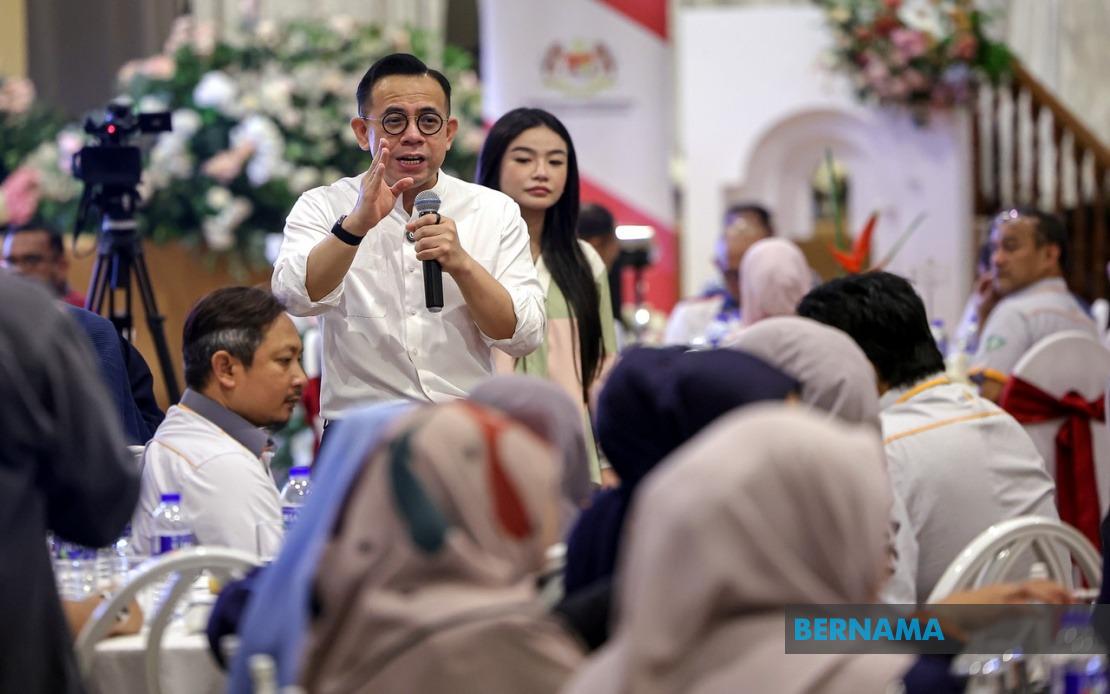
The Ministry of Entrepreneur Development and Cooperatives (KUSKOP) has successfully disbursed nearly RM7 billion through its Power Up 10K initiative during the opening half of 2026, providing crucial financial support to more than 213,000 micro, small and medium enterprises across the country. Minister Steven Sim announced the milestone while addressing state-level officials and agency representatives at an assembly in Seremban, signalling strong progress toward the scheme's full-year disbursement target of RM15 billion.
The Power Up 10K programme represents a strategic push to maintain the competitiveness and operational resilience of Malaysia's MSME ecosystem amid volatile international economic conditions. By funnelling resources through an array of tailored financing and support mechanisms, KUSKOP aims to equip entrepreneurs with the capital and technical assistance needed to navigate external pressures ranging from commodity price swings to supply chain disruptions. The halfway mark achievement underscores the ministry's operational efficiency in converting policy into tangible financial flows reaching enterprise owners at the grassroots level.
Negeri Sembilan has emerged as a beneficiary of this national thrust, with RM345 million channelled to more than 6,600 local entrepreneurs through the Power Up scheme alone. Sim highlighted this regional success as evidence that government funding pathways are functioning effectively in connecting state and federal resources to deserving business operators. The distribution across states like Negeri Sembilan demonstrates that the initiative is not concentrated in major urban centres but is reaching smaller economies and peripheral regions, a critical consideration for inclusive growth in Malaysia's tiered entrepreneurial landscape.
Beyond raw financial disbursement, KUSKOP is repositioning its operational framework to enhance the quality and speed of assistance delivery. The ministry has articulated a commitment to transform all subordinate agencies into frontline service providers capable of rapid response and comprehensive support. This reorganisation reflects recognition that financial access alone remains insufficient; entrepreneurs require expedited processing, reduced bureaucratic friction, and seamless coordination across multiple support pillars to translate credit into viable business expansion.
A key component of this reorientation involves trimming compliance and administrative costs imposed on entrepreneurs through regulatory and local government channels. Minister Sim stressed that while external shocks such as global oil price fluctuations lie beyond government control, the domestic cost burden arising from legal compliance requirements and municipal levies can and should be rationalised. This distinction highlights a pragmatic approach: instead of attempting to insulate businesses from global market forces, KUSKOP acknowledges that reducing the modifiable friction costs improves net business viability and capital availability for operational reinvestment.
The minister issued a direct challenge to state agencies to adopt a more proactive engagement model rather than passively waiting for entrepreneurs to discover available schemes. He urged officials to intensify roadshows, amplify promotional campaigns across digital and physical channels, and ensure widespread awareness of grant facilities, financing options, and technical support programmes. This push reflects a recognition that information asymmetry remains a significant barrier; many eligible entrepreneurs remain unaware of available support, creating unutilised programme capacity and missed development opportunities.
The deployment of social media and community-level outreach represents an evolution in how government agencies interface with the entrepreneurial constituency. By moving beyond traditional office-based channels, KUSKOP seeks to meet business operators where they operate and consume information, lowering the transaction costs of programme discovery and application. This shift acknowledges that in an increasingly digital landscape, passive institutional presence yields diminishing returns compared to dynamic, targeted engagement campaigns that penetrate micro-entrepreneur networks.
Inter-agency competition over fund disbursement speed, as encouraged by Sim, introduces a performance dynamic that could either accelerate credit deployment or fragment coordination if poorly managed. The implicit suggestion that agencies should race to disburse funds faster reflects confidence in programme design and applicant vetting while introducing subtle market-like incentives within the public sector apparatus. However, this approach requires careful calibration to ensure that speed does not compromise credit quality or programme compliance, particularly given MSME lending's inherent higher-risk profile.
The halfway achievement of RM7 billion against a RM15 billion target suggests KUSKOP is on pace for full-year delivery, assuming disbursement velocity remains constant or accelerates. However, this linear extrapolation masks potential seasonal and cyclical factors influencing fund absorption rates. Typically, year-end financial demands and business planning cycles drive elevated credit demand, suggesting the second half could see either accelerated deployment or, conversely, bottlenecks if processing capacity becomes exhausted during peak demand periods.
For Malaysian entrepreneurs operating in an increasingly challenging external environment—characterised by supply chain volatility, currency fluctuations, and regional competition—the Power Up 10K initiative represents meaningful policy support. By channelling substantial capital through multiple mechanisms and simultaneously reducing compliance burden, KUSKOP addresses both immediate liquidity constraints and structural inefficiencies in the entrepreneurship ecosystem. The programme's scale and reach position it as a cornerstone of Malaysia's economic resilience strategy, particularly as the country seeks to maintain MSME-driven employment and innovation amid global economic uncertainty.
The initiative also carries implications for Southeast Asia's competitive positioning on entrepreneurship support. As regional peers implement comparable schemes, the quality of implementation and speed of capital deployment become differentiators in attracting and retaining entrepreneurial talent. Malaysia's demonstrated capacity to move RM7 billion in six months, coupled with efforts to streamline compliance processes, signals administrative capability that may influence how both domestic entrepreneurs and regional observers assess Malaysia's business environment relative to neighbouring economies.

