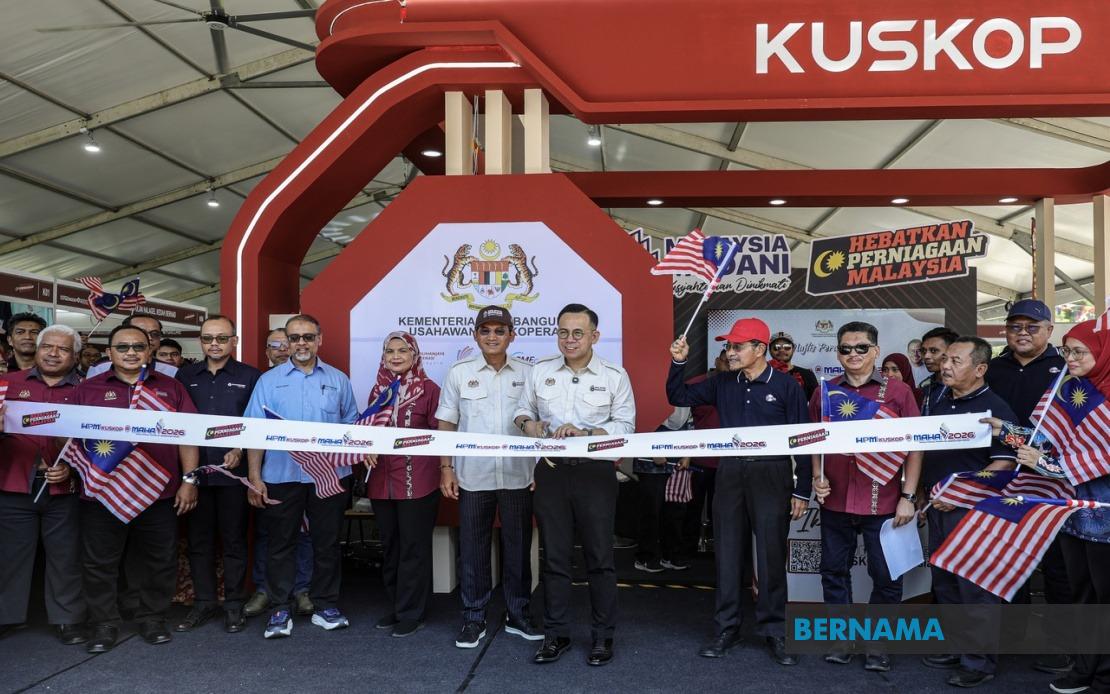
The Ministry of Entrepreneur and Cooperatives Development (KUSKOP) is pushing for RM500,000 in sales at MAHA 2026, marking the first time the ministry has maintained a dedicated pavilion at the prestigious biennial agricultural exhibition. Minister Steven Sim revealed that the newly launched presence had already generated more than RM110,000 in revenue by the second day of operations at the Serdang venue, suggesting momentum toward achieving the ambitious target before the event concludes.
The inaugural HPMKUSKOP@MAHA 2026 site represents a significant effort to integrate the cooperative and entrepreneurship sectors into Malaysia's largest agricultural showcase. By pooling resources and securing dedicated exhibition space, KUSKOP has brought together an diverse ecosystem of economic participants. The pavilion features approximately 66 companies, established cooperatives, and micro, small and medium enterprises (MSMEs), each seeking exposure to the high-traffic environment that MAHA attracts annually.
Attendance figures underscore the exhibition's draw as a national economic platform. Over 100,000 visitors had passed through the MAHA 2026 grounds within the first few days of operation, according to Sim's remarks to reporters during the official opening ceremony. Such visitor volumes provide participating vendors with substantial opportunities to connect directly with consumers, distribute product samples, and generate immediate sales—dynamics that favour both established businesses and smaller enterprises seeking market visibility.
The decision to participate in MAHA 2026 reflects KUSKOP's strategic recognition that agricultural exhibitions serve purposes beyond farming-focused transactions. Modern agricultural fairs function as commercial ecosystems where complementary sectors—including cooperative commerce, artisanal production, and small-scale manufacturing—find receptive audiences. By positioning itself alongside agricultural stakeholders, KUSKOP gains access to visitors whose purchasing power and interest in supporting local businesses align with the ministry's development objectives.
For Malaysian MSMEs and cooperative members, MAHA participation offers tangible advantages beyond immediate revenue. Exposure at a nationally recognised event enhances brand recognition, enables networking with other entrepreneurs, and creates opportunities for business-to-business connections that might lead to supply agreements or partnership arrangements. The concentration of 66 participating entities suggests that KUSKOP has actively mobilised its network to ensure meaningful representation across various business categories and cooperative structures.
The pavilion's performance trajectory—achieving roughly 22 percent of its RM500,000 target within the initial two days—indicates that the remaining exhibition period should generate sufficient additional sales to meet or approach the target. However, reaching that benchmark depends on sustained visitor engagement and effective merchandising throughout the remainder of the event. Early momentum often proves predictive of final outcomes at trade exhibitions, though weather, promotional activities, and competitor performance can influence transaction volumes.
KUSKOP Secretary-General Datuk Seri Khairul Dzaimee Daud's participation in the opening ceremony underscores the ministry's commitment to the initiative. Senior leadership presence at such events signals institutional importance and often translates into media coverage that amplifies awareness among potential participants and customers. The collaborative framework involving both ministerial leadership and operational management suggests that KUSKOP intends to make this pavilion a recurring feature at future MAHA editions.
The broader policy context involves Malaysia's ongoing emphasis on cooperative development and MSME growth as drivers of inclusive economic expansion. KUSKOP's presence at MAHA 2026 aligns with national strategies to diversify revenue streams for small business operators and strengthen cooperative institutions as alternative economic structures. By creating platforms where these entities can operate collectively, the ministry addresses challenges associated with individual market entry, including high visibility costs and limited purchasing power.
Minister Steven Sim's acknowledgment of the Ministry of Agriculture and Food Security's leadership, under Datuk Seri Mohamad Sabu, reflects collaborative governance necessary for successful sectoral integration. MAHA 2026 serves as venue for multiple ministries with economic development interests—agriculture, cooperatives, entrepreneurship, and trade—to showcase their respective sectors' achievements and generate business activity. Such multi-ministerial engagement enhances the event's value proposition and creates synergies that benefit participating businesses across different industries.
For regional observers, KUSKOP's MAHA initiative offers insight into how Southeast Asian governments leverage established commercial platforms to advance development goals. Malaysia's approach—integrating cooperative and MSME sectors into agricultural exhibitions—demonstrates institutional capacity to coordinate across economic domains and create infrastructure supporting small business growth. Similar strategies might inform cooperative promotion efforts in other ASEAN nations seeking to expand alternative economic structures.
Looking forward, the success of the inaugural HPMKUSKOP@MAHA 2026 pavilion will likely influence the ministry's strategic planning for future exhibitions. Should the RM500,000 target be achieved, the participation model will probably be replicated at subsequent MAHA events and potentially expanded to other major commercial gatherings. Conversely, shortfalls might prompt adjustments to vendor selection criteria, booth design, or promotional approaches. Either outcome will generate operational lessons applicable to cooperative development strategies beyond exhibition environments.
The transition of KUSKOP from peripheral participation to dedicated pavilion representation at MAHA reflects evolving recognition that cooperatives and MSMEs require institutional support comparable to that provided to agricultural producers. By allocating space, coordinating vendor participation, and setting sales targets, the ministry signals strategic commitment to cooperative-based economic development. For the 66 participating businesses, the immediate priority remains converting visitor interest into transactions during the remainder of the exhibition period, while simultaneously building relationships and brand awareness with potential customers.

