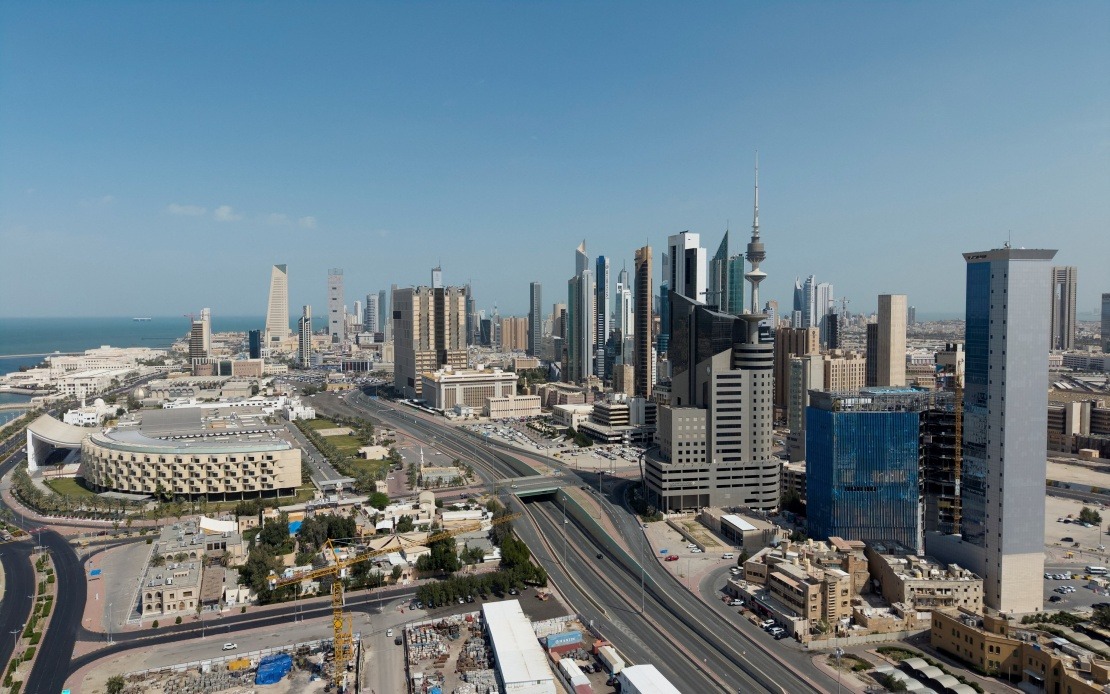
Kuwait has unveiled an emergency response fund capitalised at US$100 million, marking a significant financial initiative aimed at rebuilding critical infrastructure damaged during escalating regional tensions. The Kuwait Fund for Arab Economic Development (KFAED), the country's principal development financing institution, launched the programme following approval by the Kuwaiti cabinet, according to Foreign Minister Sheikh Jarrah Jaber Al-Ahmad Al-Sabah in announcements made on Sunday.
The new financing mechanism represents Kuwait's strategic response to structural damages sustained as a consequence of what government officials characterise as Iranian aggression in the wider Middle Eastern conflict. The framework establishes dedicated emergency financing pathways designed to accelerate reconstruction efforts while simultaneously strengthening the nation's institutional capacity to respond to future crises. This dual objective—addressing immediate infrastructure recovery whilst building resilience—underscores Kuwait's approach to both current reconstruction needs and longer-term stability.
According to Waleed Al-Bahar, Acting Director General of KFAED, the fund will operate by evaluating incoming financing applications from relevant stakeholders and systematically prioritising projects based on urgency and strategic importance. This assessment-driven methodology ensures that limited resources are deployed towards initiatives delivering maximum impact on Kuwait's recovery trajectory. Government ministries and agencies have been identified as primary beneficiaries, though the initiative explicitly welcomes partnership contributions from Kuwait's substantial private sector.
The announcement represents a formal acknowledgement of the infrastructure toll from broader regional military escalations. The conflict trajectory intensified markedly following joint United States and Israeli military operations against Iran on February 28, which triggered Iranian retaliation through coordinated missile and unmanned drone strikes targeting Israeli territory and American military installations positioned across neighbouring countries in the Gulf region. Kuwait's geographic proximity and strategic importance in Middle Eastern geopolitics meant the nation faced direct exposure to conflict-related disruptions and potential collateral damage.
For Malaysian observers and Southeast Asian policymakers, Kuwait's establishment of this emergency fund carries several instructive dimensions. The initiative demonstrates how Gulf Cooperation Council nations are operationalising financial mechanisms to address security-related infrastructure challenges, a model potentially relevant as Southeast Asian countries navigate rising regional tensions and evaluate mechanisms for rapid reconstruction funding. The KFAED's involvement signals how development finance institutions traditionally focused on economic cooperation can be repurposed for emergency response during crisis periods.
The fund's structure reflects broader trends in Middle Eastern crisis management, where specialised financing vehicles increasingly complement conventional government budgetary processes. By establishing a dedicated mechanism rather than absorbing reconstruction costs through general treasury expenditure, Kuwait creates administrative clarity, enables targeted resource mobilisation, and potentially opens pathways for international co-financing and donor participation. This institutional design offers lessons for developing economies throughout Asia confronting infrastructure vulnerabilities from geopolitical instability.
The appeal for private sector contributions represents another significant dimension. Kuwait's government is explicitly inviting commercial enterprises to participate in the reconstruction financing effort, effectively creating a public-private partnership model for crisis response. This approach distributes financial burden across society whilst potentially accelerating implementation timelines, as private sector actors often command operational efficiencies and project management expertise that complement government resources. Such models deserve careful study by other regional economies seeking to enhance reconstruction capacity.
Geographically and strategically, Kuwait's position as a major oil producer and crucial regional economic hub amplifies the significance of this reconstruction initiative. Infrastructure damage extending beyond energy sector facilities potentially affects telecommunications networks, transportation systems, and commercial infrastructure supporting Gulf trade routes. The emergency fund's scope therefore encompasses broader economic resilience considerations extending well beyond immediate conflict-related damage.
The timing of the announcement, emerging during an active geopolitical period marked by unresolved Iran-Israel tensions and American military presence throughout the region, suggests that Kuwait anticipates potential ongoing security challenges. Rather than treating the February escalation as an isolated incident, the fund's creation implies preparation for a prolonged period of elevated regional instability. This forward-looking posture contrasts with purely reactive approaches and demonstrates mature crisis anticipation.
For Southeast Asian nations monitoring developments, Kuwait's approach merits consideration regarding disaster and conflict-related financing frameworks. The establishment of rapidly deployable capital pools specifically designated for emergency reconstruction offers an alternative to delayed budgetary processes that can impede swift recovery. Malaysia and other regional economies might explore comparable mechanisms tailored to tsunami, flood, or conflict-related contingencies, particularly given increasing climate volatility and evolving security dynamics.
The KFAED's leadership role underscores how development finance institutions possess institutional architecture and sectoral expertise suitable for emergency coordination. These organisations maintain existing relationships with government counterparts, possess project evaluation methodologies, and command technical capacity for rapid needs assessment—comparative advantages proving invaluable during reconstruction phases. Regional development banks across Asia might similarly consider expanding mandates to encompass emergency response financing during crisis periods.
Kuwait's initiative also reflects broader Middle Eastern economic interdependency patterns. The fund's potential to attract contributions from neighbouring Gulf states and international partners demonstrates recognition that infrastructure damage in strategically important locations imposes costs across broader regions. This spillover logic increasingly shapes how wealthier economies approach reconstruction financing for geopolitically significant neighbours, a principle extending beyond the Gulf to affect Southeast Asian stability calculations.
Looking forward, the fund's operational success will depend substantially on administrative efficiency, transparent project selection processes, and actual resource mobilisation from private contributors. The extent to which the initiative attracts external co-financing will signal whether international stakeholders view Kuwait's reconstruction efforts as deserving investment support. For Malaysia and other Southeast Asian observers, monitoring this fund's implementation will provide valuable data regarding contemporary crisis financing mechanisms and their effectiveness in accelerating recovery within complex geopolitical environments.

