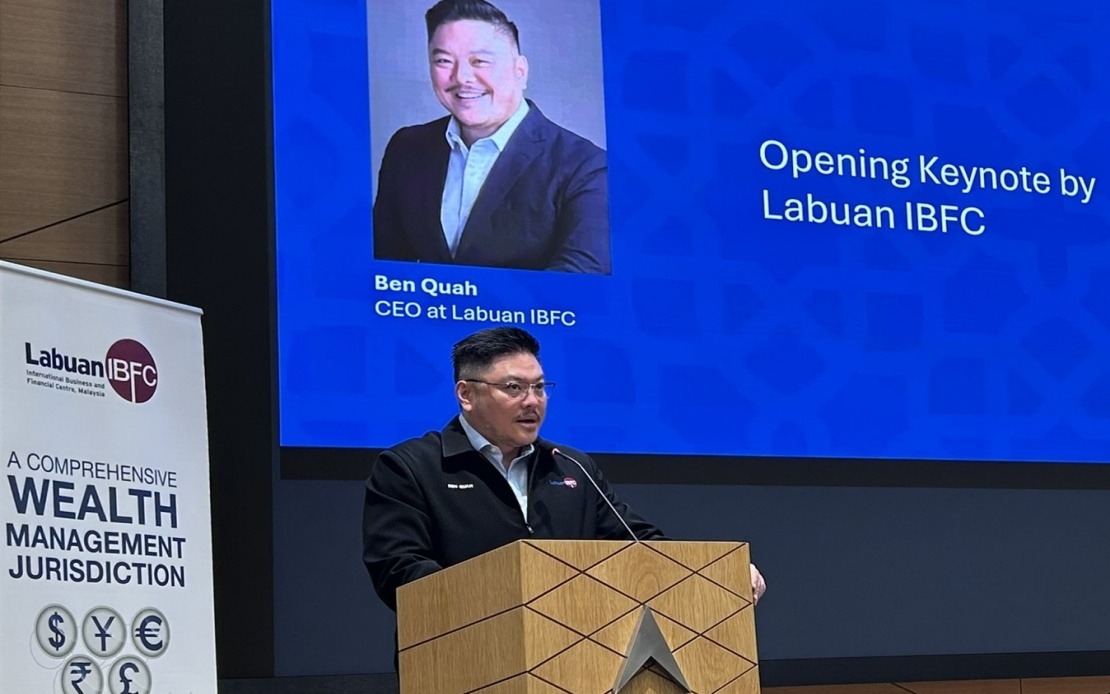
Three major industry bodies have joined forces to advance Islamic wealth planning practices across Malaysia and the region. Labuan IBFC Incorporated Sdn Bhd, working alongside the Association of Shariah Advisors in Islamic Finance Malaysia (ASAS) and the Society of Trust and Estate Practitioners (STEP) Malaysia, hosted the Islamic Wealth & Legacy Forum 2026 in Kuala Lumpur, bringing practitioners and experts together to examine contemporary approaches to preserving and transferring wealth within an Islamic framework.
The forum, titled 'Beyond Faraid: Islamic Wealth Governance, Labuan Structures and Legacy Continuity', reflects a growing recognition that Islamic estate planning extends well beyond traditional distribution principles. While faraid—the Islamic law of inheritance—forms the foundation of Muslim estate administration, practitioners increasingly acknowledge that comprehensive wealth planning requires sophisticated structuring, governance arrangements, and cross-border solutions to meet the needs of modern families. The collaboration underscores how Malaysia's Islamic finance leadership can be leveraged to serve high-net-worth individuals seeking Shariah-compliant wealth management across jurisdictions.
Labuan IBFC, the marketing authority for Labuan International Business and Financial Centre, positioned itself as a crucial hub for such services. In his keynote address, Labuan IBFC Inc chief executive officer Ben Quah emphasised the centre's capacity to deliver flexible asset protection mechanisms and long-term continuity solutions for families navigating increasingly complex, globalised wealth portfolios. He highlighted how Labuan IBFC complements Malaysia's broader Islamic private wealth ecosystem by providing international structuring capabilities while maintaining alignment with Shariah principles. This positioning reflects a strategic recognition that wealthy Muslim families increasingly require solutions spanning multiple jurisdictions and asset classes, from real estate and business interests to investments and insurance products.
Farah Deba, chair of the STEP Malaysia Branch, articulated how the three organisations bring distinct but complementary expertise to the table. STEP members serve as multigenerational advisers to families, guiding them through succession transitions and complex planning scenarios. Labuan IBFC provides the international dimension, structuring family wealth across borders while maintaining regulatory compliance in multiple jurisdictions. ASAS contributes the Shariah governance perspective, ensuring that all arrangements remain consistent with Islamic principles and serve the higher objectives of Islamic law—the Maqasid Shariah. This tripartite approach reflects the reality that Islamic wealth planning cannot be treated in isolation from either practical estate administration or international financial considerations.
The forum's substantive sessions tackled several interconnected challenges facing Muslim estate administrators and wealth planners. The opening panel examined the practical difficulties inherent in translating Islamic succession intentions into effective estate planning documents. Beyond the mathematical certainty of faraid calculations lies a complex terrain involving competing family interests, divergent interpretations of religious obligations, and the challenge of ensuring that detailed planning documents accurately reflect both the testator's wishes and religious requirements. These issues become particularly acute in cross-border contexts where multiple jurisdictions' laws may apply simultaneously.
A critical component of the discussions focused on governance and documentation. Proper governance structures and meticulously maintained documentation prove essential for ensuring that wealth planning arrangements function as intended and remain compliant with Shariah requirements throughout implementation. This addresses a persistent vulnerability in Islamic wealth structures: the gap between pious intention and institutional execution. Without clear governance frameworks and comprehensive records, even well-designed plans may face challenges at the execution stage, potentially resulting in disputes among beneficiaries or unintended divergence from the deceased's wishes.
The afternoon sessions shifted emphasis toward practical implementation mechanisms, examining how various financial instruments and legal structures support wealth preservation and risk management across generations. Liquidity planning—ensuring families have sufficient liquid assets to meet immediate needs without forced asset sales—emerged as a significant consideration, particularly given that many family wealth concentrations involve illiquid interests in businesses or property. Takaful products, the Islamic insurance equivalent, received particular attention as mechanisms for providing protection and funding estate liabilities in a Shariah-compliant manner. Trusts and other structures available through Labuan IBFC were explored as vehicles for managing assets, controlling distributions, and protecting family interests according to predetermined terms.
The forum culminated in a panel discussion examining how to strengthen the broader Islamic wealth planning ecosystem in Malaysia and Southeast Asia. This broader systems perspective reflects growing recognition that individual transactions and arrangements function within institutional contexts shaped by regulatory frameworks, professional standards, market availability, and knowledge distribution among practitioners. Yusaini Yusof, an exco member of ASAS, emphasised in closing remarks that Shariah governance ensures wealth legacies are properly structured, successfully implemented, and ultimately serve Maqasid Shariah. She committed ASAS to supporting increased engagement and professionalism across the wider Shariah fraternity and practitioner community.
The initiative builds on formal collaboration frameworks already established between the partners. A memorandum of understanding between Labuan IBFC Inc and ASAS provides institutional structure for ongoing engagement, while relationships with STEP Malaysia and the broader professional community continue to deepen. This strategic partnership architecture suggests that stakeholders view enhanced Islamic wealth planning capabilities as integral to Malaysia's competitive positioning in global Islamic finance.
For Malaysian and Southeast Asian readers, these developments carry several implications. As wealth accumulates within Muslim-majority societies and among diaspora communities, demand for sophisticated Islamic wealth planning will intensify. Families increasingly require advisers who can navigate both Islamic principles and complex international financial structures simultaneously. The forum's emphasis on professionalism and standardisation suggests efforts to establish common practices and competency benchmarks across the Islamic wealth planning profession, potentially reducing risks associated with inconsistent or substandard advice. Furthermore, Labuan IBFC's positioning as a regional hub for such services offers opportunities for practitioners throughout Southeast Asia to access international-grade structuring and governance solutions.
The strengthening of Islamic wealth planning practices also reflects broader trends within Islamic finance generally. Rather than remaining confined to banking and capital markets, Islamic finance increasingly penetrates private wealth and estate planning domains where traditional Islamic jurisprudence intersects with modern financial innovation. This expansion requires careful dialogue between Shariah scholars, legal practitioners, and financial professionals—precisely the conversation the forum facilitated. As Islamic wealth management becomes increasingly sophisticated and globalised, Malaysia's institutional capacity to support such activities positions the country advantageously within regional and global markets.
Looking forward, the success of initiatives like the Islamic Wealth & Legacy Forum 2026 will likely depend on translating professional collaboration and intellectual exchange into concrete improvements in market practices. This requires developing standardised documentation templates, educational programmes for advisers and clients, and potentially regulatory guidance clarifying how different structuring approaches interact with Malaysian and international legal frameworks. The commitment articulated by ASAS to increased engagement and professionalism, combined with Labuan IBFC's infrastructure for international wealth planning and STEP's deep expertise in estate administration, suggests the groundwork for sustained institutional development has been laid.

