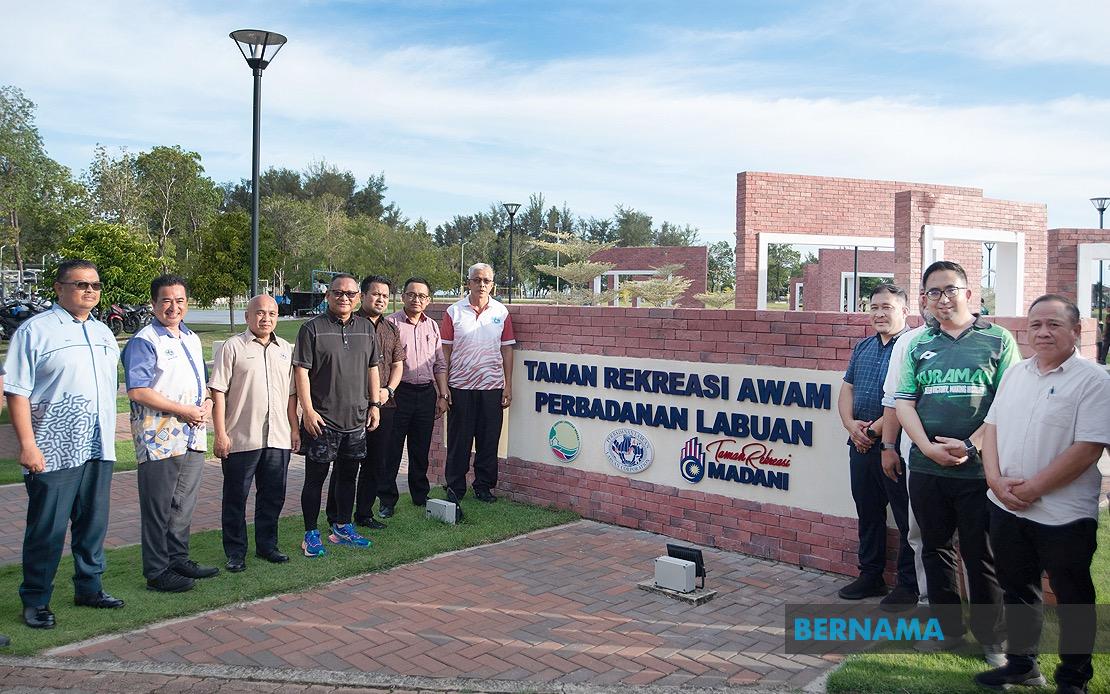
The Labuan Public Recreation Park has opened its doors at Tanjung Purun, marking a significant step forward in the federal territory's efforts to foster healthier and more active communities. The development comes after a substantial RM495,382 upgrade program executed under the Madani Recreation Park initiative, reflecting renewed institutional commitment to improving public wellness infrastructure in one of Malaysia's most important offshore financial centres.
Labuan Corporation's chief executive officer Rithuan Ismail, speaking at the June 24 opening ceremony, framed the project as emblematic of deliberate urban planning that prioritises inclusive community spaces. He emphasised that the facility was deliberately designed to accommodate people across age groups and fitness levels, creating an environment where residents could simultaneously pursue individual exercise routines and strengthen neighbourhood social bonds. This dual-purpose approach mirrors contemporary urban design philosophy, which increasingly recognises the relationship between physical recreation and social cohesion in liveable communities.
The transformation of this site originated from a pragmatic assessment of Labuan's spatial resources. The location at Tanjung Purun—situated within the town's commercial core—was specifically selected because it combined several advantages that many municipalities lack: strategic accessibility for working professionals and families, adequate land dimensions for varied recreational activities, and importantly, uncomplicated land tenure arrangements that could expedite development without protracted ownership disputes. These factors are particularly crucial in Labuan, where efficient urban development supports both residential populations and the transient workforce supporting the offshore industry.
Prior to its rehabilitation, the site operated as the LDA Field, a fundamentally underutilised public asset despite its prominent location. The original condition reflected typical challenges facing older Malaysian municipal spaces: inadequate illumination deterred evening use, recreational infrastructure had deteriorated to a point where it no longer attracted regular users, and mature casuarina trees had begun presenting genuine safety hazards rather than environmental benefits. This combination of deficiencies effectively rendered a valuable downtown location invisible to the community it should have served.
The upgraded facility now incorporates several physical features designed to appeal to diverse user demographics. An 800-metre jogging track provides space for runners and walkers, while concrete seating areas enable rest and casual socialising. The inclusion of outdoor fitness equipment—without requiring membership fees or dedicated facilities—removes traditional barriers that discourage lower-income residents from accessing exercise opportunities. A welcoming garden component adds aesthetic value and creates focal points for gathering, transforming utilitarian exercise space into genuinely liveable public environment.
Corporation officials have articulated ambitious expansion plans that extend beyond the current opening. Three additional courts designated for pickleball and sepak takraw are scheduled for completion before the calendar year concludes. This sequenced development approach reflects realistic project management while maintaining momentum toward a more comprehensive recreational complex. Sepak takraw, in particular, represents cultural investment, as the traditional Southeast Asian sport maintains significant grassroots participation in Malaysia and carries social significance beyond mere athletic competition.
The funding structure for this undertaking merits attention, as it demonstrates how federal territory governance operates within Malaysia's intergovernmental architecture. The National Landscape Department, operating under the Ministry of Housing and Local Government, channelled 2024 resources toward this initiative, indicating how ministry-level strategic priorities translate into ground-level community benefits. For Malaysian readers, this funding pathway illustrates how centralised budget allocation can service specific geographical regions while maintaining overall fiscal discipline.
Rithuan's remarks extended beyond the opening ceremony's ceremonial aspects to address stewardship responsibility. His explicit appeal for public participation in maintaining the facilities acknowledges a recurring challenge facing public infrastructure: initial enthusiasm from officials and media attention often dissipates once projects are completed, while deterioration accelerates without consistent community investment in upkeep. His framing positions maintenance as a collective rather than exclusively governmental responsibility, potentially fostering greater user identification with the space.
For Labuan specifically, this recreational facility represents practical recognition that offshore financial centre designation does not eliminate residents' fundamental wellness needs or desires for quality leisure spaces. The federal territory faces unique demographic pressures, with substantial migrant workforces and international business populations requiring amenities that facilitate both individual health maintenance and cultural integration into local communities. A well-functioning public recreation park addresses these needs simultaneously, improving perceived quality of life for both established residents and transient expatriate populations.
The development also carries broader implications for Southeast Asian urban planning discourse. As regional cities increasingly compete for skilled professionals in knowledge-intensive sectors, amenities like upgraded public recreation facilities have become competitive advantages in talent retention strategies. Labuan's investment signals awareness that modern offshore financial centres require supporting infrastructure beyond banking facilities and regulatory frameworks; they must provide liveable environments that justify residential relocation and family commitments.
With Malaysian public health discourse increasingly emphasising preventive wellness and non-communicable disease reduction, grassroots recreational infrastructure like Tanjung Purun's upgraded park addresses practical health promotion challenges. The facility's free accessibility to residents removes financial barriers that often correlate with sedentary lifestyles, while its evening lighting and multiple activity options accommodate varied schedules and preferences. These design choices reflect evidence-based understanding of how environmental modification influences population-level exercise patterns.