Kuala Lumpur has taken a significant step forward in urban transport infrastructure with the launch of the LaLaport Transportation Hub (LTH), an integrated terminal facility strategically positioned beside the Hang Tuah LRT and Monorail interchange in the city centre. The facility represents a coordinated effort to address the mounting pressure on the capital's transport networks, which currently handle approximately 1.2 million people entering and exiting the city daily, translating to roughly 5.5 million individual journeys. Hannah Yeoh, Minister in the Prime Minister's Department (Federal Territories), unveiled the hub on July 16, highlighting its potential to process up to 10,000 passengers daily by facilitating seamless connections across multiple transport modes.
The hub's design philosophy emphasises accessibility and convenience through a sheltered pedestrian walkway system that eliminates weather-related barriers to transfer between services. Travellers can now access rail services via the adjacent LRT and Monorail interchange, board express buses from dedicated bays, hail private vehicles through e-hailing platforms, catch traditional taxis, or utilise shared mobility options—all from a single, climate-controlled environment. This comprehensive approach acknowledges that modern urban mobility demands more than merely providing individual transport options; it requires thoughtful integration that encourages seamless switching between modes. The facility particularly addresses the needs of cross-border commuters, serving as a crucial gateway for the significant flow of passengers between Kuala Lumpur and Singapore.
Operationally, the LTH demonstrates Malaysia's commitment to modernising its transport licensing framework. The Dewan Bandaraya Kuala Lumpur (DBKL) has transitioned from annual renewal cycles to three-year operating licences for transport terminals, a structural change that provides operators with greater certainty and security while reducing bureaucratic burden. This policy shift signals recognition that sustainable transport infrastructure requires long-term commitment rather than year-to-year uncertainty. Additionally, DBKL is simultaneously enhancing security across the city through installation of approximately 10,000 operational closed-circuit television cameras, reflecting broader efforts to create safer transport environments that encourage public transit adoption.
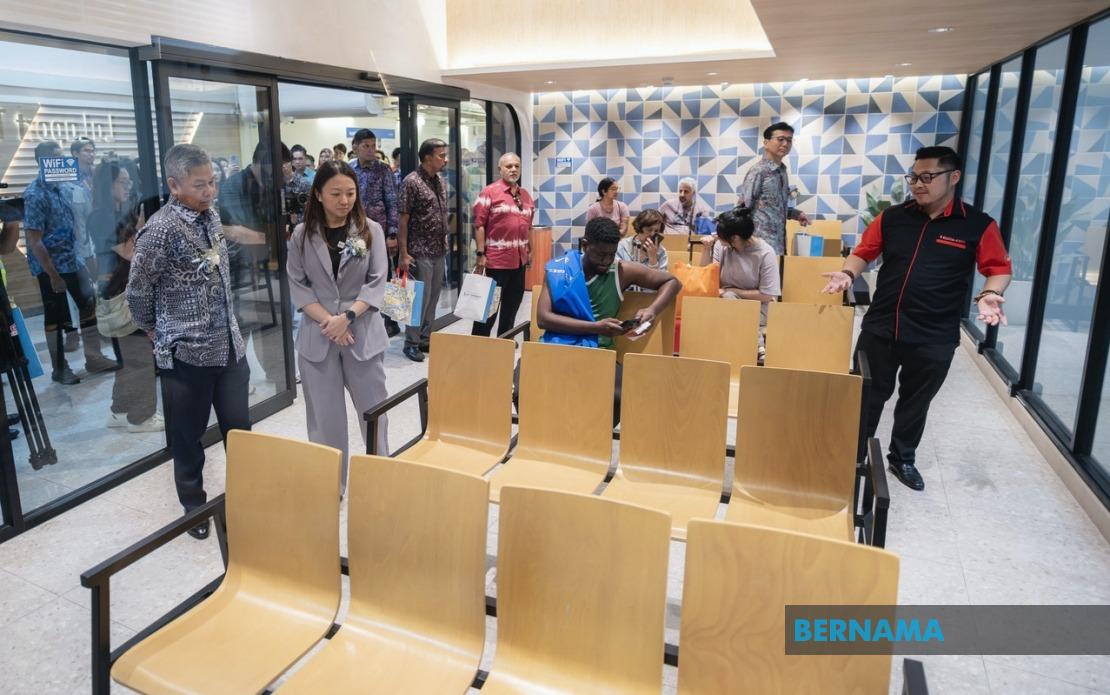
The physical infrastructure itself reflects contemporary standards for passenger comfort and information management. Located on the LG1 level of the East Atrium, the hub features 11 dedicated bus parking bays allowing multiple simultaneous boarding operations. An air-conditioned waiting area with manned counters and self-service kiosks accommodates passenger enquiries, while a Passenger Information Display System (PIDS) provides real-time bus schedules, eliminating guesswork regarding departure times. This combination of human service points and automated information systems recognises that different passengers have varying technological literacy and preferences.
According to Aaron Chuah, chief executive officer of operator Asia Success Resource Sdn Bhd, the hub anticipates accommodating approximately 150 bus trips daily, including a significant 24-hour express service connecting Kuala Lumpur and Singapore. This round-the-clock operation acknowledges that cross-border business and leisure travel operates beyond conventional business hours, serving night shift workers, late-night travellers, and early morning commuters. The operator projects that approximately 30 bus companies will eventually utilise the LTH as their primary city centre transit hub, particularly for services crossing the causeway into Singapore.
The facility extends beyond traditional bus operations through integration of supplementary services. Boleh-Boleh Ride, an on-demand van shuttle service, connects passengers to multiple key destinations throughout the city centre, addressing the crucial last-mile problem that often deters public transport adoption. Perhaps more significantly for leisure and business travellers, the hub provides dedicated shuttle van services to both Kuala Lumpur International Airport (KLIA) Terminals 1 and 2, eliminating the need for complex transfers or expensive private transportation to reach Malaysia's primary gateway. This airport connectivity transforms the LTH into a genuine intermodal hub rather than merely a bus terminal.
The initiative reflects broader regional and diplomatic cooperation on sustainable urban development. Japanese Ambassador to Malaysia Noriyuki Shikata emphasised that the hub's launch symbolises close collaboration between Malaysia and Japan in advancing sustainable metropolitan solutions. His remarks contextualised the project within the wider bilateral relationship, noting that Prime Minister Datuk Seri Anwar Ibrahim's recent visit to Japan reaffirmed both nations' commitment to enhanced cooperation spanning energy security and other domains. The two countries will commemorate 75 years of diplomatic relations next year, making transport infrastructure projects like the LTH symbolic of deepening strategic partnership.
The hub's significance extends beyond immediate passenger convenience to broader urban planning implications. Kuala Lumpur's current mobility statistics—1.2 million daily entries and exits, 5.5 million daily journeys—demonstrate a sprawling metropolis heavily dependent on motorised transport. Every facility that successfully consolidates multiple transport modes and improves transfer efficiency theoretically reduces reliance on private vehicles, alleviating congestion and air quality concerns. The LTH's location adjacent to existing rail interchange infrastructure maximises leverage of existing investments rather than scattering transport facilities across the city.
For Malaysian and Southeast Asian readers, the hub represents a practical manifestation of long-discussed public transport integration principles. Many regional cities struggle with fragmented systems where buses, trains, and taxis operate independently with minimal coordination. The LaLaport model demonstrates how dedicated physical space, clear wayfinding, real-time information systems, and operator coordination can create functional integration. The facility also underscores growing recognition that sustainable urban development requires capital investment in infrastructure that facilitates rather than merely accommodates travel.
The three-year licensing framework warrants particular attention as a policy innovation potentially applicable across Southeast Asia. Annual renewals create operational uncertainty that discourages long-term planning and investment by transport operators and can perpetuate underperformance through lack of incentive for continuous improvement. By extending certainty to three years, DBKL simultaneously maintains regulatory oversight while providing sufficient stability for meaningful operational development. This approach could serve as a model for other metropolitan areas wrestling with balancing regulation and operator sustainability.
Looking forward, the LTH's projected 10,000 daily passengers represents a modest but meaningful portion of the capital's 5.5 million daily journeys. Success depends on consistent delivery of promised services, competitive pricing relative to alternatives like private hire vehicles, and sustained operator commitment to the collaborative model the hub requires. The facility's 24-hour Singapore service and airport shuttle connections position it as genuinely serving both commuters and leisure travellers rather than purely business transit. Subsequent expansion will likely depend on whether initial passenger volumes meet expectations and whether the operator coordination model proves sustainable beyond the launch phase.

