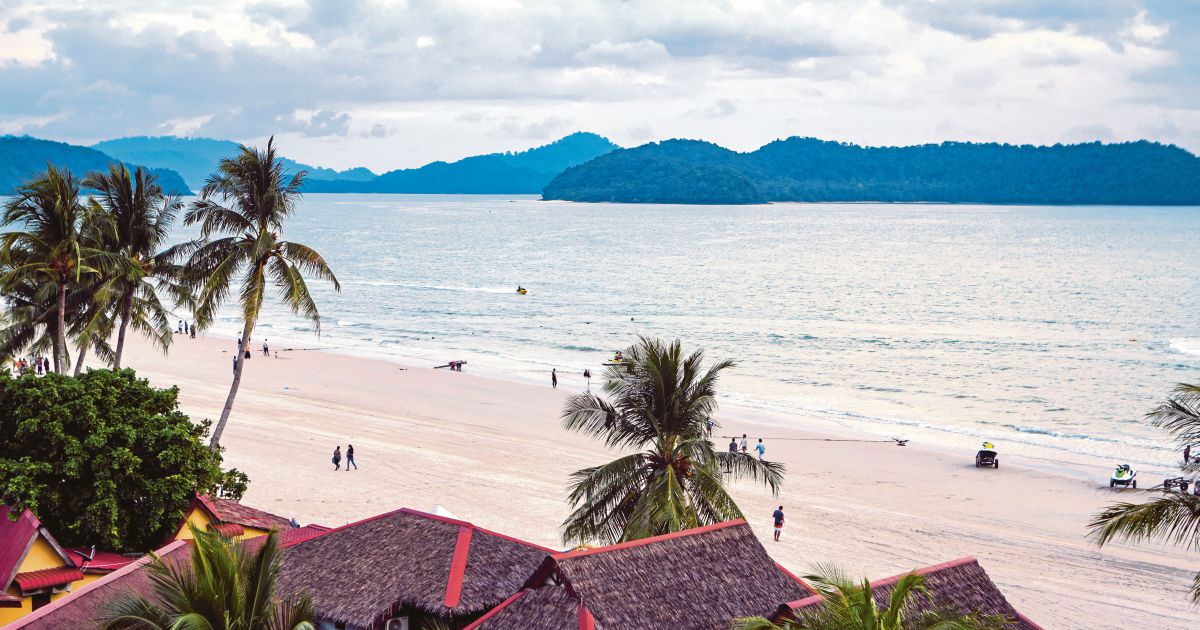
Langkawi remains dramatically underdeveloped compared to its inherent advantages as a duty-free destination, according to former prime minister Tun Dr Mahathir Mohamad, who has drawn attention to the island's failure to capitalise on privileges granted nearly 40 years ago. Speaking in Langkawi, Dr Mahathir highlighted that the archipelago's actual performance has stalled at roughly half the level it could have achieved, a sobering assessment for stakeholders invested in the island's future as a leading tourism and commercial hub in Southeast Asia.
The declaration of Langkawi as a duty-free zone in the mid-1980s was intended to transform it into a major economic engine for Malaysia's northern region, positioning the island to compete directly with regional counterparts such as Singapore, the Thai islands, and Indonesia's Bali. That initial ambition has been substantially undermined by what experts characterise as inconsistent investment, governance challenges, and the arrival of more aggressively marketed rivals. The island's tourism sector, while significant, operates well below capacity utilisation, with infrastructure and marketing efforts appearing diffuse and insufficiently coordinated across public and private stakeholders.
Dr Mahathir's candid appraisal reflects growing consensus among analysts that Langkawi's competitive position has gradually eroded. Over the past two decades, the region's tourism landscape has shifted dramatically: Thailand has aggressively upgraded Phuket and Krabi, Indonesia has poured resources into developing multiple island destinations, and Vietnam has emerged as an increasingly attractive alternative for regional travellers seeking value. Langkawi, by contrast, has experienced episodic investment cycles tied to political priorities rather than sustained, strategic development focused on infrastructure quality, amenities, and market positioning.
The duty-free status itself, which once conferred substantial commercial advantage, has become less determinative of competitiveness as air travel costs have fallen and regional supply chains have globalised. Shopping remains a draw for visitors, but its magnetic power has dimmed as duty-free shopping has proliferated across Asia, and high street retail continues its structural decline globally. The island's ability to leverage this privilege to build complementary attractions—premium hospitality, entertainment, cultural experiences, and residential investment—remains comparatively underdeveloped.
Langkawi's tourism infrastructure, whilst present, displays inconsistencies in quality and customer experience that discourage repeat visits and limit yield per tourist. Transportation connectivity has improved, with expanded international flight routes, yet accommodation options remain concentrated in mid-range properties; the island lacks flagship luxury resorts that anchor destination appeal among affluent regional and international travellers. Attractions and entertainment options, though expanded, often feel disconnected and inadequately promoted as an integrated experience.
The governance dimension compounds these challenges. Langkawi's development has been fragmented across multiple authorities with overlapping and sometimes conflicting mandates, lacking the unified strategic direction observed in successfully developed island destinations. Marketing initiatives have often been reactive and underfunded relative to competitor activities, resulting in diminished brand visibility and confused market positioning. A cohesive, long-term development plan with protected funding mechanisms and coordinated stakeholder alignment remains elusive.
The implications for Malaysia's broader regional standing are significant. As Southeast Asian tourism becomes increasingly competitive and consumer preferences evolve, destinations must continuously innovate and upgrade offerings to retain and expand market share. Langkawi's underperformance represents foregone employment, tax revenue, and foreign exchange that could strengthen the northern region's economic resilience. The island's potential to absorb tourism traffic and relieve pressure on Kuala Lumpur and Penang has been only partially realised.
Dr Mahathir's intervention signals renewed attention to Langkawi's development trajectory at senior political levels. Achieving the remaining potential will require substantive commitments: capital-intensive infrastructure projects, consistent incentive regimes for private investment, integrated marketing campaigns positioned against specific regional competitors, and institutional reforms to streamline governance and expedite decision-making. The window for implementing transformative strategies remains open but narrows as competing destinations continue upgrading their competitive positions.
For Malaysian policymakers and investors, the assessment serves as a corrective reminder that policy declarations and designations alone do not yield results; sustained execution, adequate resourcing, and adaptive management are prerequisites for destination excellence. Langkawi's trajectory over the next five to ten years will largely determine whether it recovers lost ground and consolidates position as a premier Southeast Asian destination, or whether it continues gradual marginalisation. The cost of inaction—in forgone development and diminished competitiveness—continues accumulating.

