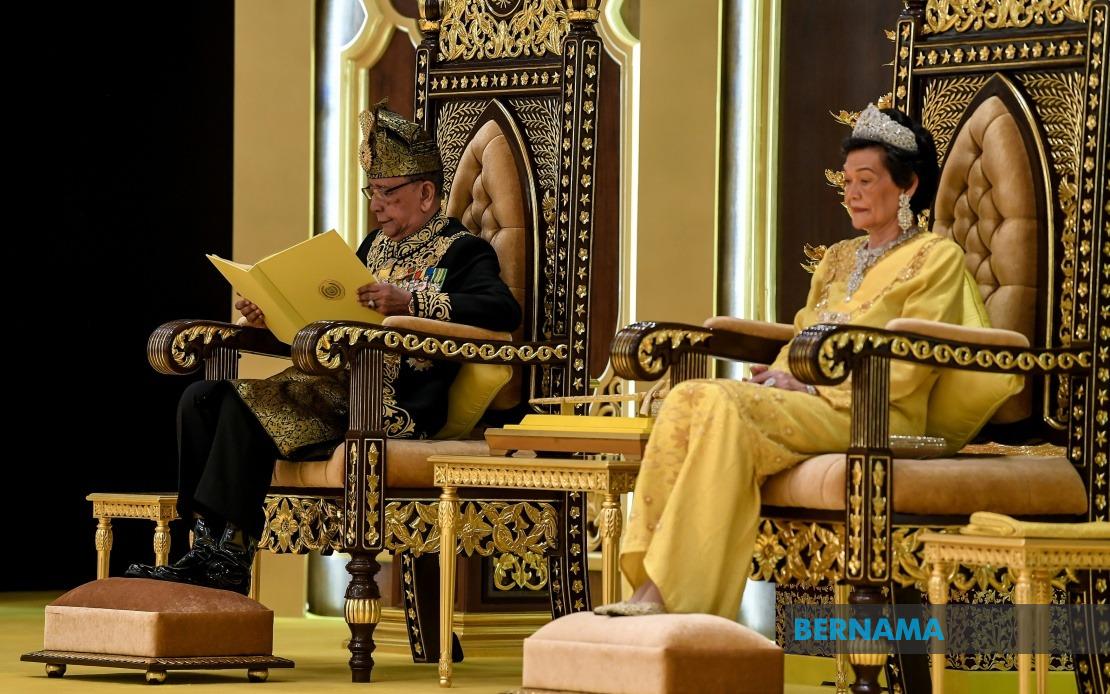
The Sultan of Kedah, Al Aminul Karim Sultan Sallehuddin Sultan Badlishah, has called for Langkawi Island to be shaped by its own distinctive character and strengths rather than pursuing development strategies that replicate successful models from competing regional destinations. Speaking during the state honours investiture ceremony marking his 84th birthday in Alor Setar, the Sultan stressed that Langkawi should not measure itself against established tourism powerhouses such as Phuket in Thailand or Bali in Indonesia, arguing instead that the island's true competitive advantage lies in its authentic identity.
The remarks come at a significant juncture for Kedah's development agenda. Langkawi represents far more than a leisure destination to the northern state; it functions as a cornerstone of the regional economy and a strategic national asset that requires calibrated stewardship. The island's status as Malaysia's premier tourist gateway makes leadership clarity on its future direction particularly consequential, especially as regional competition for tourism dollars intensifies across Southeast Asia. The Sultan's intervention suggests potential divergence between official development vision and ground-level implementation, signalling royal concern about the trajectory of major projects affecting the state.
Central to the Sultan's position is the conviction that Langkawi's enduring appeal stems from irreplaceable natural features and historical depth that cannot be artificially reproduced elsewhere. Rather than attempting to replicate the commercialised tourism infrastructure that has transformed Phuket and Bali into high-density resort clusters, the Sultan advocates for development pathways that preserve these environmental and cultural foundations whilst simultaneously stimulating economic activity. This approach aligns with broader Southeast Asian discussions about sustainable tourism, though implementation remains consistently challenging across the region.
The preservation imperative extends beyond environmental conservation to encompass the island's reputation and market positioning. The Sultan explicitly warned that he would not tolerate any party exploiting Langkawi's vulnerability by engaging in actions or rhetoric that could undermine its standing as a destination. This caveat suggests awareness of reputational risks—from environmental degradation to governance failures to safety concerns—that could erode investor confidence and tourist appeal. Such protective sentiment reflects the precarious balance tourism-dependent economies must maintain between growth ambitions and vulnerability management.
Beyond Langkawi's strategic direction, the Sultan raised pressing concerns about infrastructure delays that have cascading effects on resident welfare. The incomplete Sungai Kedah and Anak Bukit flood mitigation plan (RTB), despite remaining unfinished for an extended period, exemplifies the gap between announced projects and tangible delivery. Recurrent flooding in affected residential areas represents not merely a seasonal inconvenience but a chronic failure of state governance that undermines public confidence in institutional competence and planning discipline.
Flood mitigation projects carry particular weight in Malaysian governance discourse, given that monsoon flooding affects multiple states and displaces thousands annually. Delays in completing such infrastructure often reflect resource constraints, bureaucratic inefficiency, contractor difficulties, or competing budget priorities. In Kedah's case, the persistence of this particular gap suggests either systematic underinvestment in critical infrastructure or institutional challenges in project execution—both problematic for a state positioning itself as economically dynamic and investable.
The Sultan's direct intervention on infrastructure matters represents a calibrated expression of royal pressure on the state administration. Monarchical reminders about unmet public expectations carry particular weight in Malaysia's constitutional framework, where sultans serve as custodians of state interests and representatives of public welfare concerns. When rulers explicitly highlight governance shortfalls during formal state occasions, the message reverberates through bureaucratic hierarchies and signals escalated expectations for remedial action.
The Kedah ruler's dual focus—on Langkawi's developmental distinctiveness and on infrastructure delivery—reflects interconnected governance challenges. A tourism destination's long-term viability depends partly on surrounding infrastructure quality, resident satisfaction, and demonstrated state capacity to execute major projects. Tourists evaluating Langkawi as a destination consider not only resort amenities but also road conditions, disaster preparedness, water supply reliability, and overall operational efficiency. Infrastructure failures undermine even the most compelling natural or cultural attractions.
For Malaysian observers and regional stakeholders, the Sultan's statements carry implications extending beyond Kedah's borders. The emphasis on authentic developmental identity rather than imitative benchmarking offers a model potentially applicable to other Malaysian tourism destinations competing for regional prominence. Penang, Sabah, and Sarawak each possess distinct natural and cultural assets that might be better leveraged through differentiation strategies rather than convergence toward standardised resort-archipelago models that characterize matured regional competitors.
The Sultan's concern about reputational protection also reflects awareness that digital information flows and social media commentary amplify negative perceptions rapidly. A single environmental incident or governance failure at Langkawi can circulate globally within hours, influencing potential visitor decisions instantaneously. This risk environment makes preventive governance and consistent delivery on promises more consequential than ever for destinations seeking to maintain competitive positioning.
Implementing the Sultan's vision requires alignment across multiple stakeholders: state government agencies, private developers, environmental regulators, tourism boards, and federal coordination bodies. Translating royal preference into concrete policy mechanisms and funding allocations demands institutional coordination that historically proves elusive in Malaysian governance contexts. The infrastructure delays the Sultan highlighted suggest such coordination challenges already exist.
Moving forward, Langkawi's development trajectory will likely reflect the tension between preservation-focused sustainability and growth-oriented commercialisation. The Sultan's intervention suggests the scales should tip toward the former, though subsequent policy decisions and resource allocations will determine whether rhetorical commitment translates into substantive reorientation. For Malaysian policymakers and Kedah's administration, the challenge lies in demonstrating that authentic identity and sustainable development can coexist with robust economic performance.

