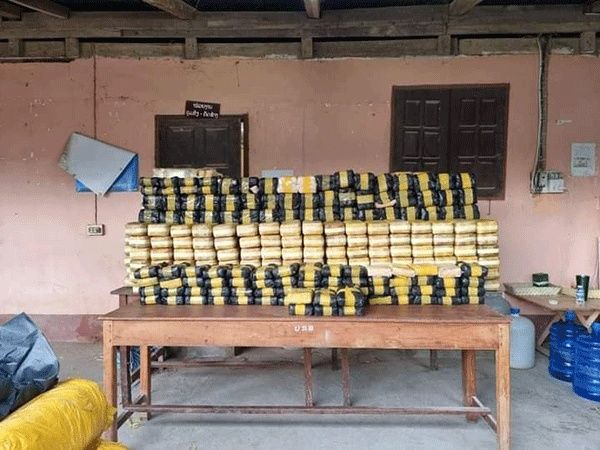
The fight against narcotics has become increasingly urgent in Laos, with drug-related crimes dominating the criminal landscape in Xaysomboun province. During the first six months of this year, authorities recorded 54 criminal cases across the region, of which 24 were connected to drug trafficking and abuse. This concentration reflects a troubling pattern where drug offences now represent nearly 44 per cent of all crimes in the province, elevating the issue to a top security priority that demands immediate and sustained intervention from law enforcement.
The scale of the problem extends well beyond Xaysomboun's borders. Prime Minister Sonexay Siphandone reported to the National Assembly last month that law enforcement agencies nationwide processed 1,786 drug-related cases during the same six-month period, resulting in the arrest of 4,025 suspects. Among those detained were 93 foreign nationals, suggesting that drug trafficking in Laos involves international criminal networks. The authorities also seized significant quantities of narcotics and seized vehicles used in trafficking operations, demonstrating the resourcefulness of enforcement efforts despite the mounting pressures they face.
At the provincial level, the situation requires careful management to prevent further deterioration. Of the 24 drug cases documented in Xaysomboun, only two have been concluded and referred to prosecutors, while the remaining 22 remain under active investigation. This backlog reflects resource constraints that plague law enforcement across Southeast Asia, where limited personnel and funding often slow judicial processes. Police Brigadier General Ouday Insouvanh, who heads the Xaysomboun Provincial Public Security Command, briefed visiting Minister of Public Security Police Lieutenant General Vanthong Kongmany about these challenges during an inspection on August 7.
The appointment of the national security minister to conduct a provincial review underscores how seriously Vientiane treats this crisis. Police Lieutenant General Vanthong directed the provincial command to intensify its campaign against drug trafficking and specifically to focus on emerging synthetic narcotics that are proliferating across the region. These new drug types present particular challenges because law enforcement agencies often lack intelligence and resources to address them effectively. The minister's emphasis on evolving criminal methods reflects a sophisticated understanding that traditional enforcement approaches may prove insufficient against adaptable criminal enterprises.
Beyond narcotics, authorities are grappling with a constellation of security threats that stretch police capacity thin. Police Lieutenant General Vanthong instructed provincial commanders to strengthen action against smuggling, human trafficking, theft, burglary, illegal mining operations and underground gambling networks. The breadth of this agenda reveals how security challenges in Laos extend far beyond drug enforcement, though narcotics remain a central concern. The minister also introduced cybercrime as a new priority, directing the provincial force to monitor social media activity and tackle online criminal activity in line with ministry directives—a recognition that crime is increasingly migrating into digital spaces where traditional policing techniques prove less effective.
Road safety emerged as another significant concern during the ministerial visit. The province recorded 60 traffic accidents in the first half of 2024, resulting in four deaths, 80 injuries and damage to 109 vehicles. Financial losses from these accidents exceeded 2.56 billion kip, representing a substantial drain on provincial resources and reflecting the human cost of inadequate traffic enforcement. This issue particularly resonates for Malaysian readers, given Southeast Asia's persistent road safety challenges and the similar pressures facing enforcement agencies across the region to balance competing priorities with limited budgets.
The provincial security command has also expanded its responsibilities to include tourism oversight and foreign national management. Officers inspected 1,698 tourists during the six-month period, of whom 396 were foreign nationals. This supervisory function reflects Laos's growing tourism sector and the security challenges associated with managing international visitor flows. For the region, such oversight is becoming standard practice as countries balance tourism revenue against security and public order concerns.
Police Lieutenant General Vanthong's broader message to provincial commanders emphasised accountability, professional development and improved governance within the security forces themselves. He urged officers to acknowledge their limitations, avoid passivity and take direct responsibility for results rather than waiting for directives from above. He also stressed the importance of political and ideological education for personnel, compliance with party policies and adherence to state law and disciplinary standards. These institutional concerns suggest that Vientiane recognises that improving law enforcement outcomes requires not just better strategy but also stronger leadership and professionalism throughout the security apparatus.
The intensity of national focus on drug enforcement reflects the designation of this issue as a core national agenda five years ago, demonstrating governmental commitment despite persistent challenges. However, the continued rise in drug cases suggests that current strategies may require adjustment or intensification. For Malaysia and other ASEAN nations facing similar pressures, Laos's experience offers cautionary lessons about the difficulty of combating international drug trafficking through domestic enforcement alone. Regional cooperation, intelligence sharing and coordinated border management may prove essential to disrupting supply chains that extend across multiple countries.
The situation in Xaysomboun is emblematic of broader security dynamics across Indochina, where geographic positioning along trafficking routes and limited regulatory capacity create opportunities for organised crime. Addressing these challenges requires sustained political will, adequate resource allocation and cooperation with neighbouring countries. The Laotian government's public acknowledgement of drug-related crimes reaching 44 per cent of all recorded offences represents a candid assessment of the challenge's magnitude, even as authorities continue their enforcement campaigns and call for heightened vigilance among security personnel.

