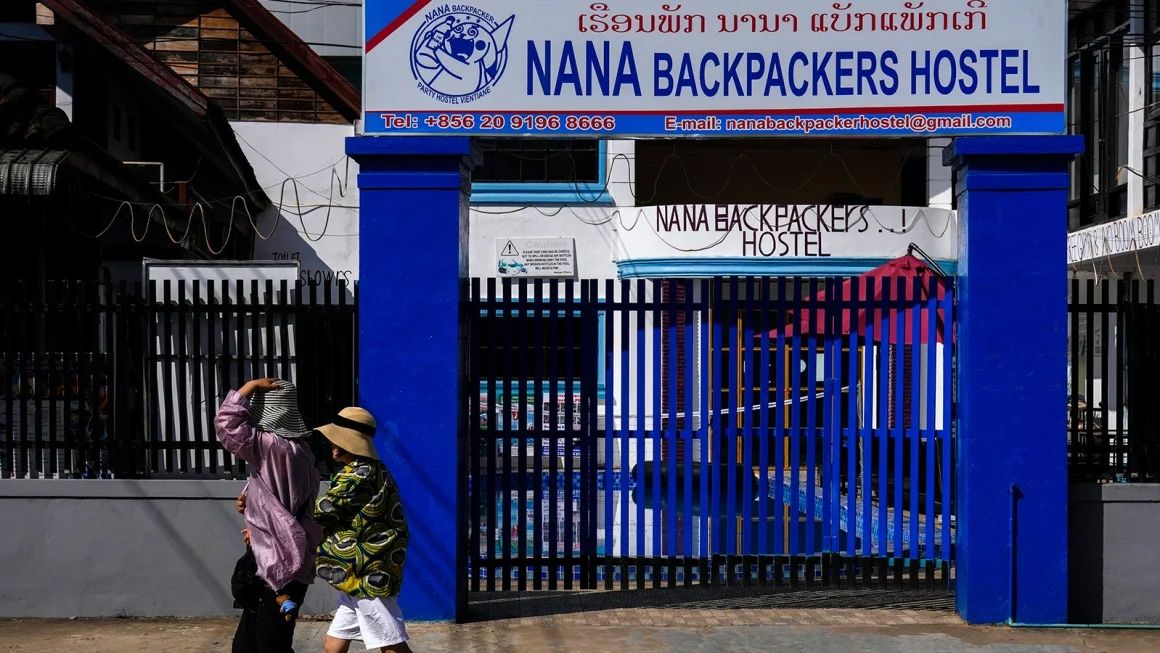
Laotian courts have formally charged a distillery operator in connection with a fatal methanol poisoning incident that claimed the lives of six international tourists at a backpacker hostel in November 2024, though Western governments and bereaved families have condemned the charges as insufficient given the scale of the tragedy. The Danish foreign ministry confirmed Friday that authorities in Vientiane proceeded with charges of selling food harmful to health and operating an unlicensed business—offences that carry potential sentences of three months to four years imprisonment plus fines upon conviction. The announcement has triggered diplomatic tensions, with Copenhagen, Canberra, and London expressing deep frustration that Laotian prosecutors did not pursue more serious criminal charges such as negligent homicide despite the deaths of citizens from multiple nations.
The incident unfolded in November 2024 when tourists staying at the Nana Backpacker Hostel in Vang Vieng, a backpacker hotspot in central Laos, consumed complimentary shots of locally-distilled vodka before venturing to other venues. Among those who died were Danish nationals Anne-Sofie Orkild Coyman, 20, and Freja Vennervald Sorensen, 21; Australian teenagers Bianca Jones and Holly Morton-Bowles, both 19; British lawyer Simone White, 28; and American James Louis Hutson, 57. The young Australians fell ill in their accommodation and were later rushed across the Thai border for emergency treatment, though all six ultimately succumbed to the toxic effects of methanol, a highly poisonous alcohol variant often used as a cheap substitute for ethanol in unregulated spirits production.
Denmark's Foreign Minister Lars Løkke Rasmussen issued a stark statement declaring his profound disappointment that the indictment failed to reflect the gravity and scope of a tragedy that devastated multiple families and nations. While acknowledging the legal complexities involved in meeting evidentiary thresholds for serious criminal charges in Laos, Rasmussen stressed that the leniency of the charges appears grossly disproportionate to the deaths of six young people. The Danish ministry noted that the case formally remains open for fifteen years, leaving the theoretical possibility that prosecutors could upgrade charges to more severe offences should additional evidence materialise, though observers regard this possibility as unlikely given Laos's opaque judicial system and limited resources for ongoing investigation.
Australian officials have proven particularly vocal in their condemnation. Foreign Minister Penny Wong issued a statement Friday morning expressing being "deeply frustrated and bitterly disappointed" that authorities declined to pursue the most serious available charges. The Australian government dispatched an envoy to Laos on the same day to lodge formal objections and emphasise expectations for a rigorous investigation that would deliver accountability for the victims. Prime Minister Anthony Albanese subsequently summoned Laos's ambassador to Canberra, signalling that Canberra regards the charging decision as sufficiently grave to warrant high-level diplomatic intervention. Shaun Bowles, father of victim Holly Morton-Bowles, warned that the perceived inadequacy of Laotian justice system responses could deter young Australian and international travellers from visiting Laos, thereby undermining a significant tourism revenue stream for the impoverished nation.
The families' anguish extends beyond the legal charges themselves. Vennervald Sorensen's parents reported to Danish media that they have received minimal information about their daughter's death throughout the process. Most troublingly, no autopsy was performed on their daughter, and the official death certificate attributed her death to cardiac arrest—a natural cause—rather than acknowledging methanol poisoning. The parents emphasised that their daughter and her travelling companion had observed precautions throughout their journey, and they remain devastated that a holiday misadventure ended fatally. Michelle Jones, mother of victim Bianca, expressed at a family press conference that the charges seemed to suggest the lives of the deceased tourists "didn't even matter," describing the outcome as "devastating" for families who watched their children engage in ordinary youthful travel experiences before tragedy struck.
Methanol contamination of alcohol represents a persistent public health hazard throughout the developing world, particularly in regions where regulation of liquor production remains minimal and illicit or home-distilled spirits circulate widely. According to data compiled by Doctors Without Borders, countries including Indonesia, India, and Russia experience the highest reported incidence of suspected methanol poisoning cases globally. The substance becomes dangerous when added deliberately to spirits as a cost-cutting measure—ethanol, the safe drinking alcohol, costs more than methanol, creating financial incentive for unscrupulous bar operators in impoverished regions to substitute it. Alternatively, methanol emerges naturally as a toxic byproduct when liquor undergoes improper home distillation, potentially contaminating beverages inadvertently when such spirits reach commercial venues through informal supply chains.
Vang Vieng's status as a premier backpacker destination amplifies the international dimensions of this tragedy. The town has cultivated a reputation across Southeast Asia for attracting young Western travellers seeking adventure activities and nightlife in a permissive environment. This appeal means that incidents occurring there generate attention from multiple foreign governments whose citizens frequent the location. Laos itself ranks among Southeast Asia's poorest nations, and tourism represents a crucial foreign exchange earner that the government cannot afford to lose. Yet the apparent unwillingness of Laotian authorities to pursue serious charges risks communicating to potential visitors that official accountability for tourist deaths remains minimal, potentially triggering precisely the deterrent effect that Shaun Bowles warned against.
Laos operates as an authoritarian one-party communist state that maintains tight governmental control over information flows and the judiciary. The nation's Foreign Ministry declined to provide substantive comment to international media, instead restricting a planned press briefing to domestic outlets and concerned foreign embassies—a decision reflecting Vientiane's general hostility toward transparent engagement with international scrutiny. This opacity complicates international pressure and makes it difficult for foreign governments to understand the reasoning behind prosecutorial decisions or to advocate effectively for stronger charges. The Associated Press and other international news organisations were explicitly barred from observing proceedings at the Ministry of Public Security in Vientiane, though diplomatic vehicles from Australian and British embassies were observed departing the location Friday afternoon, suggesting quiet bilateral engagement occurred beyond public view.
The charging decision ultimately reflects broader tensions between Laos's dependence on international tourism and its limited capacity or willingness to extend strong legal protections to foreign visitors. The three-month to four-year sentencing range for the charges brought essentially treats the deaths of six tourists as a regulatory violation rather than a serious criminal matter. For grieving families now scattered across Denmark, Australia, Britain, and the United States, the outcome represents an institutional failure to acknowledge proportionality between the harm inflicted and the legal consequences imposed. The case also underscores risks inherent in Southeast Asian backpacker tourism, where permissive regulatory environments and informal hospitality sectors create opportunities for contaminated products to reach consumers with minimal oversight or accountability mechanisms. As Western governments continue pressing Laotian authorities through diplomatic channels, the outcome will likely influence both international perceptions of justice in Laos and travel advisories affecting future visitor flows to the nation.

