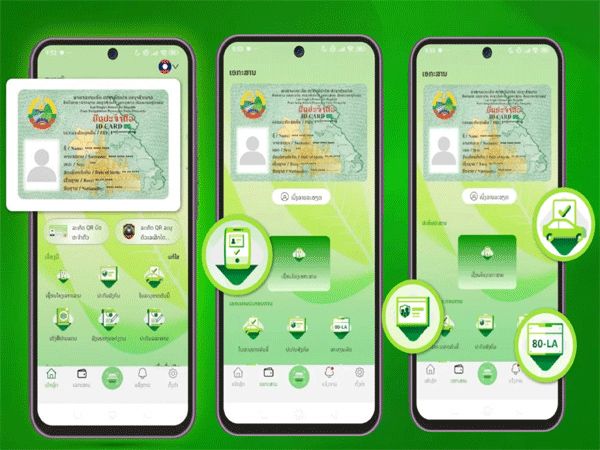
The Laotian government has taken a significant step toward modernizing its administrative infrastructure by officially retiring paper-based identity documents in favour of a mobile-first digital system. From July 18, the white and green identity cards that have served Laotian citizens for decades are no longer valid for official government transactions, marking the end of an era dominated by physical paperwork. The Ministry of Public Security has formally launched the LAeID application and simultaneously discontinued the use of paper household registration books, ushering citizens toward a streamlined digital identification framework accessible entirely through smartphones.
This transition represents a watershed moment for Laos, a Southeast Asian nation working to catch up with regional digital governance trends. Neighbouring countries including Thailand and Vietnam have progressively implemented digital identity systems, creating competitive pressure and practical incentives for Laos to modernize its own bureaucratic processes. The LAeID rollout demonstrates the government's commitment to reducing the administrative burden citizens face when interacting with public agencies, a perennial challenge across the region where citizens often must visit multiple offices with numerous documents to complete even routine transactions.
The technical architecture of LAeID transforms personal identification into a consolidated digital wallet accessible from any mobile device. Rather than carrying separate documents for identity verification, household status, driving privileges, and health insurance, Laotian citizens will eventually present a single unified identification through the application. The Ministry of Public Security has orchestrated a nationwide notification campaign directed at all government ministries, agencies, and the general public to ensure comprehensive awareness of the phased transition, though the immediate rollout focuses on activating the digital identity card function while other services remain under development.
Citizens wishing to participate in the new system must initiate registration at district and provincial public security offices, where they complete their digital identity registration and establish an electronic identification account. The process employs the citizen's identity number as the standard username, with authentication managed through SMS-delivered passwords or user-created credentials established during initial registration. This decentralized registration approach, distributed across local public security offices nationwide, should theoretically improve accessibility for rural populations, though implementation consistency across provinces may vary considerably given the uneven technological infrastructure across Laos.
The phased implementation strategy reveals the practical constraints facing Laotian digital government ambitions. While the LAeID application currently offers only digital identity card functionality, government officials have publicly committed to progressively integrating additional documents and services into the platform. Birth certificates, marriage certificates, health insurance cards, social security records, vehicle registrations, driving licences, and passports all represent future integration targets, transforming LAeID from a simple identity verification tool into a comprehensive government services hub. This graduated approach acknowledges the technical, institutional, and capacity challenges inherent in simultaneously connecting dozens of disparate government databases while ensuring data security and system reliability.
The efficiency gains promised by LAeID extend beyond mere convenience for individual citizens, potentially reshaping how Laotian government agencies operate internally. By consolidating identity verification into a single digitally managed system, the Ministry of Public Security anticipates substantial reductions in administrative processing times, elimination of redundant paperwork, and decreased operational costs across government ministries. The transition should particularly benefit provincial and district-level agencies that have historically struggled with document management and identity verification due to limited technological resources. Digital record-keeping also creates opportunities for improved data integrity and government capacity to track demographic trends, resource allocation, and service delivery effectiveness.
For Malaysia and other Southeast Asian nations evaluating their own digital identity pathways, the Laotian experience offers both opportunities and cautionary considerations. While digital ID systems promise substantial administrative efficiencies and improved citizen convenience, successful implementation requires sustained government commitment, adequate funding for technical infrastructure, robust cybersecurity protocols, and comprehensive public education campaigns. Malaysia's experience developing MyKad and MyDigital initiatives demonstrates that digital identity systems demand continuous technical updates to maintain security standards as threats evolve. The regional momentum toward digitalization creates an opportunity for countries to collaborate on technical standards and security protocols, potentially reducing implementation costs through shared expertise.
Data security and privacy protection represent paramount concerns as Laos concentrates sensitive personal information within a centralized digital platform. The consolidation of birth certificates, health records, social security information, and travel documents into a single mobile application creates an attractive target for cybercriminals and potentially extends the damage possible through security breaches. The Ministry of Public Security's commitment to managing the system suggests government attention to data protection, yet Laos faces significant capacity constraints in maintaining enterprise-grade cybersecurity infrastructure. Regional cooperation through ASEAN mechanisms might facilitate knowledge sharing regarding best practices for protecting digital identity systems from both external threats and unauthorized internal access.
The broader context of LAeID implementation reflects Laos' integration into the digital economy and its responsiveness to regional development trends. The digital transformation initiative extends beyond identity verification toward comprehensive modernization of public administration, positioning Laos to deliver government services more efficiently as economic development and urbanization increase demand for accessible public sector interactions. However, the system's success ultimately depends on consistent government commitment, adequate long-term funding, and successful integration with all relevant government agencies. Implementation failures at any stage could undermine citizen confidence in digital government services and create resistance to future digitalization efforts.
The transition from paper identity documents to LAeID also addresses environmental and resource efficiency considerations, reflecting broader Southeast Asian commitments to sustainable administration. The elimination of millions of paper identity cards and household registration books, while modest in environmental impact relative to other government operations, symbolizes a shift toward resource-efficient governance models. Over the coming years, the reduced consumption of printed forms, documents, and identity cards across Laotian government agencies will accumulate into measurable environmental benefits, though these remain secondary to the primary administrative efficiency objectives motivating the LAeID rollout.
As Laos progresses through subsequent implementation phases, integrating additional government databases and expanding service offerings available through LAeID, neighboring Southeast Asian countries will observe the outcomes closely. The system's performance in handling security challenges, maintaining citizen trust, and actually reducing administrative burdens will inform decisions by other governments considering similar transitions. Success stories emerging from Laos could accelerate regional digital government adoption, while implementation difficulties might prompt more cautious approaches elsewhere. The outcome ultimately depends on sustained execution across multiple government agencies, adequate technical resources, and genuine commitment to serving citizen needs rather than simply digitizing existing bureaucratic processes.

