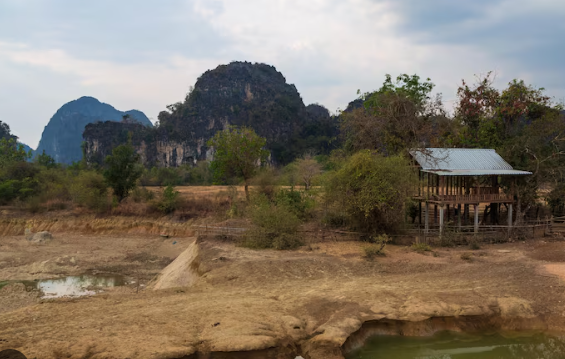
Laotian Prime Minister Sonexay Siphandone has set in motion an ambitious economic development blueprint aimed at unlocking dormant commercial potential across Champasak, Salavan, Xekong and Attapeu provinces in the country's south. Announced during a high-level review meeting held in Champasak province on Thursday (July 23), the strategy encompasses sweeping reforms across agriculture, industrial processing, energy production, and regional trade infrastructure—positioning the southern tier as a growth engine for the wider Mekong region.
The initiative reflects a significant reorientation of Laotian policy toward geographic diversification. Rather than concentrating development efforts in the central Mekong corridor, authorities now recognise that southern Laos remains substantially underutilised despite abundant natural resources, arable land, and strategic positioning between Thailand and Vietnam. The Prime Minister's blueprint directly addresses this imbalance by proposing targeted interventions across multiple economic sectors simultaneously, underpinned by a commitment to strengthen political stability and border security as foundational preconditions for prosperity.
Agriculture stands as the cornerstone of this transformation. Sonexay identified the Bolaven Plateau and surrounding upland zones as critical development zones capable of yielding far greater output under modernised farming systems. Current smallholder practices, characterised by subsistence orientation and limited mechanisation, will give way to commercial-scale operations producing standardised, export-grade commodities. The government intends establishing agricultural research centres focused on improving crop varieties, enhancing livestock breeding programmes, and developing bio-fertiliser technologies—measures designed to boost productivity while reducing dependency on imported inputs.
Technological adoption represents a core lever for agricultural transformation. Solar-powered irrigation systems and year-round production methods will enable farmers to overcome seasonal constraints that have historically limited yields and income stability. However, the strategy's emphasis on crop processing, branding, and internationally recognised quality certification suggests ambitions extend beyond primary production. By adding value domestically before export, Laos aims to capture greater profit margins and develop downstream agro-industrial capacity—positioning itself as a supplier of refined agricultural products rather than raw commodities destined for external processing facilities in neighbouring countries.
The mineral sector likewise features prominently in the modernisation agenda. Rather than exporting unprocessed ores, the government intends developing domestic mineral processing capabilities to extract greater economic returns from extraction activities. This mirrors approaches adopted by other Southeast Asian nations seeking to move up value chains and reduce raw material dependency. Combined with expanded hydropower, solar, and wind energy generation capacity, these initiatives address both domestic energy requirements and export opportunities—particularly relevant given the region's growing electricity demand and international commitments to renewable energy expansion.
Trade and logistics infrastructure receives substantial attention within the broader plan. Developing dry ports, cargo transshipment facilities, warehouses, and cold storage systems across the four provinces directly facilitates cross-border commerce with Thailand and Vietnam while positioning Laos as a transit corridor for regional supply chains. Streamlined customs procedures and simplified border protocols will reduce transaction costs and processing delays that currently deter smaller traders and agricultural exporters. Price stabilisation mechanisms for farm products during harvest peaks address a perennial challenge affecting farmer livelihoods—volatile commodity prices that undermine income predictability and discourage investment in agricultural improvements.
The environmental dimension underpins several policy elements, reflecting global pressures and Laotian commitments to sustainable development. Expanding electric vehicle adoption across passenger transport, commercial logistics, and tourism operations reduces petroleum consumption while lowering greenhouse gas emissions. Tourism development emphasises environmental responsibility alongside service quality improvements and visitor safety enhancements. Integration of locally produced food, organic vegetables, and handicrafts into hotel and restaurant supply chains simultaneously supports rural producers and reduces import dependency—generating multiple development benefits from single policy interventions.
Educational and healthcare provision emerge as equally critical pillars. Champasak University and vocational institutions must produce technicians and graduates capable of staffing advanced manufacturing and service industries. Simultaneously, upgrading specialised medical services in southern provincial hospitals aspires to transform the region into a healthcare destination, capturing patient spending currently directed toward Bangkok and other external centres. These human capital investments create foundation for sustained competitive advantage, enabling local workforces to manage sophisticated equipment and processes rather than remaining confined to low-skill assembly and basic service roles.
The development strategy explicitly anchors itself to the 12th Party Congress resolution, embedding economic measures within the Party's "Three Builds" policy framework. This positioning ensures initiatives receive political backing and resource allocation while emphasising that commercial development serves broader social objectives including rural advancement and social problem resolution. For Malaysian and Southeast Asian observers, the initiative demonstrates how regional governments increasingly recognise that uneven geographic development creates vulnerabilities requiring coordinated policy response. By prioritising southern Laos, Vientiane acknowledges that sustainable regional prosperity demands inclusivity across territory and population.
The implications extend beyond Laotian borders. Enhanced southern provincial capacity strengthens the Mekong Economic Cooperation Programme, improves regional supply chain resilience, and creates new commercial opportunities for traders and investors throughout Southeast Asia. Agricultural product flows from improved Laotian systems could reshape competitive dynamics in regional commodity markets. Infrastructure development facilitates deeper economic integration, potentially shifting patterns of regional trade and investment. For Malaysia, particularly companies with regional manufacturing and agricultural interests, the emerging opportunities warrant strategic attention as Laotian development trajectories reshape competitive positioning across the Mekong region.

