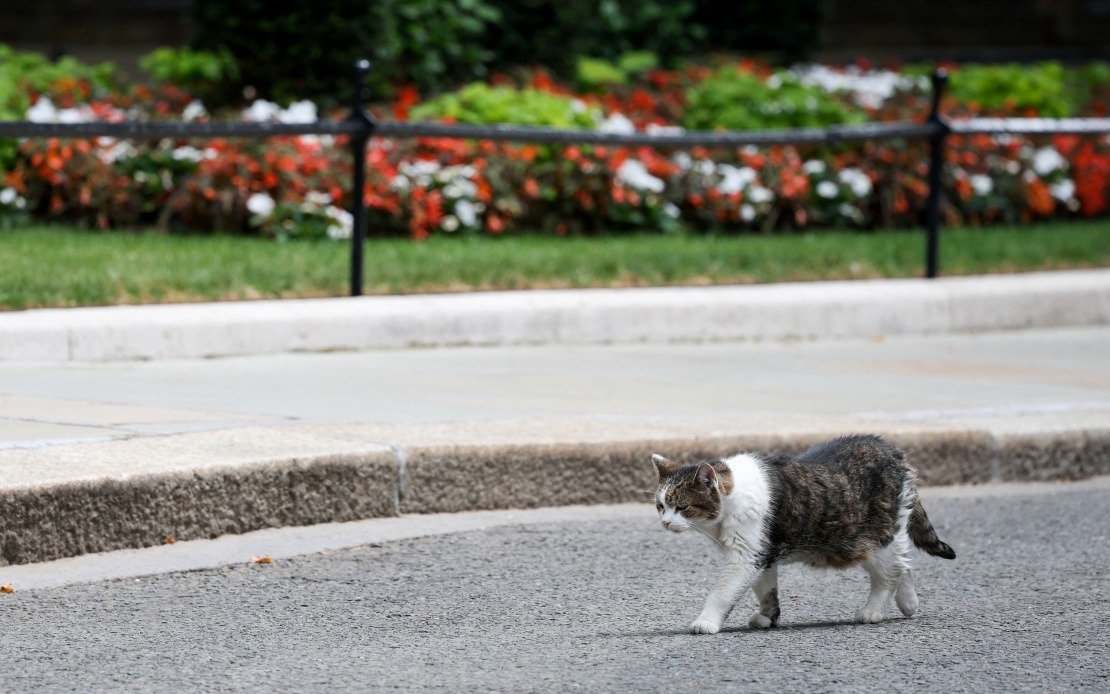
Larry, the celebrated tabby cat who resides at 10 Downing Street, has become something of a fixture in British political life, having witnessed the tenure of six different Prime Ministers. On Tuesday, July 21, as Britain's new Prime Minister Andy Burnham convened his inaugural Cabinet meeting following his recent election, the famous feline was observed wandering the grounds outside the official residence—a fitting symbol of continuity amid the constant churn of political change at Westminster.
The presence of Larry during Burnham's first gathering of ministers underscores just how long the cat has occupied his unique position in British governance. While prime ministers come and go, their electoral fortunes rising and falling with the electorate's mood, Larry has remained a steadfast resident, observing the machinery of government from a distinctly feline perspective. His tenure predates the current Prime Minister, serving through multiple administrations of different political complexions.
The symbolism of a cat outlasting six prime ministers is not lost on observers of British politics. In a nation where premierships have become increasingly shortened—reflecting broader instability in the political landscape—Larry's longevity at 10 Downing Street speaks to a certain permanence. While politicians debate policy, campaign for power, and navigate the treacherous waters of parliamentary politics, the Downing Street cat pursues his daily routine with the indifference that characterizes his species.
For Malaysian and Southeast Asian readers, the story of 10 Downing Street's resident feline offers an intriguing window into British institutional culture. The fact that a cat commands such recognition and affection within one of the world's most powerful political headquarters reflects the deeply embedded traditions that characterize Westminster democracy. The continuity represented by Larry stands in contrast to the volatility that has marked British politics in recent years, with rapid leadership changes becoming almost routine.
Larry's presence during Burnham's first Cabinet meeting carries additional weight given the significance of the moment. A new Prime Minister's initial gathering with senior ministers sets the tone for the administration ahead, establishing priorities and establishing working relationships. That Larry chose this particular moment to be observed outside, perhaps in full view of arriving and departing officials, adds a whimsical element to proceedings that would otherwise be dominated by serious matters of state.
The Downing Street cat has transcended his role as a mere mouser or house pet to become an informal ambassador of sorts for the British government. His presence is noted in political commentary, he has his own social media following, and his wellbeing is a matter of public concern. This transformation reflects how even the grandest institutions benefit from accessible, relatable symbols that humanize otherwise austere centres of power.
Burnham's ascension to the Prime Minister's office marks another chapter in Larry's extended tenure at Downing Street. The new PM will inherit not only the vast machinery of government but also the companionship of this distinguished feline. In the months and years ahead, as Burnham grapples with the various challenges facing Britain—economic, social, and geopolitical—Larry will doubtless continue his customary routines, indifferent to the weight of office that falls upon his human colleagues.
The story also resonates with observers interested in British institutional continuity. Despite the political upheavals that have characterized British governance since Larry arrived at Downing Street, the basic structures and traditions of Westminster have persisted. The Cabinet still meets, ministers still occupy their offices, and the machinery of government continues to function. In this sense, Larry serves as a living reminder that institutions possess a resilience that transcends the temporary occupants who lead them.
For the broader Southeast Asian context, where political stability is often a pressing concern, the tale of Larry's longevity might provoke reflection. While Britain's frequent change of prime ministers might appear destabilizing to some observers, the underlying institutional framework has proven robust enough to weather these transitions. The continuity represented by both the physical structures of Downing Street and its famous resident cat speaks to the importance of building durable governmental institutions that can survive leadership changes.
As Andy Burnham settles into his new role, he joins a select group of Prime Ministers whose administrations will unfold under the watchful—or at least, the observant—gaze of Larry. Whether the cat recognizes the significance of each new leader, or whether he merely notes the comings and goings with the detached curiosity typical of felines, remains a matter of speculation. What is certain is that Larry has carved out a remarkable position in British public life, becoming a symbol of institutional permanence in an increasingly volatile political landscape.

