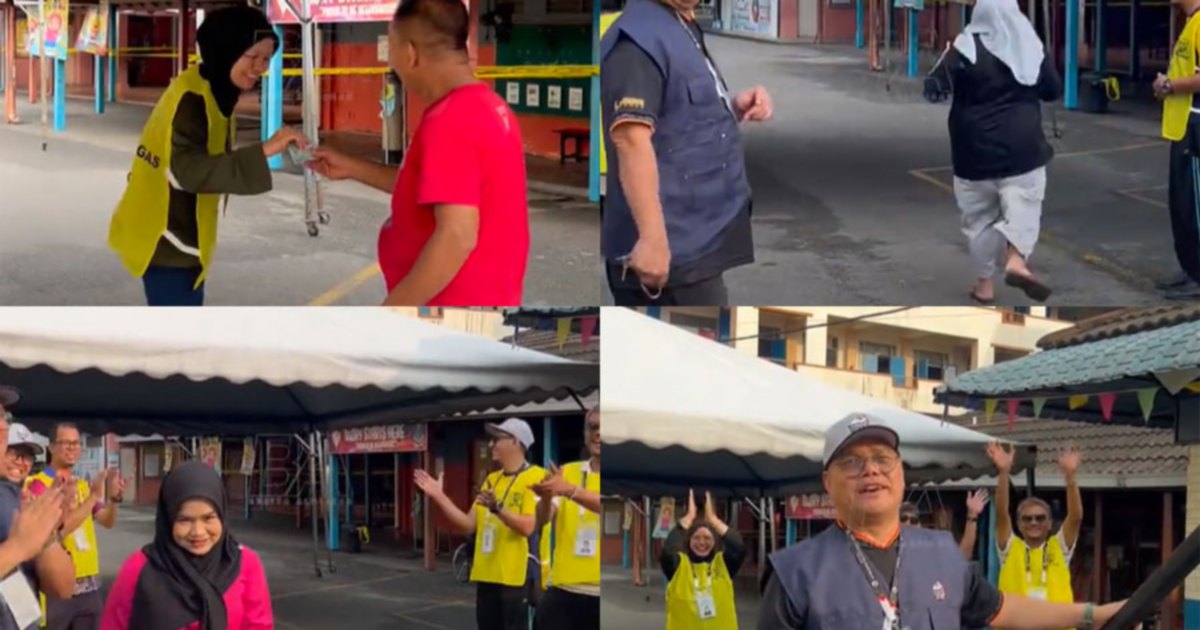
Footage that has rapidly circulated across social media platforms offers a compelling glimpse into the determination of Negri Sembilan voters during the concluding moments of a recent state election. The video documents the dramatic scramble that unfolded as citizens hurried to participate in the democratic process, arriving at polling stations in the final minutes before voting operations ceased at 6pm, highlighting the significance many Malaysian voters place on exercising their electoral rights despite time constraints.
The clip has resonated powerfully with online audiences across Malaysia, generating considerable engagement and discussion on platforms including TikTok, Twitter, and Facebook. The footage captures the palpable tension and urgency that characterises the closing hours of any election day, when queues swell suddenly and election officials prepare to seal the polling stations. This surge of activity in the eleventh hour reflects a broader pattern observed in Malaysian elections, where some voters deliberately wait until late afternoon before making their way to cast their votes.
The images conveyed in the viral content underscore the logistical challenges that electoral authorities face in managing voter flow, particularly when surges occur close to the deadline. Election officials across Malaysia routinely prepare for this predictable phenomenon, ensuring sufficient staff and resources remain at polling stations to accommodate last-minute voters without compromising the integrity or efficiency of the voting process. The rush captured in the video demonstrates the practical complexities inherent in coordinating mass participation across multiple voting centres simultaneously.
For election observers and political analysts, such scenes provide valuable insights into voter enthusiasm and participation patterns. The willingness of citizens to leave matters until the final moments, yet still prioritise reaching polling stations, suggests a robust commitment to engagement with the electoral system despite potential inconvenience. However, this pattern also raises questions about whether certain voters face barriers earlier in the day that prevent earlier voting, or whether the time-sensitive drama itself motivates some to participate.
The Negri Sembilan state election campaign preceding these voting scenes had generated substantial public interest throughout the state. As a key electoral contest in Malaysia's federal landscape, state elections in Negri Sembilan carry implications extending beyond local governance, influencing national political dynamics and coalition formations. The visible enthusiasm demonstrated by voters racing to participate suggests the election had captured public attention and motivated broad segments of the electorate to engage.
Social media amplification of election-related content has become increasingly significant in shaping public discourse around Malaysian electoral events. Viral videos and footage from polling stations provide ordinary Malaysians with unfiltered perspectives on the democratic process, bypassing traditional media gatekeeping. This democratisation of political information can enhance civic awareness, though it also occasionally spreads misinformation or takes isolated moments out of broader context.
The timing and nature of this viral moment also highlight the competitive intensity that characterises Malaysian electoral contests. When voters prioritise racing to polling stations as voting closes, it often reflects genuine political engagement and investment in outcomes. Whether motivated by support for specific candidates, desire to influence coalition formations, or commitment to democratic participation generally, these voters demonstrate that Malaysian electoral politics continues to mobilise significant public involvement across diverse demographics.
Election officials and observers alike have noted consistent patterns in voter behaviour across multiple election cycles, with late-afternoon surges representing a predictable feature of polling day dynamics. Negri Sembilan, like other Malaysian states, has experienced this phenomenon repeatedly, prompting authorities to fine-tune their operational planning to accommodate the inevitable rush. The successful processing of these late arrivals without significant disruption speaks to the operational competence of Malaysia's electoral machinery, despite the visible chaos such moments may convey to external observers.
The broader context of electoral participation in Malaysia reveals that voter turnout represents a complex phenomenon influenced by multiple factors including political interest, accessibility of polling stations, work schedules, and weather conditions. The prominence of the 6pm deadline captures the imagination of voters and media alike, creating a psychological focal point that may itself influence behaviour. Some analysts suggest that artificial urgency generated by fixed closing times may inadvertently suppress participation among those unable to leave work or attend to other obligations earlier in the day.
For Malaysia's electoral authorities and policymakers, persistent patterns of last-minute voting surges suggest potential value in exploring extended voting periods, early voting provisions, or administrative streamlining to distribute voter flow more evenly throughout polling days. Several other democracies have implemented such measures with varying degrees of success, offering potential models for consideration. However, any substantial changes to electoral procedures would require careful deliberation and consultation with stakeholders to ensure they enhance rather than compromise electoral integrity.
The viral video ultimately encapsulates a moment of democratic vitality within Malaysian electoral practice. While the visual drama may appear chaotic to some observers, it represents citizens actively claiming their political voice and insisting on participation despite practical obstacles. Whether recorded for social media effect or captured spontaneously, such footage reminds Malaysians of the importance many attach to their electoral franchise and the energy that characterises competitive elections at state level.
As Malaysia continues evolving its electoral practices and social media reshapes how election narratives spread publicly, moments like the Negri Sembilan voting rush will likely continue capturing attention and generating discussion. These instances serve constructive purposes in maintaining civic awareness about electoral processes, though they also underscore the need for ongoing assessment of whether current voting arrangements optimally serve Malaysia's diverse electorate. The viral video thus functions simultaneously as documentation of political enthusiasm and as an implicit prompt for reflection about electoral administration efficiency.

