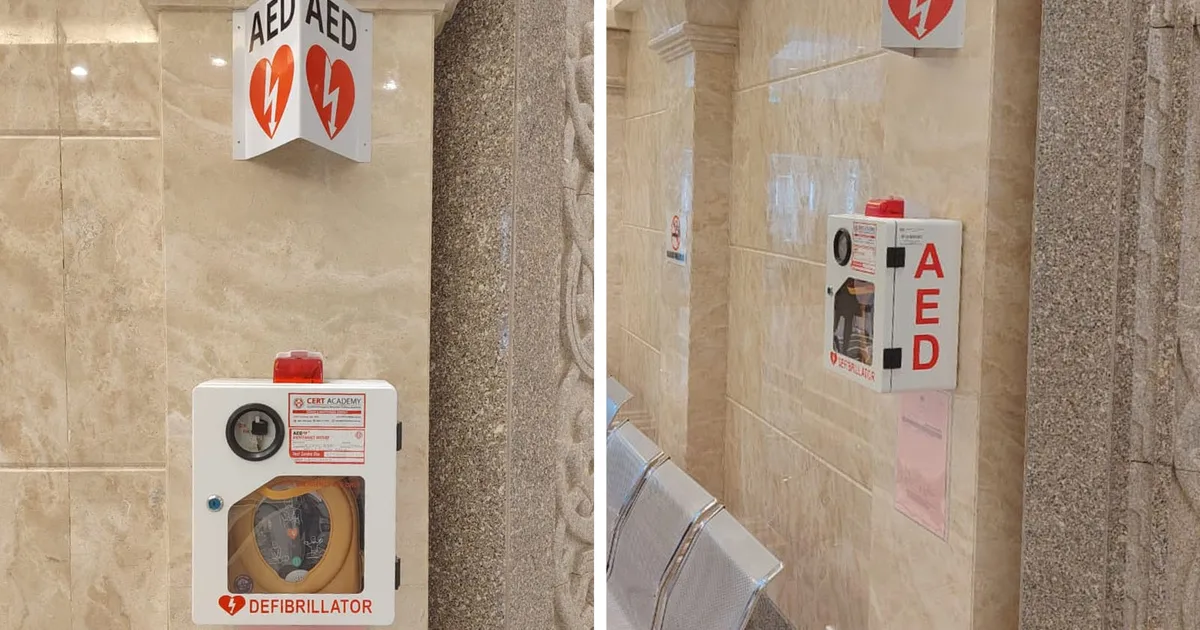
The Malaysian legal community has intensified calls for comprehensive installation of life-saving equipment at court facilities across the country, following the tragic death of a litigant who experienced sudden cardiac arrest within a KL High Court courtroom. The incident has reignited concerns about emergency preparedness in judicial settings, where proceedings often extend for hours and vulnerable individuals navigate high-stress situations involving their legal futures.
This push from the legal profession represents a significant conversation about institutional responsibility and public safety within Malaysia's justice system infrastructure. Court complexes function as civic spaces where ordinary Malaysians spend considerable time pursuing remedies and attending to legal matters, yet many facilities lack basic emergency medical equipment that has become standard in hospitals, shopping centres, and public institutions globally.
Automated external defibrillators, commonly known as AEDs, are portable devices designed to restore normal heart rhythm during life-threatening arrhythmias. Their effectiveness increases dramatically when deployed within the first few minutes of cardiac arrest, making strategic placement in high-traffic public venues genuinely lifesaving. The technology has been credited with preventing countless deaths in workplaces and commercial spaces throughout developed nations.
The death at the KL High Court courtroom has prompted legal practitioners and court administrators to evaluate whether Malaysia's judicial infrastructure adequately reflects contemporary standards for occupant safety. Unlike many workplaces and public venues that have embraced AED placement following regulatory changes, court complexes have historically focused resources on security and case management rather than medical emergencies.
Lawyers and legal professionals argue that judges, litigants, witnesses, and court staff face genuine health risks during their time within courthouse buildings, particularly when proceedings run lengthy or involve emotionally charged disputes. The argument extends beyond mere sentiment—research consistently demonstrates that stress-related health events occur more frequently in environments characterised by psychological pressure and uncertainty, making courtrooms potentially higher-risk spaces than many other institutional settings.
The proposal for comprehensive AED installation would require coordination between multiple stakeholders, including the judiciary, court management, the Ministry of Health, and legal regulatory bodies. Implementation would necessitate not only equipment procurement but also staff training, maintenance protocols, and public awareness campaigns to ensure that court users understand equipment location and basic operation procedures.
Malaysia's major court complexes—including facilities in Kuala Lumpur, Penang, Johor Bahru, and other state capitals—would require prioritised attention in any rollout programme. These facilities process thousands of cases annually and welcome tens of thousands of visitors, litigants, and legal professionals each year, making them legitimate public health concern points.
The advocacy from the legal profession also reflects broader institutional reform momentum, as Malaysian courts and government agencies increasingly recognise their responsibility to provide functional emergency services infrastructure. This follows earlier campaigns for improved security measures, accessible facilities, and enhanced administrative efficiency across the judiciary.
Beyond the immediate court setting, the incident underscores Malaysia's broader health preparedness landscape. While urban commercial areas have increasingly adopted AED networks through corporate initiatives and municipal programmes, rural courts and facilities in smaller towns remain largely underserved. A comprehensive judicial AED programme could potentially establish a model replicable across government buildings and public institutions nationwide.
Financial considerations will inevitably influence implementation timelines and scope. Equipment costs, installation expenses, and ongoing maintenance represent budgetary items requiring allocation within court administration budgets. However, proponents argue that the investment represents genuine cost-benefit value when measured against the potential loss of life and reputational damage to the judiciary when medical emergencies go inadequately managed.
The legal profession's unified advocacy signals that court stakeholders—judges, practitioners, and court users—recognise a clear institutional vulnerability requiring urgent remediation. Whether policymakers and court administrators respond with swift, comprehensive action or pursue incremental, partial measures will likely reflect broader institutional attitudes toward preventive safety investment.
This particular episode joins a growing collection of incidents that prompt Malaysian institutions to reconsider emergency readiness and public welfare standards. As the nation continues developing infrastructure and institutional frameworks, the integration of basic life-saving equipment into everyday institutional settings represents both practical necessity and symbolic commitment to preserving human life within official spaces.

