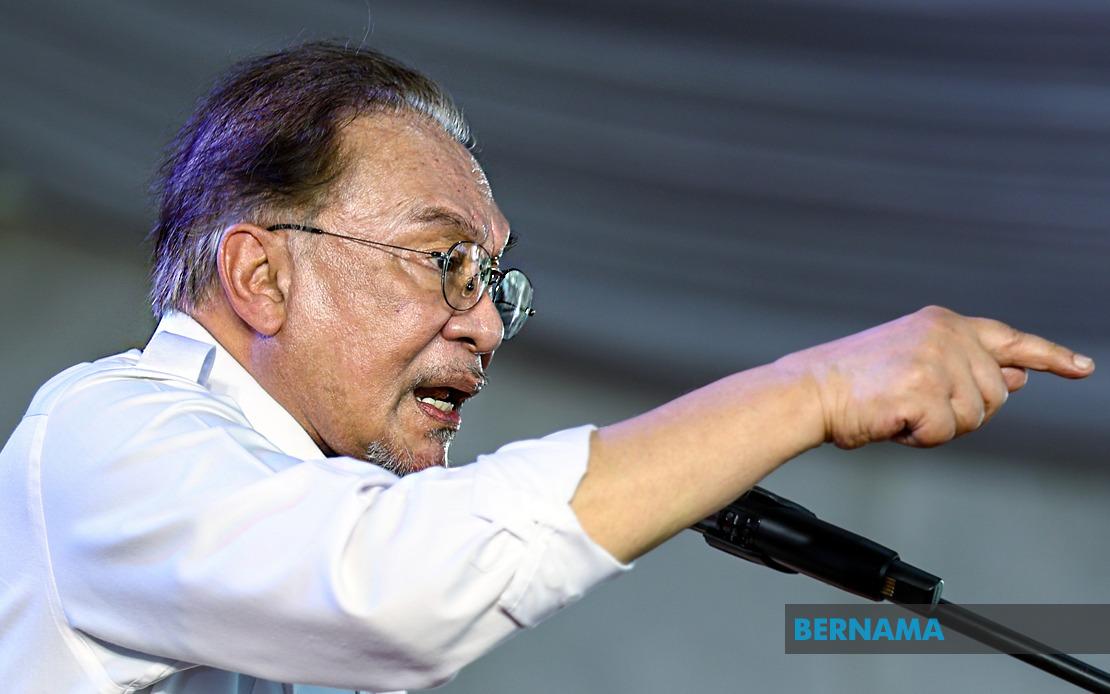
Prime Minister Datuk Seri Anwar Ibrahim has urged political leaders operating at federal, state and municipal levels to maintain consistent engagement with Malaysia's diverse communities, warning that such inclusive governance is fundamental to sustaining the nation's cohesion and prosperity. Speaking during a hi-tea gathering with Johor community leaders in Johor Bahru on July 4, Anwar highlighted a significant implementation gap between national-level reform commitments announced by the MADANI Government and their practical realisation in states and local councils across the country.
The Prime Minister articulated a nuanced understanding of fair governance, clarifying that impartiality does not mean capitulating to every petition or application brought before authorities. Rather, he emphasised, it requires that all citizens receive a genuine opportunity to express their perspectives and substantiate their appeals through mechanisms that demonstrably uphold both transparency and equity. By creating such institutional pathways, Anwar suggested, governments can ensure that their decisions—even when unfavourable to particular groups—carry the legitimacy that comes from being perceived as just and principled rather than arbitrary or discriminatory.
Anwar's remarks carry particular weight given Malaysia's complex ethnic and religious composition, where perceptions of unfair treatment by state or local authorities can rapidly crystallise into broader communal grievances. The distinction he drew between decision-making processes that are open and accountable versus those that appear opaque represents a recognition that in a diverse democracy, the procedural fairness of governance may ultimately matter as much as substantive outcomes. State governments and municipal councils, he suggested, should sustain receptiveness to community dialogue whilst simultaneously adhering to established legal frameworks and administrative principles that bind their discretionary powers.
Beyond procedural matters, Anwar repositioned Malaysia's development narrative away from a purely economic framework. He contended that national progress cannot be adequately measured through gross domestic product expansion or investment figures alone, but must encompass the preservation of social cohesion, empathetic leadership, and reciprocal regard among the population. This philosophical stance suggests a deliberate pushback against metrics-driven governance that prioritises growth whilst neglecting the softer dimensions of social stability that emerge from inclusive decision-making.
The Prime Minister pointed to an expanding geographic distribution of economic opportunities as evidence of the MADANI Government's commitment to decentralised development. Previously, investment and industrial activity concentrated in traditional economic nodes such as the Klang Valley and Penang. Under current policy trajectories, capital and commercial activity are dispersing to Negeri Sembilan, Melaka, and Johor—particularly through the Johor-Singapore Special Economic Zone initiative—whilst Sabah and Sarawak are simultaneously receiving heightened investment attention. This territorial redistribution, Anwar implied, demonstrates an attempt to translate national fairness principles into tangible regional economic participation.
Yet Anwar acknowledged persistent institutional and cultural headwinds that complicate this vision. He expressed apprehension regarding the durability of ethno-religious narratives that circulate within Malaysian discourse, noting their capacity to strain the nation's delicate social fabric and corrode national unity. These divisive framings, whether intentional or emergent, undermine the foundational consensus required for a multiethnic nation-state to function cohesively. Rather than attributing such narratives solely to deliberate political exploitation, Anwar's formulation suggested a more complex ecosystem in which various actors—some motivated by political interest, others by genuine communal anxiety—contribute to the circulation of identity-based messaging.
In response to this challenge, Anwar assigned religious and community leaders a more expansive role than conventional political discourse typically contemplates. He urged them to exercise moral leadership by articulating faith-based commitments to compassion, justice, and mutual comprehension within their respective constituencies. Simultaneously, he called upon all leaders to assume responsibility for distributing accurate information and actively countering narratives that weaponise race and religion for factional advantage. This dual appeal—to both religious authorities and secular leaders—reflects an understanding that addressing divisive narratives requires mobilisation across multiple institutional domains.
Anwar then pivoted toward a grounding observation about ordinary citizens' priorities. Most Malaysians, he suggested, harbour uncomplicated aspirations: they seek quality education for their offspring, healthcare for family members, and adequate public infrastructure for their communities. Accompanying these material concerns is a desire to practise their respective faiths and belief systems—protections that, Anwar reminded his audience, were embedded in the Malaysian Constitution by the nation's founding generation. By reframing the stakes in terms of quotidian human needs rather than abstract constitutional principles, the Prime Minister sought to appeal to common ground beneath surface-level communal divisions.
The incorporation of Deputy National Unity Minister R Yuneswaran at the event underscored the government's deliberate positioning of this message within a unity-focused policy framework. The presence of the national unity portfolio holder alongside the Prime Minister signalled that inclusive community engagement represents not an ad hoc gesture but a structured component of contemporary Malaysian governance strategy. This institutional reinforcement suggests that the rhetoric of fair engagement is being operationalised through dedicated governmental machinery tasked with translating exhortations into measurable implementation.
Anwar's insistence that artificial intelligence, digital transformation, and energy sector transitions must be steered by moral values, cultural sensitivity, and religious precepts reflects growing recognition within regional policymaking circles that technological and economic modernisation cannot proceed in isolation from social and spiritual considerations. For Malaysia—where rapid development trajectories have occasionally generated communal tensions—embedding governance reforms within ethical and religious frameworks may represent an attempt to secure broader legitimacy for transformation initiatives that might otherwise provoke resistance from communities perceiving themselves as marginalised by progress narratives.
The Prime Minister's Johor remarks ultimately articulate a governance philosophy centred on procedural legitimacy rather than outcome uniformity. By stressing the importance of transparent deliberation, inclusive consultation, and demonstrable fairness in decision-making processes, Anwar positioned equity not as a distributive outcome but as a relational practice embedded within institutional design. For Malaysian state and local authorities, this implies that even unpopular decisions may retain public legitimacy if adopted through genuinely consultative mechanisms that all communities perceive as accessible and good-faith.

