Datuk Seri Lee Chong Wei, the Badminton Association of Malaysia's performance committee chairman, has issued a pointed warning to national team members that threatening to leave the federation is not an acceptable negotiating tactic. His remarks underscore growing tensions between BAM's management and elite players over career autonomy and partnership arrangements, particularly following recent competitive results and contract disputes. The veteran administrator sought to recalibrate expectations within the national badminton ecosystem, emphasising that institutional loyalty and organisational authority must remain paramount even as individual athletes gain international prominence.
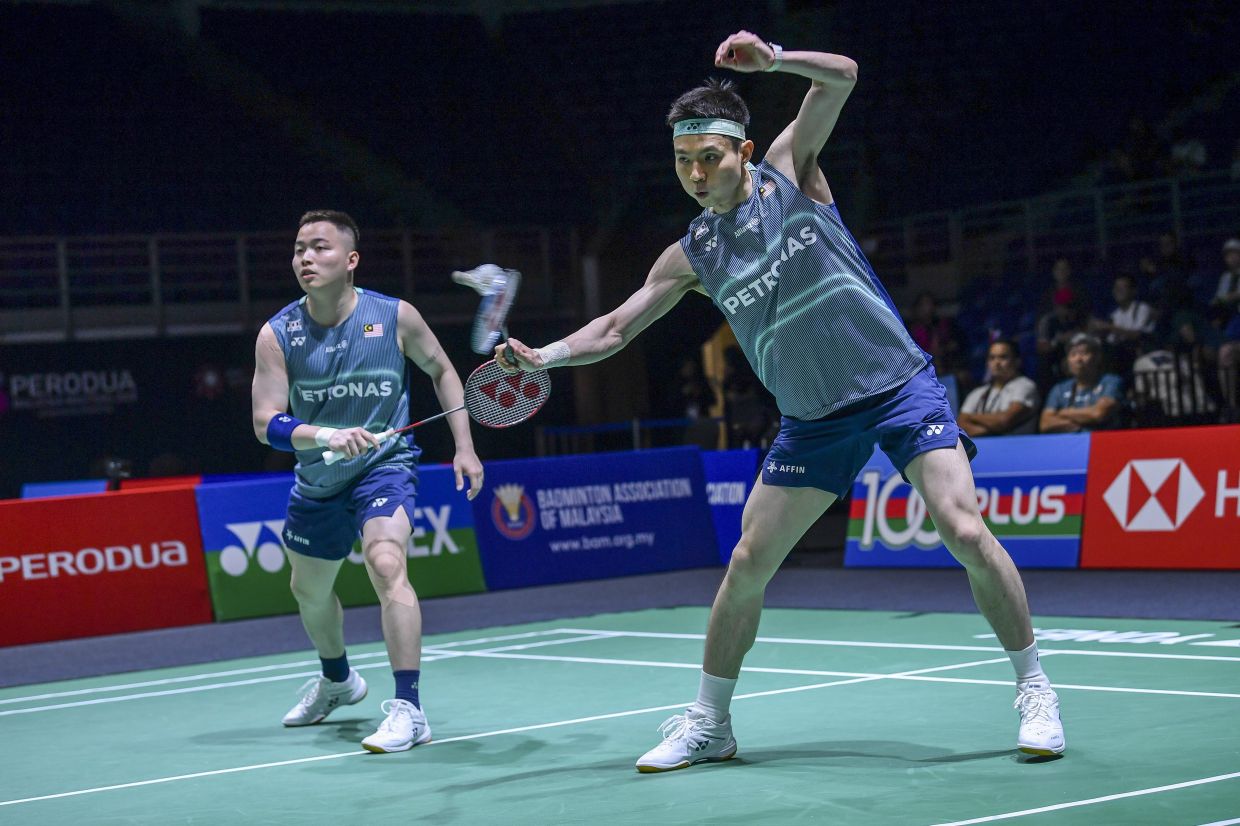
Lee's intervention came in response to comments from men's doubles player Soh Wooi Yik, who indicated his willingness to explore alternative arrangements with partner Aaron Chia as the two seek to remain paired through the 2028 Los Angeles Olympics. The World Championships silver medalists have become increasingly vocal about their partnership preferences, signalling that they may consider pathways outside BAM's direct control if the federation does not accommodate their wishes. This represents a nuanced power dynamic: the athletes have demonstrated elite competitive capability, yet BAM retains contractual authority and control over tournament access.
The BAM official framed his response in terms of institutional memory and developmental investment. Lee argued that the federation had invested years in cultivating these players from their formative years, providing coaching infrastructure, financial support, and competitive pathways that enabled their rise to international prominence. From this perspective, current success should not obscure the foundational role BAM played in athlete development. He contended that gratitude toward the institution and recognition of its contribution should inform how players approach disputes over selection decisions or partnership configurations. This reflects a traditional hierarchical model common in Asian sports administration, where the federation's authority is presented as fundamentally unquestionable.
Yet Lee's comments also reveal frustration with players using competitive leverage—particularly strong World Championships performances—to pressure institutional decision-making. The performance committee chairman explicitly cautioned against what he characterised as emotional or strategic threats to depart the national programme. He suggested that previous BAM management may have been more accommodating to such pressure, but that the current administration operates under different principles. This signals a shift toward more assertive institutional governance, where management decisions about training partnerships and competition assignments are treated as non-negotiable rather than subject to player veto through ultimatums.
The underlying dispute concerns BAM's experimentation with alternative men's doubles pairings as part of longer-term Olympic cycle planning. Despite Aaron Chia and Soh Wooi Yik's silver medal showing at the recent World Championships in New Delhi, the coaching apparatus has been systematically testing new combinations. Over the previous two months, Aaron Chia was paired with Aaron Tai, and that combination reached the Taiwan Open final. Meanwhile, Soh Wooi Yik initially competed with Man Wei Chong before transitioning to partner with Aaron Tai, culminating in a Korean Masters final appearance. At the China Masters beginning September 1, the federation plans another reshuffle pairing Aaron Chia with Wei Chong while positioning Soh Wooi Yik with Aaron Tai.
This strategic flexibility in partnership arrangements appears driven by institutional uncertainty about which pairing offers the strongest prospects for Olympic gold medals and sustained international competitiveness. Rather than allowing athletes to dictate their partnerships based on personal chemistry and preference, BAM's coaching establishment is pursuing a data-driven approach to identify optimal combinations. Such systematic experimentation, while potentially unpopular with individual players, reflects sophisticated competitive planning that considers variables beyond immediate relationship comfort. However, it also creates friction when players view these rotations as destabilising or threatening to their long-term Olympic aspirations.
Lee's warning carries significant practical consequences for athletes considering independence. Aaron Chia and Soh Wooi Yik remain contractually bound to BAM through 2028, meaning departure from the national programme could trigger substantial financial penalties. Beyond compensation obligations, departure also risks losing international tournament eligibility, as governing bodies frequently recognise only official national federation representatives for major competitions. Such restrictions would severely constrain their ability to accumulate the ranking points essential for Olympic qualification. The federation thus retains leverage even against highly accomplished players, as the costs of exit remain prohibitively high.
This dynamic reflects broader structural realities in Malaysian badminton and Southeast Asian sports more broadly. Individual athletes, regardless of competitive achievement, occupy subordinate positions within institutional hierarchies that control resource distribution and international access. The federation's authority derives not merely from contractual arrangements but from its gatekeeping function in the Olympic system and international tournament ecosystem. Players cannot realistically compete at elite levels without federation support, institutional recognition, and access to training facilities and competition opportunities that only BAM can provide. This structural asymmetry constrains authentic negotiating power despite surface-level claims of dialogue.
Lee's emphasis on BAM's willingness to discuss player concerns, coupled with his firmness on non-negotiability of exit threats, reflects an attempt to thread institutional accountability with managerial authority. He acknowledged that the federation's door remains open for substantive negotiations about accommodations and support. However, he categorised conversations that begin with departure threats as illegitimate tactics rather than genuine requests for dialogue. This distinction allows BAM to frame itself as reasonable and responsive while rejecting player ultimatums as inappropriate pressure tactics. It effectively restructures the terms of negotiation to prioritise institutional prerogatives over individual preferences.
For Malaysian badminton specifically, Lee's warning signals that the current BAM administration intends to assert stronger institutional control over player management and partnership decisions than may have characterised previous regimes. This approach could enhance competitive planning and systemic coherence, enabling the federation to develop athletes according to strategic priorities rather than accommodating individual preferences. Conversely, it may generate resentment among elite players who feel their autonomy is constrained and their voices dismissed. The outcome will likely depend on whether BAM's competitive planning actually yields stronger results, validating the harder-line institutional approach, or whether it proves counterproductive by demoralising talented athletes.
The Aaron Chia and Soh Wooi Yik situation encapsulates broader questions about athlete agency, institutional authority, and career autonomy in Malaysian sports. As athletes become more internationally connected and aware of alternative pathways available to competitors from larger badminton nations, expectations around personal choice and partnership autonomy are likely to increase. BAM's challenge will be balancing institutional coherence and competitive planning with sufficient flexibility to retain talented athletes and prevent the emergence of external alternative power structures. Lee's warning represents one phase in this evolving negotiation, setting boundaries while acknowledging dialogue possibilities, but the fundamental tensions between individual and institutional interests appear unlikely to resolve quickly.

